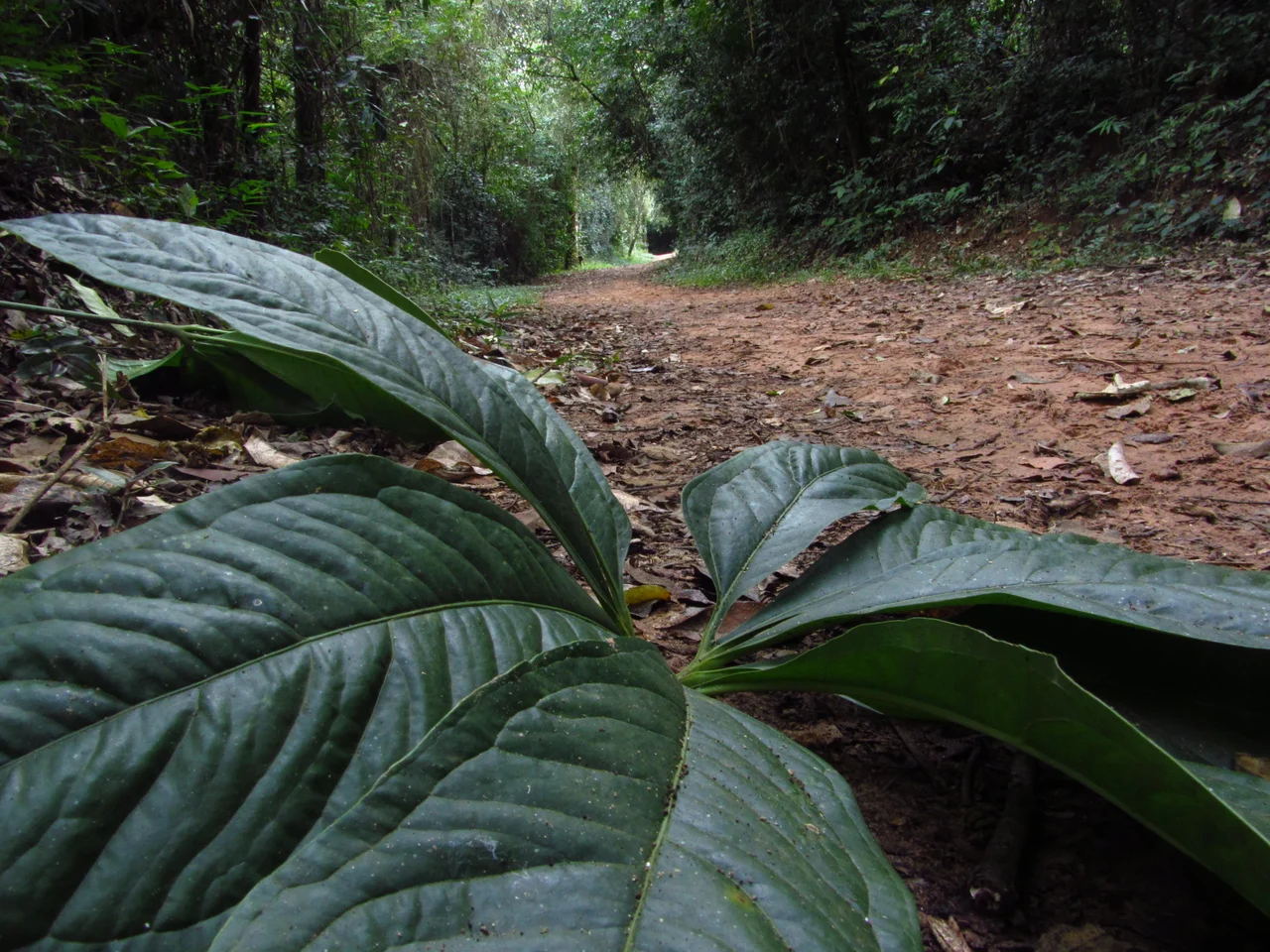

Vassununga State Park
It weighs an estimated 264 tons. Its trunk is 3.6 meters thick. Its longest root runs 30 meters sideways underground, and its deepest punches 18 meters straight down. Forty meters overhead, its crown catches the Cretaceous sun that once fell on dinosaurs. The tree is a jequitibá-rosa, Cariniana legalis, and the locals call it O Patriarca - the Patriarch. It has been standing here for approximately 600 years, which means it was already a sapling when Europeans first sighted the Brazilian coast. Most of the Atlantic Forest that once surrounded it has been cut for coffee and cattle. This grove survived because a sugar mill kept it as a woodlot. When the mill went bankrupt in 1969, the state of São Paulo stepped in.
How the Forest Was Saved
The Vassununga Sugar Mill owned roughly 2,000 hectares of northeastern São Paulo in the 19th and 20th centuries. Like many Brazilian planters of the era, the mill's managers kept forest reserves scattered through the cultivated land - not out of early conservation ethics but for practical reasons. Forest preserved soil, held water sources against drought, supplied construction timber, provided game, and in some cases served as a seed bank for replanting shaded coffee. One such reserve contained an extraordinary stand of jequitibá-rosa trees, then as now among the largest tropical hardwoods in the Americas. When the Vassununga mill collapsed in 1969, the property faced the same fate as countless other bankruptcies: subdivision for agriculture, clear-cutting for lumber, the final erasure of one of the last interior Atlantic Forest remnants in the region. State decree 52,546 of October 26, 1970 intervened. The Vassununga State Park was created to protect 2,071 hectares scattered across six disconnected sections - Capão da Várzea, Capetinga Oeste, Capetinga Leste, Praxedes, Maravilha, and Pé de Gigante. The park is a patchwork, not a single preserve. That fragmentation is both its weakness and its story.
The Giant's Foot
The largest section, 900 hectares called Pé de Gigante - the Giant's Foot - takes its name from a broad depression in the landscape that, viewed from certain angles, suggests the imprint of something enormous. The cerrado here is unusually well preserved, which is why the section draws visitors even more than the coffee-cleared fragments elsewhere in the park. This is also where O Patriarca stands. A neighboring jequitibá-rosa, felled and examined, had growth rings that carbon-14 dating aged at 400 years. The Patriarch is larger and thicker, which is how the 600-year estimate emerged. Around 330 specimens of Cariniana legalis grow in the park's surviving woodlands, some of them rivaling the famous tree in size. The Atlantic Forest canopy that rises around them is classified as semi-deciduous - it sheds partially in the dry season, a characteristic of this interior variant that differs from the coastal moist forest. Beneath the emergent jequitibás, the forest structure includes guaritá, peroba-rosa, capixingui, copaiba, cedro-rosa, and the spectacularly named paineira, whose floss-silk seeds drift across the park in windy spring.
Life in the Fragments
The list of mammals recorded at Vassununga reads like a field guide to the Brazilian interior: maned wolf, cougar, capybara, bush dog, crab-eating raccoon, oncilla, tayra, neotropical otter, the pampas deer once nearly extirpated across this range, and the robust capuchin monkey whose troops move through the canopy in noisy pursuit of fruit. The bird list is longer still. Toco toucans, yellow-headed caracaras, seriemas, hummingbirds by the dozen species, blue ground doves, solitary tinamous whose bellowing calls travel kilometers through wet morning air. All of these animals live in a landscape that no longer supports their movement freely. The park's six sections are disconnected, surrounded by agriculture, and small enough that genetic isolation threatens some populations. Conservation biologists have long recommended ecological corridors - strips of replanted forest connecting the fragments - as a way to give wildlife functional territory. Progress is slow, because the intervening land belongs to soybean and potato farmers who have other plans. The park survives as a series of green islands in an agricultural ocean, a reminder of what all of this region looked like five hundred years ago.
The Road to the Patriarch
The park sits along kilometer 245 of the Rodovia Anhanguera, the SP-330 highway, about 245 kilometers northeast of São Paulo in the municipality of Santa Rita do Passa Quatro. The Anhanguera itself traces an old bandeirante route - 17th-century Portuguese explorers, enslavers, and gold-hunters who cut paths from São Paulo into the interior, giving the highway its name. Visitors today reach the Pé de Gigante section through a simple park entrance. Trails lead into the cerrado and into the forest. Guides will point out the Patriarch if asked, though its location is an open secret and most hikers find it without help - the tree is simply larger than anything else in the woods. Standing under it, you can hear the Anhanguera traffic distant through the trees, a freight truck or a tourist sedan passing at 110 kilometers per hour. The tree has been there longer than the highway. It will, with luck, outlast it too.
From the Air
Located at 21.72°S, 47.59°W in northeastern São Paulo state, Brazil. The Vassununga State Park occupies 2,071 ha in six disconnected sections along the Rodovia Anhanguera (SP-330) near Santa Rita do Passa Quatro, 245 km northeast of São Paulo city. The largest section, Pé de Gigante, appears from altitude as a distinctive patch of intact cerrado and Atlantic Forest surrounded by agricultural mosaic. Nearest airports: Ribeirão Preto (SBRP) to the north and São Paulo's Viracopos (SBKP) to the south.
Nearby Stories
- Vargem Grande do Sul 26 km away
- Count of Pinhal Mansion 27 km away
- São Paulo (state) 30 km away
- Ribeirão Preto 35 km away
- Titanochampsa 43 km away
- Guaxupe 44 km away
- Itapira 59 km away
- Torrinha 80 km away