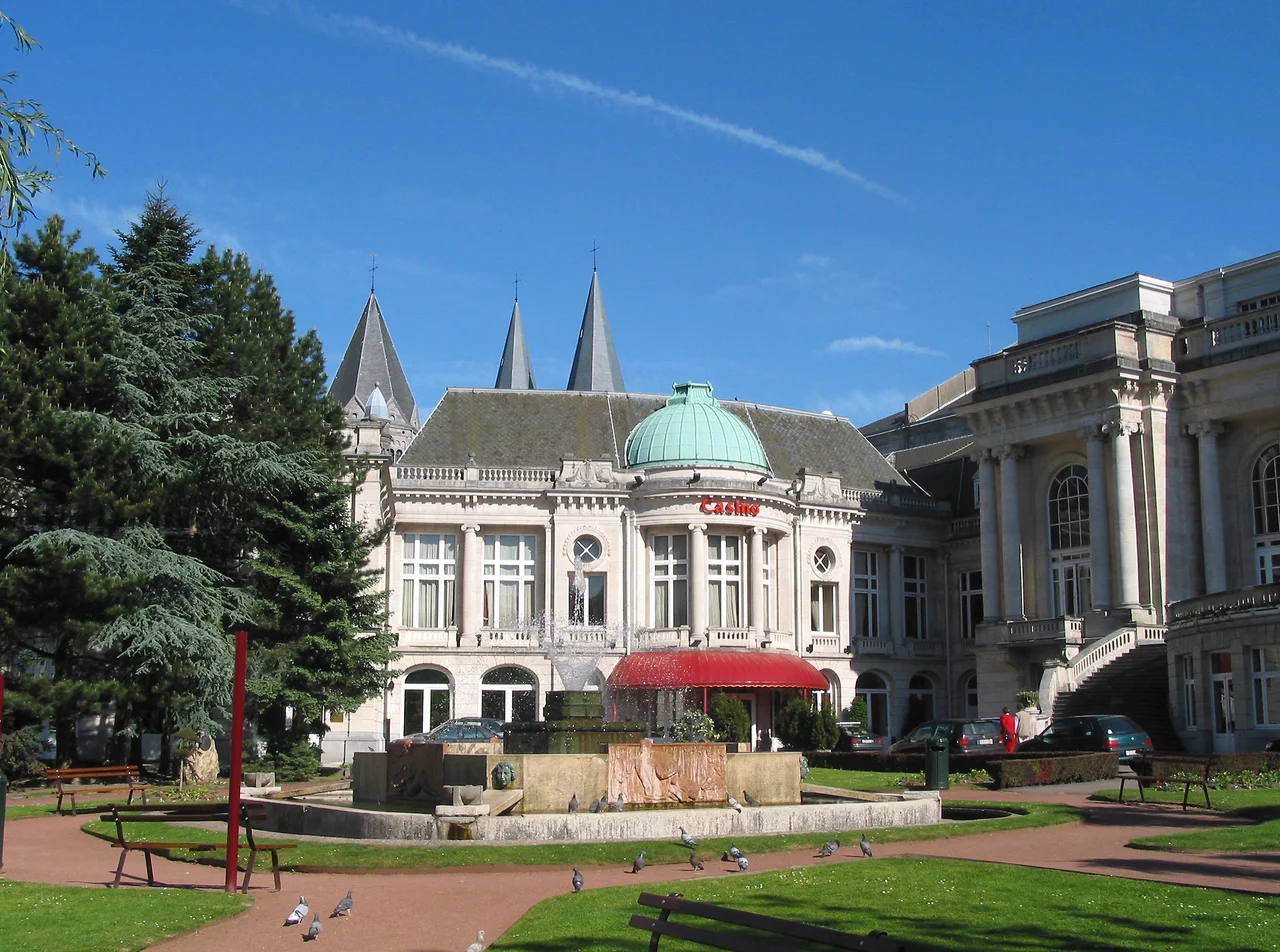

Belgium
For a country smaller than the state of Maryland, Belgium has produced a remarkable amount of complication. There are six governments serving eleven million people. There are three official languages, four federal entities, and an ongoing constitutional negotiation that the Belgians themselves admit they no longer fully understand. And yet, somehow, this Lilliputian federation produces some of Europe's best chocolate, almost certainly its best beer, and a quiet, persistent influence on the continent it sits in the middle of - because Brussels, by happy historical accident, became the capital of the European Union.
A Country Built on Compromise
Belgium was not really meant to exist. In 1830, the Southern Provinces of the United Kingdom of the Netherlands rose up and seceded - Catholic, partly French-speaking, and increasingly unwilling to be ruled from The Hague. The Great Powers of Europe, alarmed at the prospect of a new nation in a strategically delicate spot, accepted the breakaway only on the condition that the new country remain permanently neutral. That neutrality lasted until 1914, when German armies marched through anyway. Belgium has lived with its geography ever since: pinned between France, Germany, and the Netherlands, it became a battlefield in both world wars precisely because it sat where everyone needed to pass through. The compromises that hold the country together - federal, linguistic, cultural - are not abstract. They are the country's working definition of survival.
The Language Line
Run an invisible line across Belgium, just south of Brussels, and you split a country in two. North of the line lies Flanders, where roughly six million people speak Dutch (or, more precisely, the Belgian variant called Flemish). South lies Wallonia, where about three and a half million speak French. A small slice of the east speaks German. Brussels, awkwardly, sits inside Flanders but speaks mostly French. Almost every political crisis in Belgium since World War II has turned on some aspect of this geography - which language a university uses, which signs go up at a tram stop, where the border of a commune lies. In 2010 and 2011, Belgium spent 541 days without a federal government, the world record at the time, because its parties could not agree on how to share power between linguistic communities. Daily life, somehow, continued.
Beer Country
There are roughly 400 active Belgian breweries producing well over a thousand distinct beers, and the country takes the subject more seriously than any place on earth. Trappist abbeys still brew within monastery walls - Westvleteren, Orval, Rochefort, Chimay, and Westmalle - using recipes refined over centuries. (Achel lost its official Trappist designation in 2021 when its last monks departed for Westmalle.) Lambic brewers in the Senne valley ferment beer with wild yeasts that drift in through open windows, a method that survives essentially nowhere else. There are sour reds from West Flanders, dark dubbels and tripels from the abbeys, witbier cloudy with coriander, and the dangerously drinkable golden strongs. UNESCO added Belgian beer culture to its list of Intangible Cultural Heritage in 2016. Order a beer in any Belgian cafe and it arrives in a glass branded for that brewery alone - to drink it from the wrong vessel would be a small but real offense.
What the Land Looks Like
Belgium splits geographically much as it does linguistically. The north is low and flat, ribboned with canals and crossed by the slow brown waters of the Scheldt. Antwerp's harbor is the second largest in Europe. The medieval cores of Bruges and Ghent survived the centuries almost intact - stepped gable roofs, belfries, market squares paved in cobble that German bombers somehow missed. Move south and the land begins to rise. The Ardennes is genuinely wild for Western Europe: oak and beech forest, deep river valleys cut by the Meuse and the Ourthe, scattered castles, wild boar in numbers large enough to be a road hazard. In December 1944, this was where the Battle of the Bulge was fought; the small American cemeteries still tucked between villages are reminders that the Ardennes was the last great Nazi gamble of the war.
Frites, Waffles, and Other Lies the Belgians Tell
Call them french fries in Belgium and you will be corrected, politely but firmly. They are frites, invented here, traditionally fried twice in beef tallow, and served everywhere from a little stand called a frituur with a paper cone and one of about thirty available sauces. The waffle problem is more delicate. There is no single Belgian waffle. The Brussels waffle is light, rectangular, crisp, eaten plain or with powdered sugar. The Liege waffle is denser, sweeter, irregular at the edges, with pearl sugar caramelizing as it cooks. The travel-brochure version sold abroad - drowned in whipped cream and strawberries - is essentially unknown in Belgium itself. As for chocolate, the country has roughly two thousand chocolatiers for eleven million people. Pralines, the filled chocolates invented in Brussels in 1912, remain the local specialty and the only acceptable hostess gift.
Why It Still Holds Together
Outsiders sometimes predict that Belgium will eventually split. Flanders is wealthier, more conservative, and culturally distinct from Wallonia. The Flemish nationalist N-VA is the largest party in the country. And yet the split never happens. Part of the reason is Brussels itself - bilingual, federal, home to NATO, the EU, hundreds of multinationals, and about a fifth of the population. Neither Flanders nor Wallonia is willing to lose it, and neither will agree to let the other have it. So they stay. The compromises continue. The governments multiply. And the country goes on doing what it has always done - brewing, baking, painting, arguing - largely uninterested in the international debate about whether it ought to exist at all.
From the Air
Belgium centers around 50.5 N, 4.5 E. Brussels Airport (EBBR) sits 11 km northeast of the capital; Antwerp (EBAW), Liege (EBLG), and Charleroi (EBCI) handle regional traffic. Belgian airspace is among the most congested in Europe - Brussels TMA layers over Maastricht UAC sectors and connects most westbound transatlantic departures from northern Europe. From cruise altitude in clear weather, the densely lit corridor from Antwerp through Brussels to Charleroi is unmistakable at night, with the Ardennes plateau visible as a dark mass to the southeast.
Nearby Stories
- Battle of Buggenhout 2.9 km away
- Acronicta rumicis 4.2 km away
- Zonhoven 6.5 km away
- Attack on the Twentieth Convoy 12 km away
- Battle of Steenkerque 14 km away
- Marcinelle Mining Disaster 23 km away
- Courrieres Mine Disaster 94 km away
- Fort Jeanne d'Arc 159 km away