
Battle of Buggenhout
On 22 September 1914, seven detachments of one hundred Belgian volunteers each climbed onto bicycles in Antwerp and rode out into the German rear. Their orders were to cut railway lines across Limburg, Brabant, and Hainault. Some of them succeeded - ten motorcyclists tore up the rails between Bilzen and Tongeren, and two hours later a German troop train derailed. Some of them did not return. The Germans found them, killed them, and burned the villages where they had been hidden. The Battle of Buggenhout, which gives this whole confused week its name, was the larger sortie that the cyclists were meant to support: a Belgian army of two divisions plus cavalry, sallying out of the National Redoubt at Antwerp from 25 to 29 September 1914, in a desperate effort to pull pressure off the French on the Marne.
Why the Sortie Happened
King Albert I commanded the Belgian field army from the great ring of forts around Antwerp - the National Redoubt - while the Germans drove south into France. The French Grand Quartier General sent urgent requests to Antwerp: please attack, please cut their communications, please do anything that might draw German troops away from the Marne. The Belgians agreed to try. They believed the German force around Antwerp had been thinned to feed the French campaign. They were partly right. Albert's planners selected a region west of Brussels for the raid and sent the Cavalry Division by rail to Ghent, ready to move on Aalst. The main army would march south. Then preliminary reconnaissance showed that the German force before Antwerp had in fact been reinforced. Albert canceled the larger sortie. What remained was a reduced operation against Landwehr Brigade 37, which had pushed up from Brussels toward Dendermonde.
The Action of 26 September
On 26 September the 4th Division advanced on Dendermonde and found the town in ruins and the Germans pulling out. The Belgians moved through the wreckage along both banks of the Dender and engaged Landwehr Brigade 37 at Sint-Gillis, Oudegem, and Wieze. The 5th Division covered the left flank cautiously. Two battalions pressed south from Buggenhout toward Lebbeke, hoping to cut off the German line of retreat, and occupied Lebbeke as night fell. The Cavalry Division attacked the German posts holding the Dender crossings at Aalst, with Belgians and Germans firing across the river at each other. Belgian horse pushed on to Asse. The trap should have closed. It did not. Landwehr Brigade 37, sensing the encirclement, skirted Lebbeke to the west in the dusk, used back roads to reach Opwijk, and rejoined the main German body early on 27 September.
What Was Done in Aalst
The Belgian Wikipedia summary records, in the dry register that war histories adopt for atrocity, what German troops did in Aalst as they pulled back. An old weaver carrying a pail of water across the street was bayoneted. In the Binnen Straat, houses were set on fire and two men killed. In the Eue des Trois Clefs, about forty civilians were dragged from their homes, stripped of their valuables, marched to the river Dender, and used as human shields against Belgian fire from the drawbridge. A Belgian officer commanding a machine gun signaled the civilians to throw themselves down, and the Belgians fired anyway. The Germans retreated and shot eight or nine of the civilian prisoners. Houses on the Eue Lenders and the Eue de l'Argents were burned, and people trying to escape were cut down in the street. A German column heading from Aalst to the village of Erpe set houses on fire there too and killed five or six civilians trying to flee. When a Belgian car with a machine gun appeared, the Germans placed the Aalst hostages on the road; two were wounded by Belgian fire. These were among the many incidents that came to be remembered, with great bitterness, as the Rape of Belgium.
The Volunteers in the Campine
At the same time, in the Campine region in Limburg far to the east, the 4th Volunteer Regiment - young recruits, many of them students - was fighting its own scattered war. They held the camp at Leopoldsburg, cleared the countryside of German scouts, and stitched themselves into a series of small engagements that the Germans could not predict. On 20 September, four companies of volunteers fought Germans at Schaffen-near-Diest for nearly three hours before being enveloped. Another skirmish at Lummen ended with over fifty houses burned by German troops. A company held the bridge over the canal at Beringen against much larger forces. On 27 September, German artillery began to bombard Beringen, and the volunteers, dug into trenches by the canal, drove back the first crossing attempt before being forced to withdraw through woodland. They watched Beringen, Heppen, and Oostham burn behind them. They retreated through Mol, fought a small action at the railway station, and finally were ordered to abandon plans to retake Leopoldsburg.
The End of the Sortie, the Beginning of the Siege
On 28 September the siege of Antwerp began in earnest. German artillery opened on forts Waelhem and Sint-Katelijne-Waver, the southernmost of the great ring around the city. Belgian operations in Limburg ended. The sortie at Buggenhout had failed to destroy Landwehr Brigade 37, had failed to permanently disrupt the German rear, and had failed to draw significant German forces away from France. But it had also forced the Germans to reinforce Antwerp's siege lines, and that, in a small and brutal way, was the point. Antwerp fell on 10 October. The Belgian field army, having extracted itself from the fortress, fell back to the Yser, where it would hold the last sliver of unoccupied Belgium until 1918. The Battle of Buggenhout is a forgotten engagement of a forgotten campaign. It is also where the war's character - the railway sabotage, the civilian executions, the long retreats - was already plainly visible six weeks in.
The Ground Today
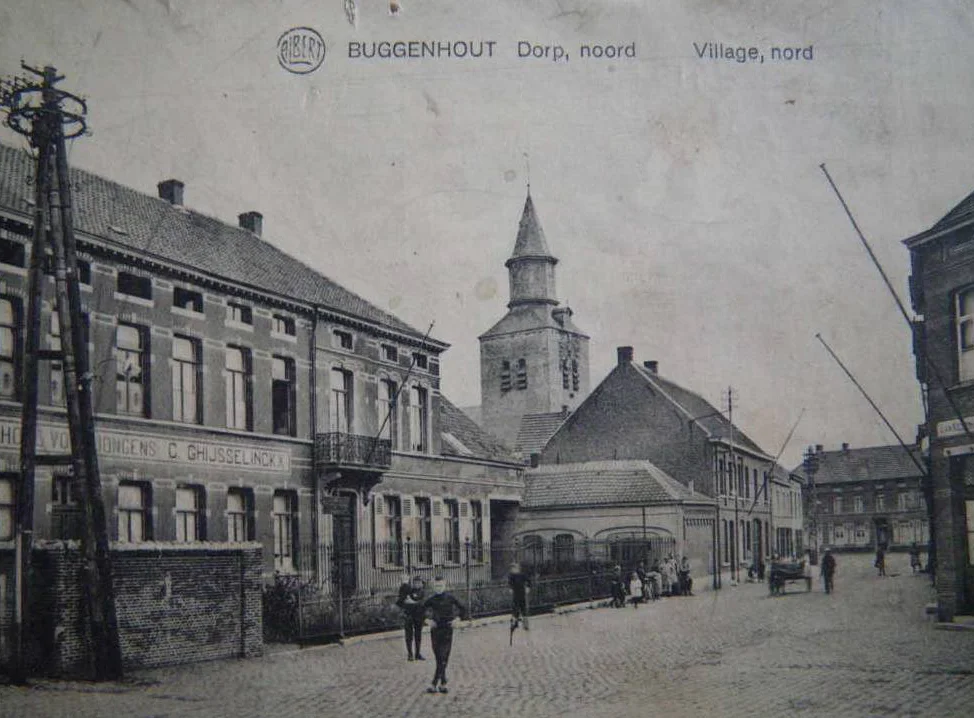
Buggenhout itself is a quiet municipality between Antwerp, Ghent, and Brussels, with about fifteen thousand inhabitants and a forest, the Buggenhoutbos, on its northern edge. Dendermonde was rebuilt after both World War I and World War II - the older was the more total destruction - and the Dender still flows beneath new bridges where the 4th Division crossed in 1914. Aalst preserves its old center, scarred but surviving. From altitude, the operational area of Buggenhout is just a patch of flat Flemish farmland between the Dender and Antwerp's southern approaches, indistinguishable from the surrounding country except for the small monuments local communities have kept up.
From the Air
The Battle of Buggenhout operational area centers near 51.00°N, 4.20°E, between Antwerp (35 km north), Ghent (40 km west), and Brussels (25 km southeast). Brussels Airport (EBBR) lies 25 km south; Antwerp International (EBAW) 25 km north. The Dender River, running northeast from Aalst through Dendermonde to its confluence with the Scheldt, is the primary geographic feature and the line along which the Belgian 4th Division attacked. Low altitudes show the dense Flemish settlement pattern between the three cities; Buggenhout itself is a small town easy to miss without GPS reference.
Nearby Stories
- Sluis 2.7 km away
- Poeke Castle 5.3 km away
- 1997-98 UEFA Champions League 8.9 km away
- Hertogin Hedwigepolder 12 km away
- 1989 Belgium MiG-23 Crash 15 km away
- Halle 15 km away
- Hoogstraten 16 km away
- Battle of Landen 33 km away