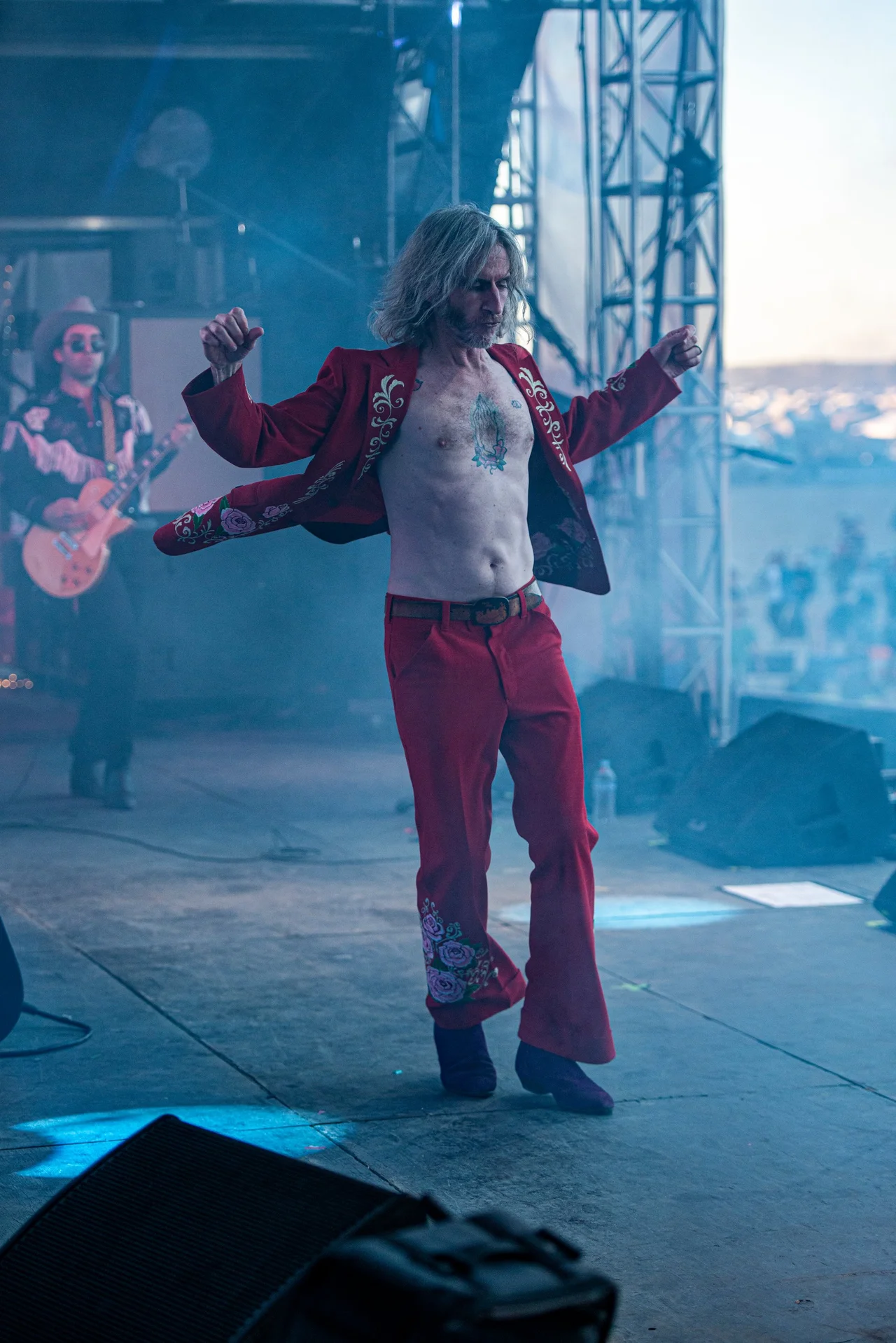

Big Red Bash
Imagine a rock concert with no city anywhere near it - no nearby town big enough to matter, no highway, just a stage at the foot of a 40-metre sand dune in the middle of the Simpson Desert. That is the Big Red Bash, billed as the world's most remote music festival. Each winter, thousands of people drive vast distances into the outback west of Birdsville, pitch their tents on red sand, and watch some of Australia's best-known musicians perform against a backdrop of ancient dunes glowing in the desert dusk. For a few days, one of the emptiest corners of the continent becomes a roaring town.
From 500 to a Sea of Tents
The Big Red Bash started small. The first event in 2013 drew only about 500 people to the desert - a modest, slightly improbable gathering at the back of beyond. It grew with astonishing speed. By 2023 the festival was pulling in more than 11,000 visitors, transforming a patch of cattle station into the temporary settlement organisers call Bashville. The concert ground alone covers some 63,000 square metres of desert floor. Founder Greg Donovan still organises the event he dreamed up, and the appeal is easy to understand: it is part music festival, part outback pilgrimage, a chance to do something genuinely wild in a landscape most Australians only ever see in photographs.
A Stage Beneath Big Red
The festival takes its name and its setting from Big Red itself - the towering dune, known by its Aboriginal name Nappanerica, that rises about 40 metres above the surrounding desert and ranks as the tallest in the Simpson. It stands roughly 35 kilometres west of Birdsville, the first great wall of sand for anyone heading into the desert. The event unfolds on a 1.3-million-hectare organic cattle station at the dune's foot, with the red ridge looming behind the stage. As the sun drops, the sand burns orange and crimson, and the crowd watches live music with one of the most dramatic natural backdrops any festival could ask for - a stage set built by wind and time.
The Nutbush in the Desert
The Bash has a delightfully Australian sense of ritual. Since 2016 the crowd has gathered each year to attempt the world record for the most people dancing the Nutbush - the line dance set to Tina Turner's 'Nutbush City Limits' that generations of Australians learned in school halls. In 2023, a sea of 5,838 dancers stomped through it together on the desert floor and set a new record, a mass tribute on the sand that doubled as a farewell to Turner in the year of her death. The festival leans into this communal spirit, and it pairs the party with purpose: fundraising has been woven into the event from early on, turning a remote bash into a gathering with a charitable heart.
The Desert Sets the Terms
Getting to the Bash is part of the experience - long drives on dusty unsealed roads, careful planning, and a healthy respect for a place with no quick way out. The desert always has the final say. The 2020 event was cancelled when the COVID-19 pandemic swept the world, though the festival fought back the next year with a COVID-safe plan and a lineup of Australian favourites including Paul Kelly, Daryl Braithwaite and The Black Sorrows. The outback can shut the gates at any time, whether by pandemic or by the rare floods that turn the desert tracks to impassable mud. That fragility is part of the magic: a festival that exists only because thousands of people are willing to chase music to the ends of the map.
From the Air
The Big Red Bash is held on Adria Downs station in the Simpson Desert at approximately 25.88 degrees south, 139.06 degrees east, about 35 km west of Birdsville at the foot of the Big Red (Nappanerica) dune. For most of the year the site is empty desert - long parallel red dunes meeting the braided channels and floodplains of the Georgina River - with Big Red standing as the most prominent dune on the desert's eastern edge. During the festival each winter, the normally bare sand fills with a vast temporary campground and stage, briefly one of the largest concentrations of people for hundreds of kilometres. The nearest airport is Birdsville (YBDV), which sees heavy light-aircraft traffic during the event; Bedourie (YBIE) lies to the northeast. No services exist in the desert itself. Best viewed by day in clear winter air, when the dunes and river channels show sharp contrast; summer brings extreme heat, dust, and haze.
Nearby Stories
- Yarluyandi 10 km away
- Poeppel Corner Survey Marker 52 km away
- Warburton River 58 km away
- Burke and Wills Plant Camp 64 km away
- Munga-Thirri National Park 64 km away
- Munga-Thirri–Simpson Desert National Park 64 km away
- Carcory Homestead Ruin 71 km away
- Sturt Stony Desert 100 km away