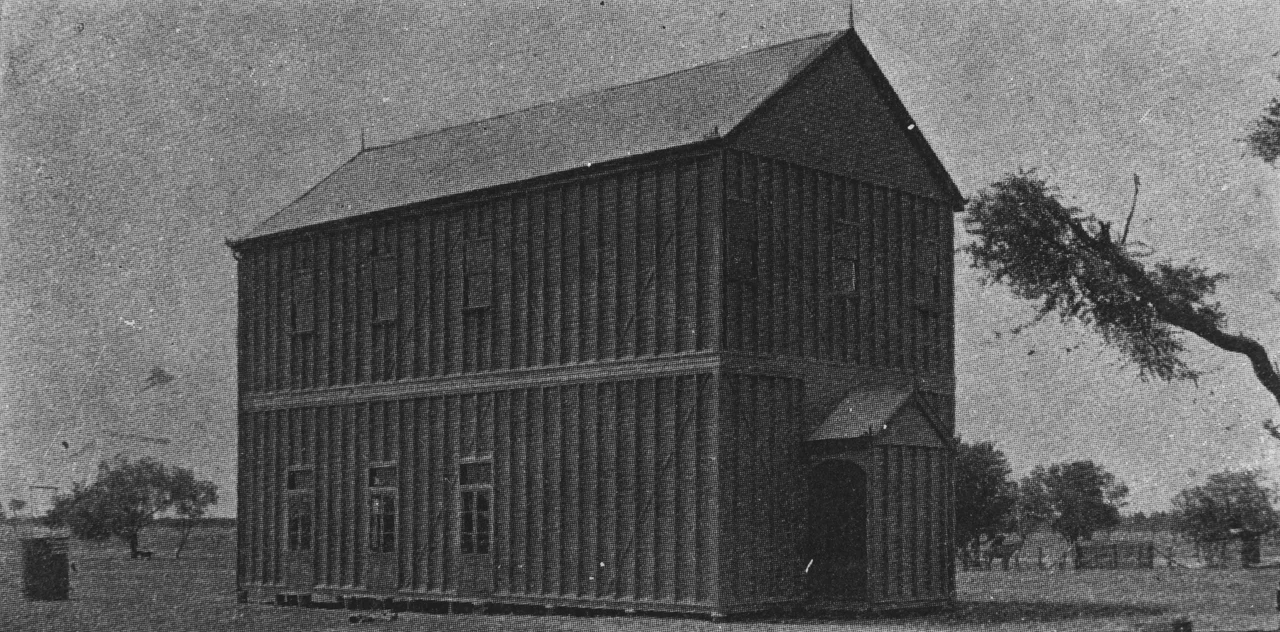
Blackall Masonic Temple
Behind a plain timber facade on Hawthorn Street, up a flight of stairs, is a room most people in Blackall never entered. The upstairs temple of the Blackall Masonic lodge has been kept much as it always was - the chairs, the symbols, the careful geometry of a Masonic meeting hall - in a building dedicated on 3 August 1908. In a remote wool town where the social pillars were the pub, the church, and the shearing shed, the Masonic temple was a fourth: a place where men who spent their days in the dust of the yards gathered after dark in ritual and fellowship, far beyond the black stump.
Brotherhood on the Frontier
Freemasonry came to Blackall in May 1887, when seven masons met at the local Methodist church to found a lodge. By the end of that year the membership had grown to thirty-two - a striking number for a town only two decades old on the edge of the settled colony. This 1908 building was the second temple the lodge raised, a sign of a community confident enough to invest in permanence. A two-storey timber structure on stumps with a gabled roof and shady verandahs, it cost £1,603 - a substantial sum that included the luxuries of gas lighting and running water, rare comforts in the outback of the day.
A Town Worth Joining
Blackall had reasons for confidence. Named after Sir Samuel Blackall, the second governor of Queensland, the town sat in some of the richest wool country in the colony. In 1885 the first artesian bore in Queensland was sunk here, tapping the vast underground water of the Great Artesian Basin and transforming the prospects of the dry plains. In 1892 the legendary shearer Jackie Howe set a world record nearby at Alice Downs, shearing 321 sheep with hand blades in seven hours and forty minutes - a feat unbeaten for decades. And the town gave Australia an idiom: surveyors' use of a charred "black stump" as a datum point left everything further west forever "beyond the black stump."
Ritual in the Wool Country
It is easy to underrate what a lodge meant in a place like this. Isolation was the defining fact of outback life - the next town was hours away, news came slowly, and a working man's world could shrink to the shearing shed and the bar. The Masonic temple offered something else: a structured fellowship that crossed the usual lines, where a station owner and a tradesman might meet as brothers in the same ritual. The same year the temple was completed, 1908, the railway finally reached Blackall, knitting the town more tightly into the colony and easing the haul of wool and stock. The lodge was part of that same impulse toward permanence and connection - a community insisting it was more than a cluster of tin roofs in the dust.
What the Lodge Became
Added to the Queensland Heritage Register on 21 October 1992, the temple is valued as a characteristic and intact example of a regional timber Masonic hall - a building type that once stood prominently in the streetscapes of country towns across Queensland and anchored their social life. Its significance lies in that ordinariness made rare: most such lodges have vanished, but Blackall's survives with its upstairs temple preserved. The lodge itself closed its doors in late 2016, after which the building was bought and lovingly restored as The Lodge on Hawthorn - now a cafe, antique shop, and art gallery, where guided tours still climb the stairs to the temple room and let visitors stand inside a brotherhood's quiet century.
From the Air
The Blackall Masonic Temple stands on Hawthorn Street in Blackall at 24.43°S, 145.47°E, in the Blackall-Tambo Region of central-west Queensland. From the air it is one timber-and-iron building among the town grid, set on the Barcoo River plains roughly 110 km east of Isisford; the town and the river line are clearly visible from a recommended altitude of 2,000–4,000 ft AGL in clear conditions. Blackall Airport (YBCK) lies just outside town with a sealed runway, making this the most aviation-accessible site in the Isisford district. Longreach (YLRE) is the larger regional hub to the north. Visibility across the flat wool country is excellent in the dry season; morning light best reveals the temple's verandahs and gabled roof among Blackall's heritage streetscape.
Nearby Stories
- Isis Downs Woolshed 26 km away
- Augustus Charles Gregory 33 km away
- Yalleroi 39 km away
- Idalia National Park 42 km away
- Wellshot Station 46 km away
- Yaraka 134 km away
- Queensland National Bank, Charleville 202 km away
- Cullin-la-ringo Massacre 222 km away