
Boodjamulla National Park
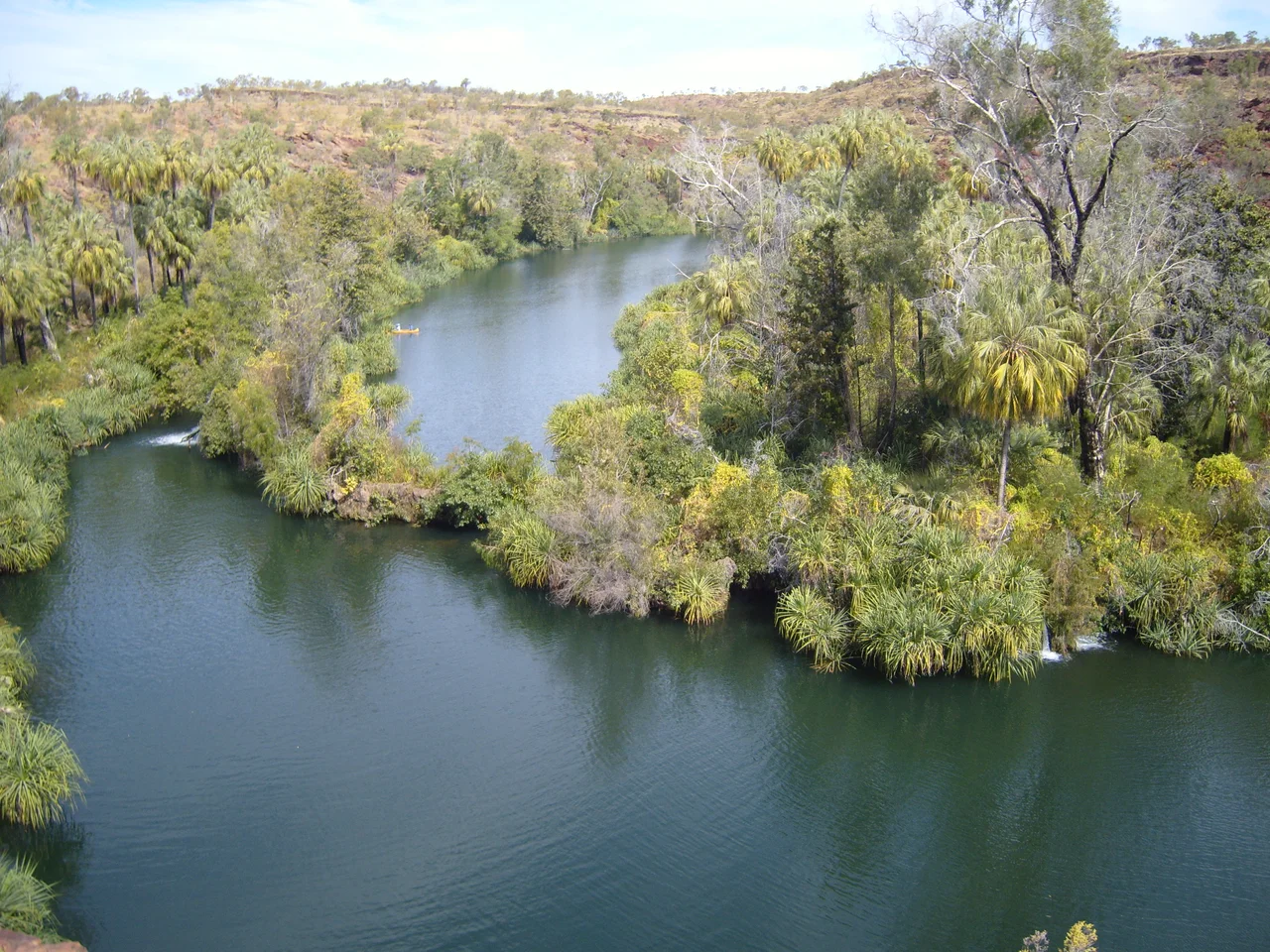
After hours of dust and dry spinifex, the gorge arrives like a hallucination. Sheer red sandstone walls drop into water the colour of polished jade, fringed with cabbage palms and cycads, the whole improbable scene fed by springs that never fail. The Waanyi people call this place Boodjamulla, Rainbow Serpent country, and they say the great Serpent himself carved the gorge and laid down its permanent water. Stand at the edge of Lawn Hill Gorge and that story feels less like myth than the plainest possible explanation for something this alive in the middle of so much dry.
The Serpent's Country
The Waanyi have lived in this gorge for at least 17,000 years, and their connection to it is not a chapter of history but a living relationship. To them, Boodjamulla is sacred, a place of ceremony, and the water is the Rainbow Serpent's gift and responsibility. The warning that comes with the story is precise: pollute the water, waste it, or take it for granted, and the Serpent will leave and take all the water with him. That belief is woven through the land in rock art, grinding stones, middens and engravings, the marks of an unbroken presence. In 2010 the Waanyi were granted native title over their country, and since 2022 they have shared in managing the park, a measure of authority returning to the people who never relinquished it.
How an Oasis Is Built
The magic of Lawn Hill Gorge is plumbing, and it is no less wondrous for that. Lawn Hill Creek flows year-round, fed by countless freshwater springs draining off a limestone plateau to the west. As that lime-rich water spills over rocks and fallen branches, it evaporates and leaves behind skins of calcite, building up over centuries into a porous, brittle rock called tufa. These natural tufa dams, among them Indarri Falls, wall the creek into a string of deep, still, emerald pools stacked through the gorge. The water trapping plant and animal matter as it sets is the same process, across far greater time, that fossilised the famous Riversleigh fauna preserved in the park's limestone to the south.
Crocodiles, Cycads and the Fairy-Wren
Cut through the sandstone plateau of the Constance Range, on the eastern edge of the Barkly Tableland, the gorge shelters a riot of life across four habitats, from riverine pools to rocky hills. Freshwater crocodiles bask on the banks, harmless to the canoeists who paddle the upper gorge. Ancient cycads, survivors from a far older Australia, cling to the cliffs. The park is recognised as an Important Bird Area and home to more than 140 bird species, its emblem the rare purple-crowned fairy-wren that flits through the riverside cane grass. Twenty kilometres of walking track climb to rim lookouts where the green gash of the gorge cuts a startling line through the red and ochre country all around. Camping is permitted at the Lawn Hill Gorge site and at the Miyumba bush camp near the Gregory River, but the park is remote enough that visitors are urged to carry their own fuel, food and water.
Cattle, Conflict, and the Long Way Back
Before it was a national park, this was Lawn Hill Station, one of Queensland's largest cattle properties, carved out after European settlers pushed in during the 1870s. The frontier here was violent: in 1889 the Aboriginal man Joe Flick shot dead a Native Police officer and wounded the explorer Frank Hann in a shootout at Lawn Hill, an episode that speaks to the bitter resistance these incursions met. The land came back slowly. A station owner returned a parcel to the public in 1984, more was added in 1992, and the park grew from there. Floods in March 2023 closed it entirely, and it has reopened only in stages from July 2025, a reminder that out here the Serpent's water still sets the terms.
From the Air
Boodjamulla National Park centres on roughly 18.70 degrees south, 138.49 degrees east, in remote north-west Queensland near the Northern Territory border. The unmistakable landmark from the air is Lawn Hill Gorge: a narrow, vivid green corridor of water and vegetation slicing through red sandstone ranges of the Constance Range, on the eastern edge of the Barkly Tableland. The surrounding country is dry savanna and broken escarpment. Ground access is by unsealed road, often impassable after wet-season rain (October to March). Mount Isa Airport (YBMA) is the nearest major field to the south-east; Burketown and Camooweal (YCMW) serve the wider Gulf. Clearest viewing is the dry season, May to October, when the contrast of green gorge against red rock is sharpest.
Nearby Stories
- Riversleigh World Heritage Area 31 km away
- Burketown Post Office 107 km away
- Augustus Downs Station 107 km away
- Old Westmoreland Homestead 125 km away
- Mount Cuthbert Township and Smelter 157 km away
- Brunette Downs Station 197 km away
- Merlin diamond mine 237 km away
- Tennant Creek 387 km away