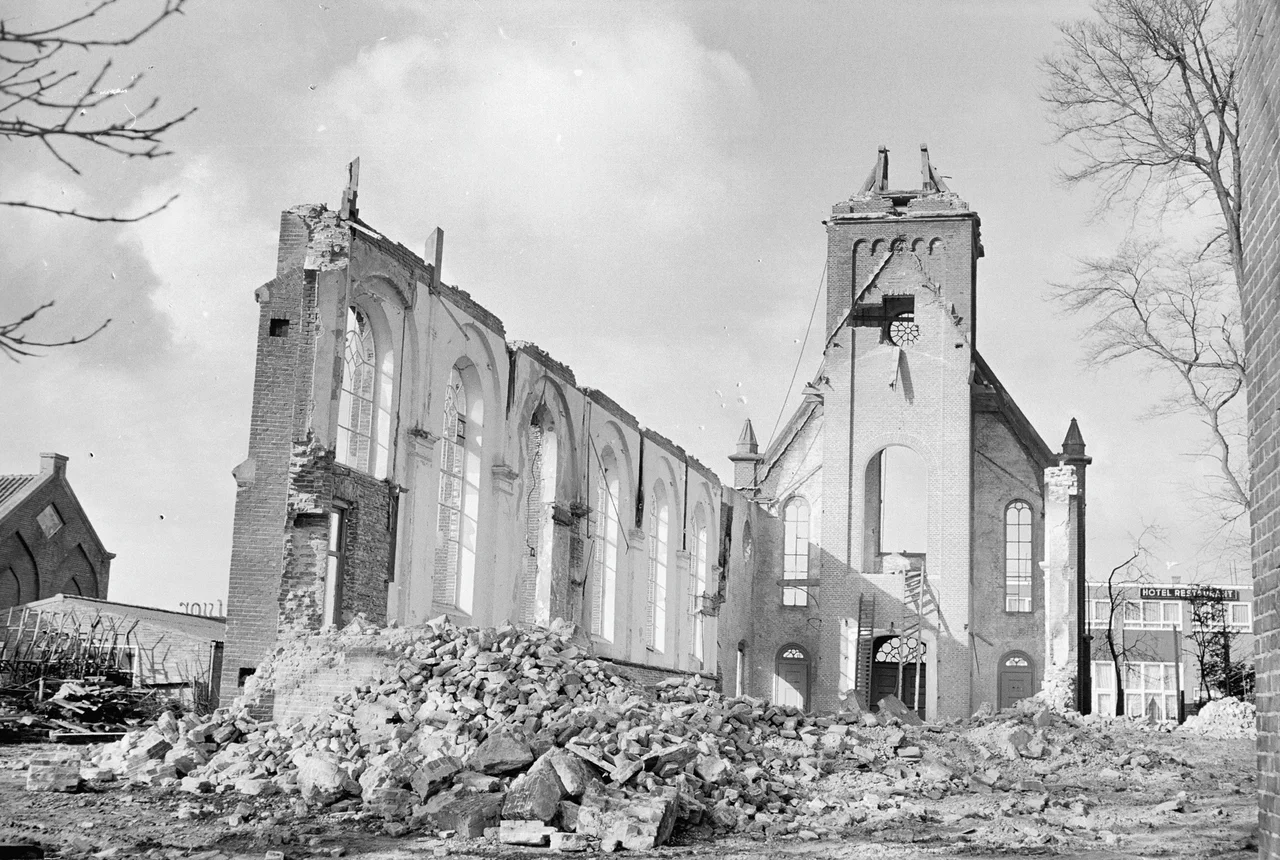

Bovenkarspel
Thirty-two people went to a flower show and did not come home. They were mostly older - retirees who loved tulips, daffodils, hyacinths, the smell of damp peat under glass at the Westfriese Flora exhibition in Bovenkarspel. Some had been visiting the show for decades. In late February and early March 1999, they walked past a display hot tub running quietly on the exhibition floor. They breathed in a fine, invisible mist that nobody had thought to test. Two weeks later they began arriving at the hospital in Hoorn with high fevers and lungs filling with fluid. By the time the doctors understood what they were treating - Legionnaires' disease, from one specific bacterium living in one specific unfiltered hot tub - the outbreak had reached 318 confirmed cases, with at least 32 deaths. The flower show, founded in 1933, was discontinued. It has never been held again.
The People Who Died
The Dutch public-health response is usually careful with names, but the victims of the Westfriese Flora outbreak were not statistics to the families who lost them. They were husbands and wives, gardening-club members, retired teachers, parents who had brought children, grandparents who had brought grandchildren. Some had pre-existing lung conditions that made them more vulnerable; many were simply older, and older lungs are what Legionella pneumophila tends to find. The youngest known victim was middle-aged. The investigators later concluded that more people had likely died in the days before doctors knew to look for Legionnaires' disease at all, their pneumonia attributed to other causes and their deaths counted in other columns. The exhibition floor was not a careless place. Nobody had set out to harm anyone. The hot tub was on display, full and warm, the way display hot tubs are. It is the kind of accident that happens because nobody yet knew it could.
Why It Happened Here
Bovenkarspel is a small town in West Friesland, north of Hoorn, on the inland shore of the Markermeer. The Westfriese Flora was its biggest annual event - a regional flower exhibition with international visitors, the kind of show that put a town of fewer than fifteen thousand people on the European horticultural map. The display hot tub was a normal exhibitor's booth. It had been sitting at warm temperatures, water unchanged, for the run of the show. Legionella loves exactly that - water between roughly 25 and 45 degrees Celsius, undisturbed, undisinfected. The bacteria thrive, and the moment the tub is agitated, they aerosolise. The bubbling looks like wellness. The mist looks like atmosphere. The investigators eventually traced the outbreak to that specific source by sampling water across the venue and matching the strain to patient samples. By then it was too late for the people who had already breathed it.
What the Town Carries
The Westfriese Flora was Bovenkarspel's calling card for sixty-six years. After 1999 the town did not simply rebrand. In 2006 a quiet monument went up - the Legionellamonument, a small marker for the dead that does not pretend to be anything more than a marker. Dutch hot-tub regulations were rewritten in the years that followed; the outbreak became a textbook case in public-health curricula across Europe; cooling-tower and recreational-water rules tightened in ways that have, almost certainly, prevented other deaths nobody will ever know to count. The town also kept being a town. The black tulip - the world's first, a cultivar called Paul Scherer that emerged from seven years of cross-breeding deep purples - had been presented here in February 1986, and the horticultural work continued. The grain windmill Ceres burned in 2019 and was rebuilt; in 2022 Princess Beatrix reopened it. Bovenkarspel does what small Dutch towns do. It keeps going.
Older Than the Flower Show
Long before the flora exhibitions, Bovenkarspel was a parish on a sand ridge - boven karspel, the upper parish, slightly higher than the marsh around it. Archaeologists working at a site called Het Valkje found the remains of a Bronze Age farmhouse here, reconstructed today at the Zuiderzee Museum in nearby Enkhuizen. In 1289 Count Floris V of Holland conquered West Friesland; the locals, famously hard to govern, kept enough autonomy to remain free farmers rather than serfs. In 1449 the town opened its own harbour at Broekerhaven, over the objections of bigger Enkhuizen down the road, and the small overtoom boat lift that moved barges between water levels still operates there in electric form. The town was liberated by Canadian troops on the afternoon of 10 May 1945. The grocer who had betrayed a Jewish neighbour during the occupation was sentenced to five years. Bovenkarspel has been a place where ordinary life keeps happening, and where, every so often, history shows up and asks something terrible of it.
Living Town, Quiet Memory
Today Bovenkarspel sits at the eastern end of the rail line from Hoorn and Amsterdam, with two stations - one of them still named Bovenkarspel Flora, after the exhibition that no longer exists. The town has primary schools and a weekly Thursday market, a children's lantern walk on Saint Martin's Day, a local football club playing in the lowest tier. The Ceres windmill turns. The polders stretch flat and green to the horizon. A traveller passing through would not know that this is the place where thirty-two people died from a flower show, unless they walked far enough to find the small monument and read the names. That is, in its quiet way, how the Netherlands carries grief. Without drama. Without forgetting.
From the Air
Bovenkarspel sits at 52.70 N, 5.25 E in North Holland province, on the northern shore of the Markermeer, about 50 km north of Amsterdam. The town is part of the municipality of Stede Broec. Visible from the air as a small linear settlement strung along the historic Hoorn-Enkhuizen road, with the green of the Streekbos to the north and the open water of the Markermeer to the south. Nearest airports: Schiphol (EHAM), 60 km southwest; Lelystad (EHLE), 25 km southeast across the Houtribdijk.
Nearby Stories
- Pampus 2.8 km away
- De Fryske Marren 4.2 km away
- French submarine Amazone (Q161) 7 km away
- Ermelo, Netherlands 9.2 km away
- Wind Power in the Netherlands 11 km away
- Afsluitdijk 11 km away
- Keukenhof 13 km away
- IJssel 16 km away