
Wind Power in the Netherlands
A single turbine at the Noordoostpolder wind farm, on the shore of the IJsselmeer, generates as much electricity by itself as the fifty turbines of the original wind farm did combined. That is not a small statistic; it is the whole story of Dutch wind power in one number. For the better part of four centuries the Netherlands used wind to do the most important physical job in its history, which was to pump water off its land. Now it is trying to use wind to do the second most important job, which is to keep the lights on without burning fossil fuel. The technology is unrecognisable. The geography is the same.
From Polder to Power
Dutch windmills, those iconic wooden structures with cloth sails, were never decorative. They were drainage pumps. They were the heavy machinery of a country gradually winning back land from peat bog and shallow sea, scoop by scoop, turning marsh into farmland by force of moving air. By the seventeenth century the Netherlands had built more than ten thousand of them. Most were torn down by the twentieth, replaced by steam and then diesel and then electric pumps. But the engineering instinct never quite went away. When wind power returned in the 1990s as an electricity source, it returned to almost the same geographies: the flat polders of Flevoland, the dyke crests of Groningen, the offshore sandbanks of the North Sea. The wind had not moved. The country had simply remembered what to do with it.
Lely and the First Offshore Try
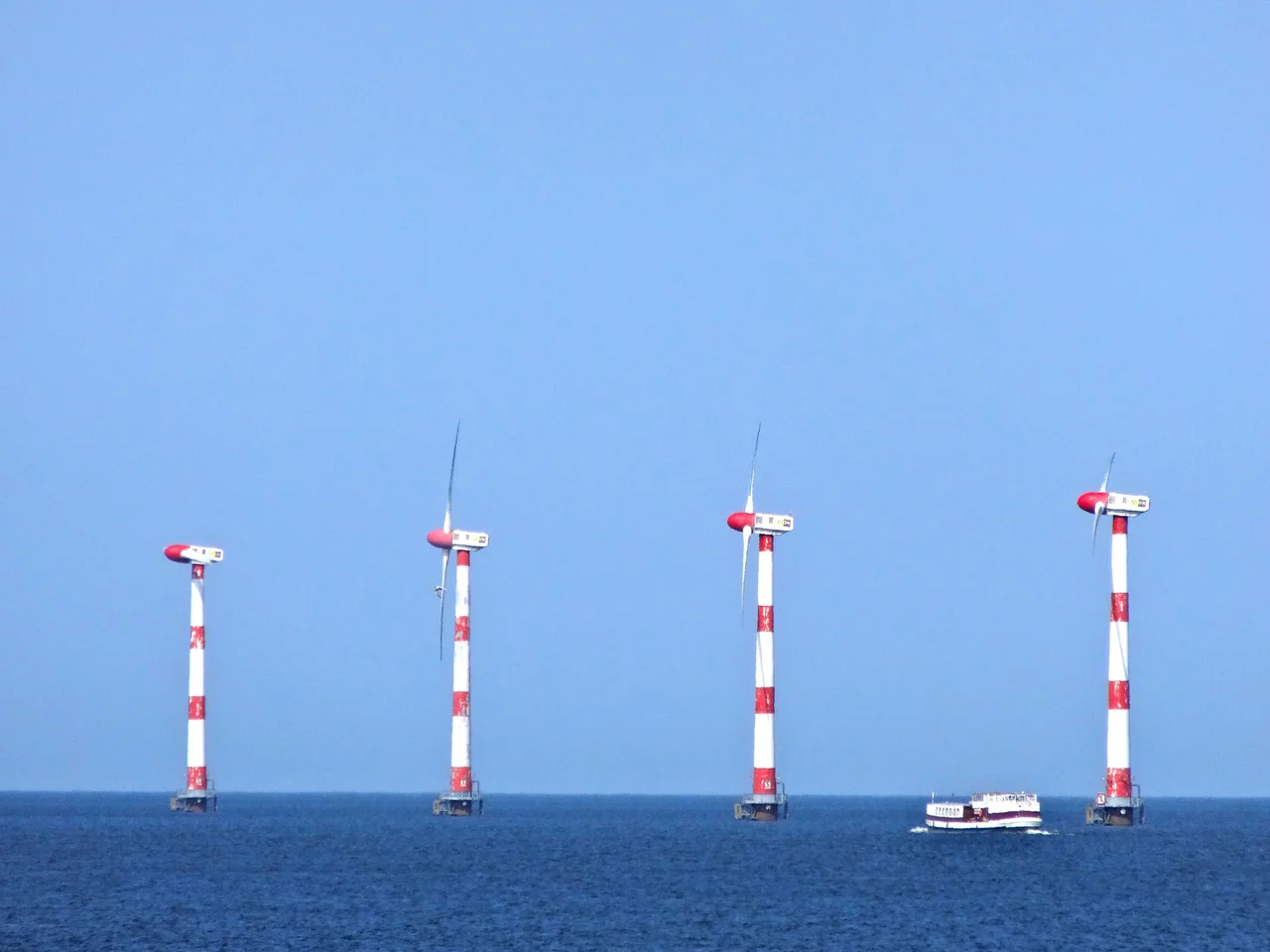
The first Dutch offshore wind farm, called Lely, began construction in 1992 and was finished in 1994. By modern standards it was tiny: four Nedwind turbines of 500 kilowatts each, set just one kilometre from shore in the IJsselmeer, the inland sea created when the Dutch closed off the Zuiderzee in 1932. The farm had a complicated working life. In 2014, one of the turbines suffered metal fatigue and lost both blades of its rotor. The four turbines were dismantled in 2016 after twenty-two years in the water, an early lesson in how brutal salt air and constant rotation are on machines designed to operate forever. Lely never produced significant power, but it taught the country what it would need to do at industrial scale a decade later.
Scale Compresses
The pace and scale of growth in Dutch wind power between roughly 2010 and 2025 is hard to convey without numbers. By December 2013, 1,975 onshore turbines were operating with a combined capacity of 2,479 megawatts. By 2015, capacity had passed 3,000 megawatts onshore, with another 586 megawatts added in that single year. In 2016 the Gemini offshore wind farm switched on all 150 of its turbines, a 600-megawatt facility 85 kilometres from the coast. The largest onshore farm in the country, Noordoostpolder in Flevoland, hits 429 megawatts using a mix of 48 nearshore Siemens turbines (3 MW each) and 38 onshore Enercon E-126 turbines rated at 7.5 megawatts apiece. Each of the Enercon turbines has a hub height of 135 metres, blades that sweep an area the size of a football pitch, and produces as much electricity as a small town consumes. Older turbines are being scrapped or sold into a second-hand market, and one farm that once held 50 turbines now does the same job with 12 larger ones.
The Offshore Bet
The real strategic shift came offshore. The Princess Amalia Wind Farm, commissioned in 2008, used 60 Vestas turbines totalling 120 megawatts and powered 125,000 homes. The Eneco Luchterduinen farm, 23 kilometres off the coast between Zandvoort and Noordwijk, went online in 2015 as a joint venture between Eneco and Mitsubishi. The Borssele project, awarded in 2016, set what was then a world-record-low offshore price of 7.27 euro cents per kilowatt-hour. In March 2022 the Dutch government raised its offshore wind target dramatically: 21 gigawatts by 2030, an amount that would meet roughly 75 percent of national electricity demand. To make that possible, the national grid operator TenneT was tasked with building standardised offshore platforms, either 700-megawatt alternating-current connections for closer farms or 2-gigawatt high-voltage direct-current connections for those further out. Standardisation is supposed to drop the cost of every subsequent farm. Whether it does is the test that the next few years will run.
Turbines Come Down As Well
The growth curve is not perfectly clean. Subsidies were cut sharply in 2011, when the government dropped support from six billion euros a year to one and a half billion. The 2020 onshore target of 6,000 megawatts and the 2023 offshore target of 4,450 megawatts were both missed. In January 2023 a turbine at the Eemmeerdijk farm, one of an unusual two-bladed Nedwind design, collapsed in a strong wind. Public opposition to onshore farms has hardened in some provinces, especially in landscapes where 150-metre towers feel like an imposition on otherwise flat horizons. The country is still arguing about where, exactly, the next generation of wind farms goes. But the long shape of it is settled. The Netherlands built its identity by harnessing wind. After a few centuries of letting that machinery rust, it is rebuilding it at a scale its windmill engineers could not have imagined.
From the Air
The centre point used here, 52.604°N, 4.426°E, sits offshore from Petten on the North Holland coast, in the waters where several of the Netherlands' offshore wind farms are clustered. From the air, the country's wind investment is unmissable: long staggered grids of turbines in the North Sea between the coast and the horizon, with the largest concentrations in the polders of Flevoland east of the IJsselmeer and along the Groningen coast in the north-east. Schiphol (EHAM) lies 40 km south-east, but the nearer general aviation field is Den Helder (EHKD) to the north. Best viewed at low altitude in clear daylight; the white turbine towers and slow-turning blades are visible from far further away than their actual size suggests.
Nearby Stories
- Centre for Research on Multinational Corporations 1.2 km away
- French submarine Amazone (Q161) 4.9 km away
- Hollandse Kust West Offshore Wind Farm 7.4 km away
- Westfries Museum 9.3 km away
- 1996 Texel Douglas DC-3 Crash 10 km away
- Action of 22 September 1914 13 km away
- Hofje Codde en Van Beresteijn 15 km away
- HMS Cressy 20 km away