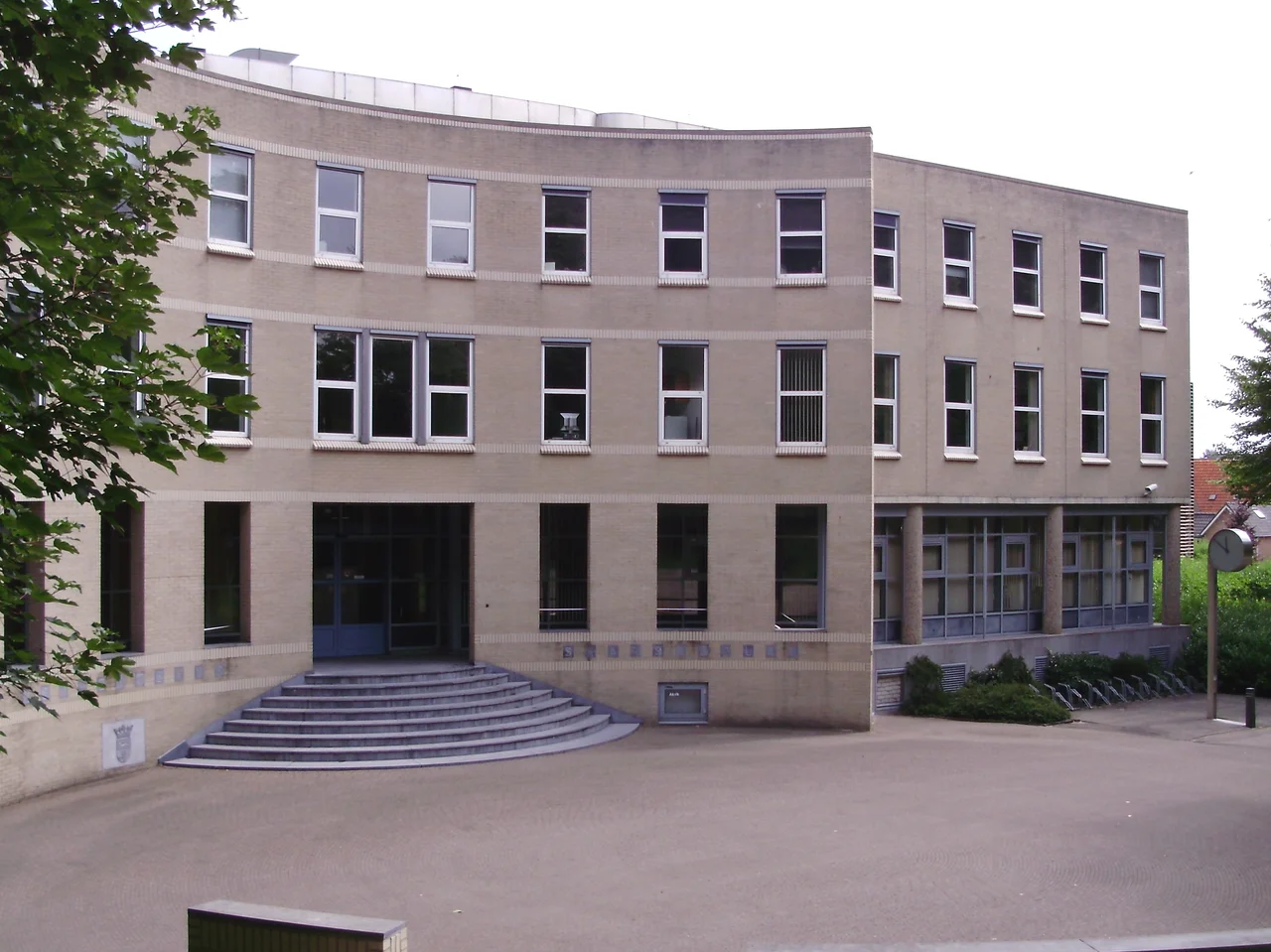

De Fryske Marren
When the new municipality was created on January 1, 2014, it was officially called De Friese Meren, in Dutch. Eighteen months later, on July 1, 2015, it changed its name to the West Frisian translation, De Fryske Marren. Same place, same lakes, same fifty-one settlements, but suddenly the official letterhead spoke a different language. In a country where the second official language is alive but politically modest, the swap was a small, deliberate planting of a flag. This is a municipality that knew which language belonged on its road signs.
An Era of Mergers
Dutch municipal mergers are not unusual. Over the twentieth century the country thinned out its local governments from 1,121 in 1900 to 537 by the year 2000, and the trend has continued. By the early 2010s the rural municipalities of Gaasterlân-Sleat, Lemsterland, and Skarsterlân, three places that had themselves been built from earlier mergers in 1984, had concluded separately that they were too small to operate well. Tourism was their shared bread and butter. Joining forces meant pooling planning, infrastructure, marketing. In 2007 the first two evaluated themselves; the next year all three councils agreed to study a merger. The Dutch national policy at that moment was firm: amalgamation had to come from below, not from The Hague.
Drawing the Lines
Not everyone agreed on the shape of the new entity. The municipality of Heerenveen, to the east, proposed absorbing Lemsterland and Skarsterlân itself, or at least parts of Skarsterlân. The province of Friesland rejected the carve-up, though in the final compromise two villages from Skarsterlân, Nieuwebrug and Haskerdijken, were assigned to Heerenveen. A separate, messier negotiation involved Boarnsterhim, a municipality that had decided it was no longer viable. Its territory was split into four parts: the town of Terherne went to the new entity, the rest divided among Leeuwarden, Heerenveen, and Súdwest-Fryslân. The House of Representatives and the Senate signed off in June 2013, and the new municipality opened for business at the start of 2014.
Lakes, Villages, Olympic Skaters
The fifty-one settlements that fall inside De Fryske Marren run from substantial towns like Joure, Lemmer, and Balk down to hamlets of a few dozen households. The land between them is half water. This is the heart of the Frisian Lakes, and the local economy still leans on visiting boats in summer. It is also, improbably for a rural municipality of modest size, a factory for Olympic athletes. Sjoukje Dijkstra from Akkrum won figure skating gold at the 1964 Winter Games. Speed skaters Rintje Ritsma and Sjinkie Knegt were born within the municipality's boundaries; Ids Postma (born in Dearsum, now Súdwest-Fryslân) and Jorrit Bergsma (born in Oldeboorn, now Heerenveen) hail from neighboring Frisian municipalities. Marit Bouwmeester from Warten won sailing gold in 2016. Gymnast Epke Zonderland from Lemmer took gold on the high bar in 2012. The lakes and the indoor rinks of Friesland produce champions out of proportion to their population.
Speaking Frisian on the Letterhead
The decision to officially Frisify the name eighteen months into the municipality's existence belongs to a longer conversation Friesland has been having with itself, and with the rest of the Netherlands, about how publicly to use its language. West Frisian is co-official with Dutch in the province, taught in schools, used in government, spoken at home by a meaningful fraction of the population. Most other Frisian municipalities have stuck with the Dutch versions of their names on official paperwork, even when the Frisian forms live on the village welcome signs. De Fryske Marren did the opposite. The administrative center, fittingly, is Joure, a town that thinks of itself in Frisian as De Jouwer.
From the Air
De Fryske Marren covers the southwestern corner of Friesland, centered around 52.92N, 5.68E. From cruise altitude the municipality reads as a mosaic of green polderland and silver water, with the Tjeukemeer, Sloten, and Sneekermeer lakes spread across its surface. Drachten Airport (EHDR) lies a short hop to the northeast; Lelystad (EHLE) is south across the IJsselmeer. A low-level orbit at 1,500 to 3,000 feet will reveal the sailing fleets that fill these waters from May through September.
Nearby Stories
- De Steenhuistermolen, Stiens 1.5 km away
- Bovenkarspel 4.1 km away
- Pinksterlanddagen 5.1 km away
- Afsluitdijk 7.1 km away
- Hoogeveen 9.5 km away
- De Marne 10 km away
- Holmes's Bonfire 12 km away
- Urk 16 km away