
Bowra Sanctuary
At first light on the Warrego plains, the air at Bowra is loud. Parrots break from the river gums in screeching flocks, babblers chatter through the mulga, and somewhere overhead a falcon rides the early thermals. For birdwatchers, this 140-square-kilometre patch of southwest Queensland is something close to hallowed ground: more than 200 species have been recorded here - over a quarter of all the bird species regularly seen in the whole of Australia, gathered within a single former cattle run about sixteen kilometres northwest of Cunnamulla. Bowra is not a manicured reserve or a zoo. It is working outback country that one family, and then a conservation charity, decided was worth keeping wild.
Five Generations, One Decision
For five generations the McLaren family ran Bowra as a pastoral property, grazing stock on the Warrego River flats while - whether by design or good fortune - keeping its birdlife and other wildlife largely intact. When the time came to sell, they did something unusual: rather than simply pass it to the highest bidder, they approached the Australian Wildlife Conservancy about protecting Bowra as a permanent reserve. The AWC, a not-for-profit group, now owns and manages the land, and still leans on the McLarens' deep local knowledge of the place. It is a quiet story of stewardship - a family that had spent more than a century reading this country choosing, in the end, to hand its survival forward.
A Quarter of a Continent's Birds
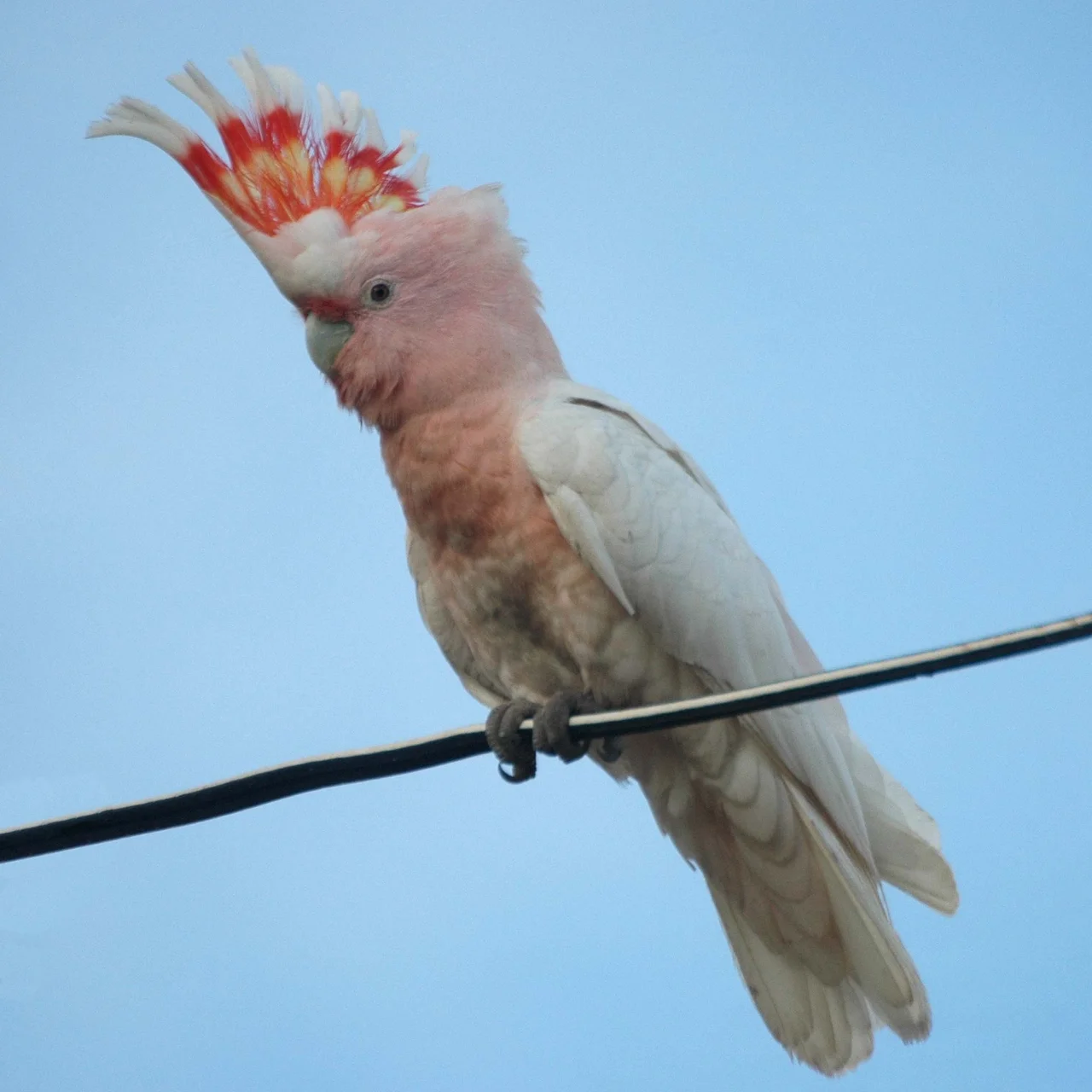
The numbers at Bowra are genuinely remarkable. The reserve hosts 14 species of parrot, all of which breed on the property, including the soft-voiced, nocturnal Bourke's parrot and the spectacular pink-and-grey Major Mitchell's cockatoo. It shelters 18 of Australia's diurnal birds of prey - among them the rare grey falcon, the black falcon, the black-breasted buzzard and the square-tailed kite, several of which nest here. Sought-after specialties draw birders from around the world: Hall's babbler, the chestnut-breasted quail-thrush, the crested bellbird. Of some fifty waterbird species recorded, even the elusive Australian painted snipe has turned up. For a single property in the dry inland, it is an astonishing concentration of life.
More Than Birds
Bowra's reputation rests on its birds, but the reserve protects far more. A wide range of mammals, reptiles and frogs share the mulga and the river country. Tiny carnivorous marsupials hunt through the leaf litter - the fat-tailed and stripe-faced dunnarts, and the rare, long-legged kultarr, a creature few people will ever glimpse. The threatened Yakka skink has been found here, and the land holds suitable habitat for the woma python, a handsome desert snake under pressure across much of its range. In a bioregion where so much has been cleared or grazed thin, Bowra's intact mix of mulga woodland, open plain and seasonal wetland offers refuge to species that are quietly disappearing elsewhere.
A Mecca for Birders
Among Australian birdwatchers, Bowra has acquired near-legendary status - a place spoken of the way anglers speak of a famous river. People drive enormous distances to camp here, rising before dawn to work the waterholes and the mulga in the cool of early morning, hoping to add Hall's babbler or a grey falcon to a lifetime's list. The appeal is partly the sheer tally of species and partly the setting: this is genuine outback, not a contrived attraction, and the birds are wild and on their own terms. Sitting quietly by a Warrego waterhole as the light comes up and the flocks begin to move, a visitor understands quickly why Bowra has become one of the most sought-after birding destinations in the country.
Where Two Rivers Reach
Bowra lies in the Mulga Lands bioregion, on the broad plains where the Warrego and Paroo river catchments meet - a setting that explains its abundance. This is dry country, but it is dry country laced with watercourses and waterholes, and in the outback water is everything. When the rivers run and the wetlands fill, birds and animals converge from across the surrounding plains to drink, feed and breed. Under the Australian Wildlife Conservancy, the old station has become a model for how grazing land can be returned to nature without erasing its history. For visitors who make the long drive in, Bowra offers a rare thing: a chance to stand in working outback and watch a quarter of a continent's birds come to the water.
From the Air
Bowra Sanctuary sits in southwest Queensland at roughly 27.24°S, 146.13°E, about 16 km northwest of Cunnamulla on the Warrego River plains, within the catchment of the Warrego and Paroo rivers. From the air the reserve reads as a mosaic of grey-green mulga woodland, open red plain and the threading lines of creeks and waterholes - greener and more textured than the bare country around it, especially after rain when ephemeral wetlands flash silver. Cunnamulla, with its grid and its river bend, is the obvious nearby landmark to the southeast, and the Mitchell Highway runs past it. The practical base is Cunnamulla Airport (YCMU) just southeast of the sanctuary, with Charleville Airport (YBCV) the larger regional hub well to the north. Low, slow flying in early morning or late afternoon shows the wetlands and timbered river lines to best effect. Visibility is usually excellent in the dry season; watch for daytime thermals and dust over open ground, and dramatic isolated storms in the summer wet.
Nearby Stories
- Dillalah 3.1 km away
- Koroit opal field 26 km away
- Cooladdi 30 km away
- Cheepie, Queensland 79 km away
- Cunnamulla 81 km away
- Carnarvon Gorge 261 km away
- Hornet Bank Massacre 320 km away
- Warialda 453 km away