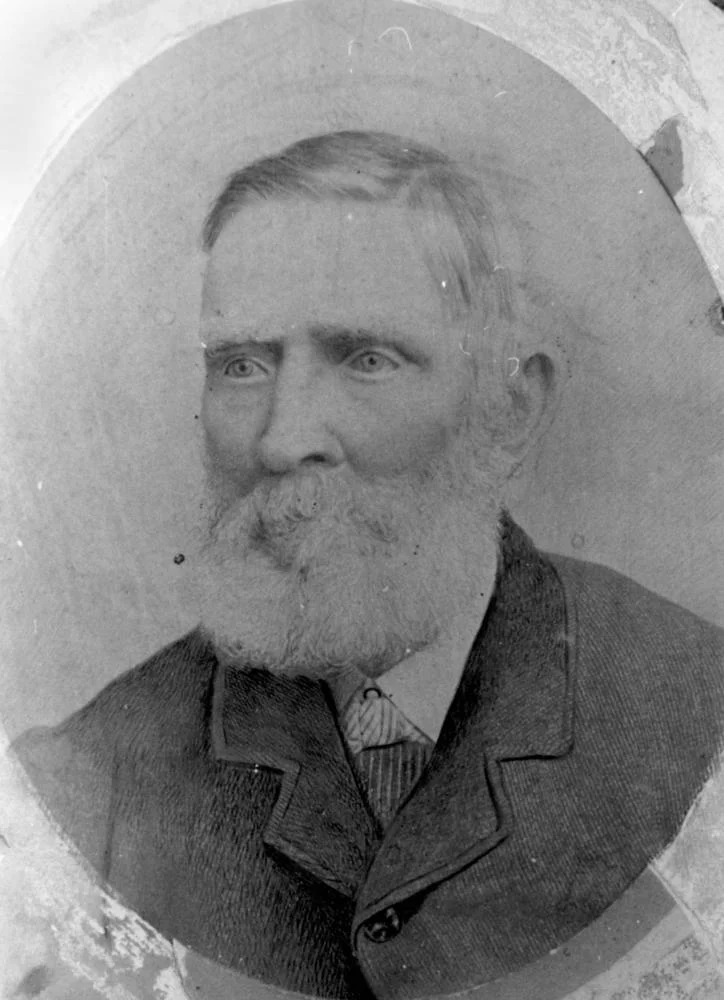

Hornet Bank Massacre
It happened in the small hours of 27 October 1857, on an isolated cattle and sheep station on the upper Dawson River. By dawn eleven people lay dead, eight of them members of one family, the Frasers. It is remembered as the Hornet Bank massacre, and for generations it was told as a story of innocent settlers slaughtered by savages. But the truth on this stretch of frontier was darker and more entangled than that. The killing of the Frasers was an act of retaliation in a war already underway, and the vengeance it unleashed nearly erased an entire people. To stand here is to stand on the ground of one of colonial Australia's worst tragedies, one with no innocent side to comfort us.
An Invasion Without Permission
This is Yiman country, the land of the Iman people, who had lived along the Dawson for thousands of years. From 1847, in the wake of Ludwig Leichhardt's overland expedition, British colonists pushed sheep and cattle onto it without treaty, payment, or consent. To the squatters, the Yiman were simply an obstacle to pastoral empire; to the Yiman, the squatters were invaders barring them from their own land and waterholes. The frontier curdled into violence. Shepherds in outlying huts were attacked and killed, and settlers grew afraid to leave their families. What the colonial press rarely reported was the violence flowing the other way: the casual shootings, the dispossession, and on this station in particular a pattern of abuse so flagrant that John Fraser's widow, Martha, reportedly wrote letters complaining that her own older sons were preying on Yiman women and girls.
The Spark and the Night
By late 1857 the grievances had become unbearable. Twelve Yiman had recently been shot for spearing cattle. Months earlier, an unknown number had reportedly died after being given a Christmas pudding laced with strychnine, an atrocity attributed to the station. Against that backdrop, a Yiman party came to Hornet Bank in the night. The Frasers were not strangers to the country's brutality, but they were also a family: a widowed mother, young children, sons and daughters, who had come to this lonely place in 1854 and lost their father, John, to dysentery two years later. They died in the dark. The only survivor was fourteen-year-old Sylvester, struck down with a waddy, who fell into a gap between bed and wall and lay hidden, then ran twelve miles barefoot and bruised to raise the alarm. He carried the horror of that night for the rest of his life and never recovered from it.
The Vengeance Without End
What followed was not justice but extermination. The eldest son, William Fraser, away in Ipswich that night, returned consumed by grief and rage and was permitted to ride with the Native Police. He killed Aboriginal people almost at will and almost without consequence, an Aboriginal jockey at the Taroom racetrack, two men shot dead on the courthouse steps in Rockhampton after a jury acquitted them, a woman in the main street of Toowoomba whom he accused of wearing his mother's dress. By most accounts he killed more than a hundred people, and the law looked away. He was only one avenger among many. Private death squads with names like 'The Browns' rode the district for weeks, gunning down people who had nothing to do with Hornet Bank; the Native Police followed. Estimates of the Yiman dead in the reprisals run from roughly 150 in the immediate district to hundreds more across the wider region. A whole people was driven to the edge of annihilation for the act of a few.
What Survived, and What Returned
For more than a century the official story held: a memorial raised at the grave site in 1957 on the centenary, the dead Frasers remembered, the Yiman dead unnamed and uncounted. It was widely claimed that the Iman people had simply ceased to exist. They had not. Their descendants endured, carrying their identity through generations of dispossession, and in time they returned to the record not as victims but as claimants. After a native title application begun in 1998 and years of legal process, the courts recognised the Iman people as the traditional owners of country around Taroom, restoring in law what the frontier had tried to destroy. The grave site itself was added to the Queensland Heritage Register in 2008. The Dawson River runs quiet now, but it remembers a tragedy that belonged to everyone who lived and died along it, and a people who refused to be written out of their own land.
From the Air
The site of Hornet Bank station lies near 25.75 degrees south, 149.40 degrees east, on the upper Dawson River in central Queensland's Western Downs, in remote pastoral country near Eurombah, between Wandoan and Taroom. From the air the Dawson River and its tree-lined floodplain wind through dry grazing land and patches of brigalow scrub; the country is sparsely settled and the historic grave site sits on private station land. The nearest fields are at Taroom (YTAM) to the northwest and Wandoan to the south, with Roma Airport (YROM) the main regional aerodrome well to the southwest. This is isolated terrain with little infrastructure; clear, dry conditions are common, and low sun rakes the river country at dawn and dusk.
Nearby Stories
- Carnarvon Gorge 74 km away
- Jimbour Homestead 180 km away
- Cullin-la-ringo Massacre 203 km away
- Bunya Mountains National Park 212 km away
- Charleville 249 km away
- Childers Palace Backpackers Hostel fire 254 km away
- Charleville railway station, Queensland 257 km away
- Jondaryan Woolshed 278 km away