
Bunya Mountains National Park
Every few years the bunya pines bear heavily, and when they do they let fall something extraordinary: green cones the size of footballs, weighing as much as ten kilograms, dropping from forty metres up with force enough to kill. For thousands of years that abundance was not a hazard but an invitation. Aboriginal peoples walked for hundreds of kilometres to be here when the harvest came. Rising abruptly from the flat farmland of the Darling Downs, the Bunya Mountains hold the largest stand of bunya pines left in the world, a green island of rainforest where the air is cooler and the trees are older than almost anything around them.
The King of the Forest
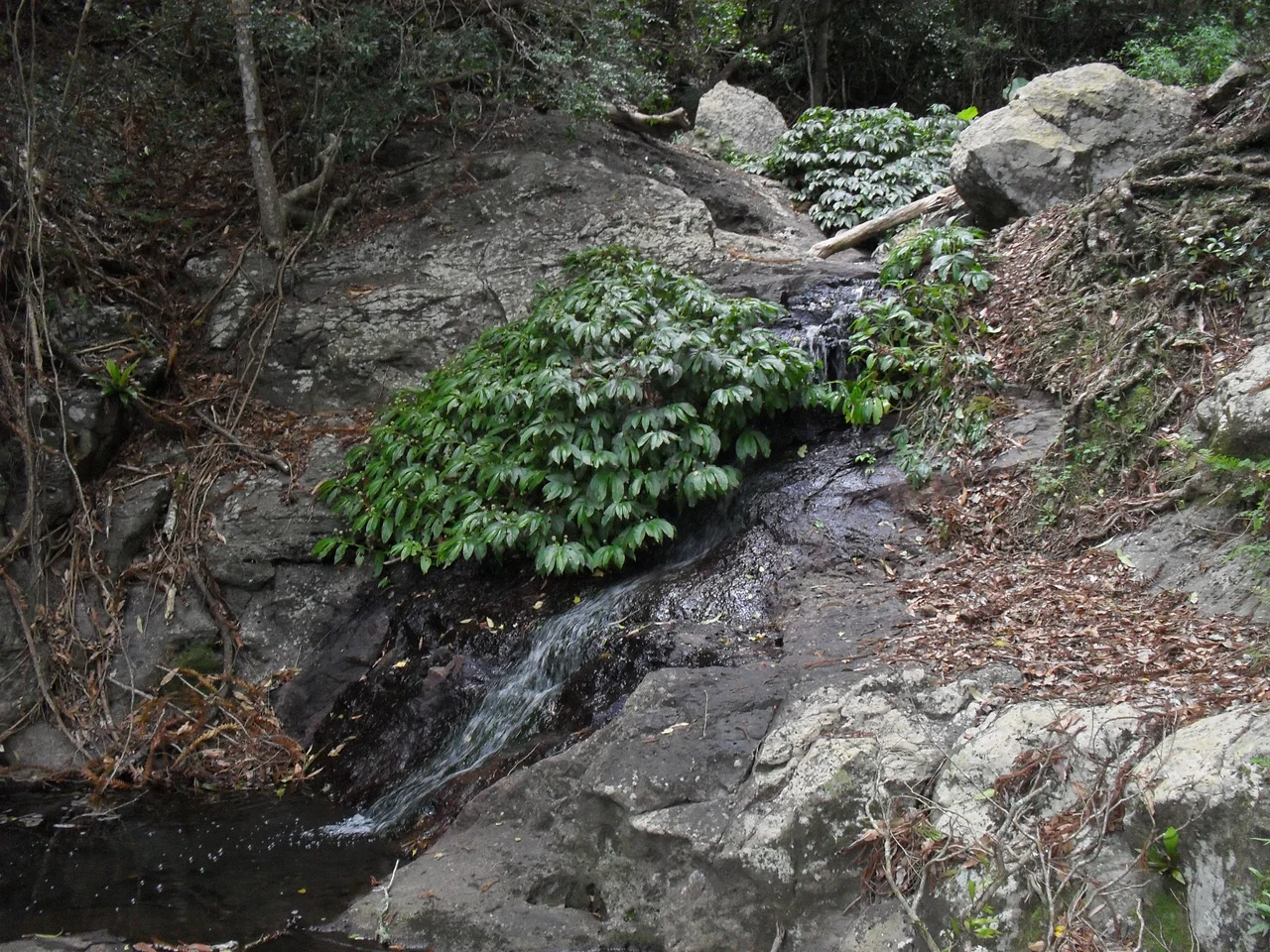
The bunya pine, Araucaria bidwillii, is a survivor from a vanished world. Its closest relatives turn up as fossils from the Jurassic period, when forms like it shaded the dinosaurs, and standing beneath one is a glimpse of deep time. They grow tall and straight, the largest with a single unbranched trunk; the tallest individual still living, here in the park, was measured at 51.5 metres. Their dark, dome-crowned silhouettes give the range its name and its character. Around them grows a layered rainforest that feels worlds away from the dry plains below, home to bright parrots, grazing wallabies, and the satin bowerbird, whose males build elaborate display courts and decorate them obsessively with anything blue they can find, from flowers and feathers to scraps of plastic, in the hope of attracting a mate.
When the Nations Gathered
When the bunya bore its great crops, the harvest drew Aboriginal peoples from across an enormous region to one of the most significant ceremonial gatherings in eastern Australia. The Wakka Wakka, Jarowair, and many other groups, some travelling from far beyond the mountains, came together here to feast on the rich, starchy nuts, to trade, to arrange marriages, to settle disputes, to pass on law, and to renew their connection to one another and to country. The cones hold dozens of nutritious kernels, enough to feed hundreds of people, and the gathering could continue for weeks. This was diplomacy and ceremony on a continental scale, a tradition reaching back countless generations until colonisation severed it. In recent years the spirit of that gathering has been revived through festivals led by Aboriginal Elders, who tend the memory of what these mountains meant, and still mean, to their peoples.
A Cooler, Older World
The Bunya Mountains rise to over 1,100 metres at their highest peaks, and that altitude changes everything. Temperatures here run several degrees below Brisbane's, and even at the height of summer the mercury tends to sit near a comfortable 25 degrees, a relief that makes the walking easy and the rainforest lush. Trails thread through the park to lookouts where the land falls away to the patchwork plains below, and a quiet evening on a cabin terrace will often come with the company of parrots overhead and wallabies grazing in the grass. The forest demands a little respect in return. The giant stinging tree and its nettle cousins are best avoided, ticks are a fact of life, and between December and March, when the great cones come down, it is genuinely wise to keep clear of the bunyas overhead.
Second in the State, First of Its Kind
Protected as Queensland's second-oldest national park, the Bunya Mountains have been recognised since 2010 on Australia's tentative list for World Heritage, a nod to a place that is at once an ecological relic and a profound cultural landscape. There are no buses here, no trains, certainly no airstrip; the roads in are steep and winding, three hours west of Brisbane, and that remoteness is part of the point. The only store sits beside the local tavern, and most visitors who stay bring their own supplies and settle into a cabin or a campsite at Dandabah, Westcott, or Burton's Well. What draws them is not amenity but atmosphere: the hush of an ancient forest, the cool clean air, and the towering pines that have presided over gatherings, harvests, and the slow turning of millions of years.
From the Air
Bunya Mountains National Park centres near 26.80 degrees south, 151.54 degrees east, where a forested range rises sharply more than 700 metres above the surrounding Darling Downs farmland. From the air the dark, dense rainforest canopy of the Bunyas stands out vividly against the cleared, geometric plains on every side, an unmistakable green island; the tallest bunya pines break the canopy line. The nearest fields are Dalby Airport (YBDL) to the west and Kingaroy Airport (YKRY) to the northeast, each roughly 50 to 60 km away; Toowoomba Wellcamp (YBWW) lies to the south. The range can generate its own cloud and cooler conditions, so expect localised weather over the high ground; clear, stable mornings give the best views of the forested escarpment.
Nearby Stories
- Cressbrook Homestead 33 km away
- Jondaryan Woolshed 38 km away
- Thomas Petrie 78 km away
- Noosa National Park 90 km away
- Brennan & Geraghtys Store 149 km away
- Hornet Bank Massacre 198 km away
- Warialda 280 km away
- Inverell 329 km away