
British Empire Exhibition
In 1920, with the First World War barely cold and an empire that already covered roughly a quarter of the planet, the British government decided what it really needed was a show. Not a war, not a budget, but a colossal staged demonstration of imperial reach, and they chose Wembley - then a leafy bit of north-west London - to host it. What rose there over the next four years was the largest exhibition ever staged anywhere in the world: 216 acres, fifty-six pavilions, the world's first purpose-built concrete city, and a stadium so enormous it still stood, dilapidated and beloved, until the year 2003. Twenty-seven million people came through the gates. Many were astonished. Some were appalled. And the people on display - the actual human beings from the colonies the exhibition was meant to celebrate - had a far more complicated experience than any postcard ever showed.
The Concrete City
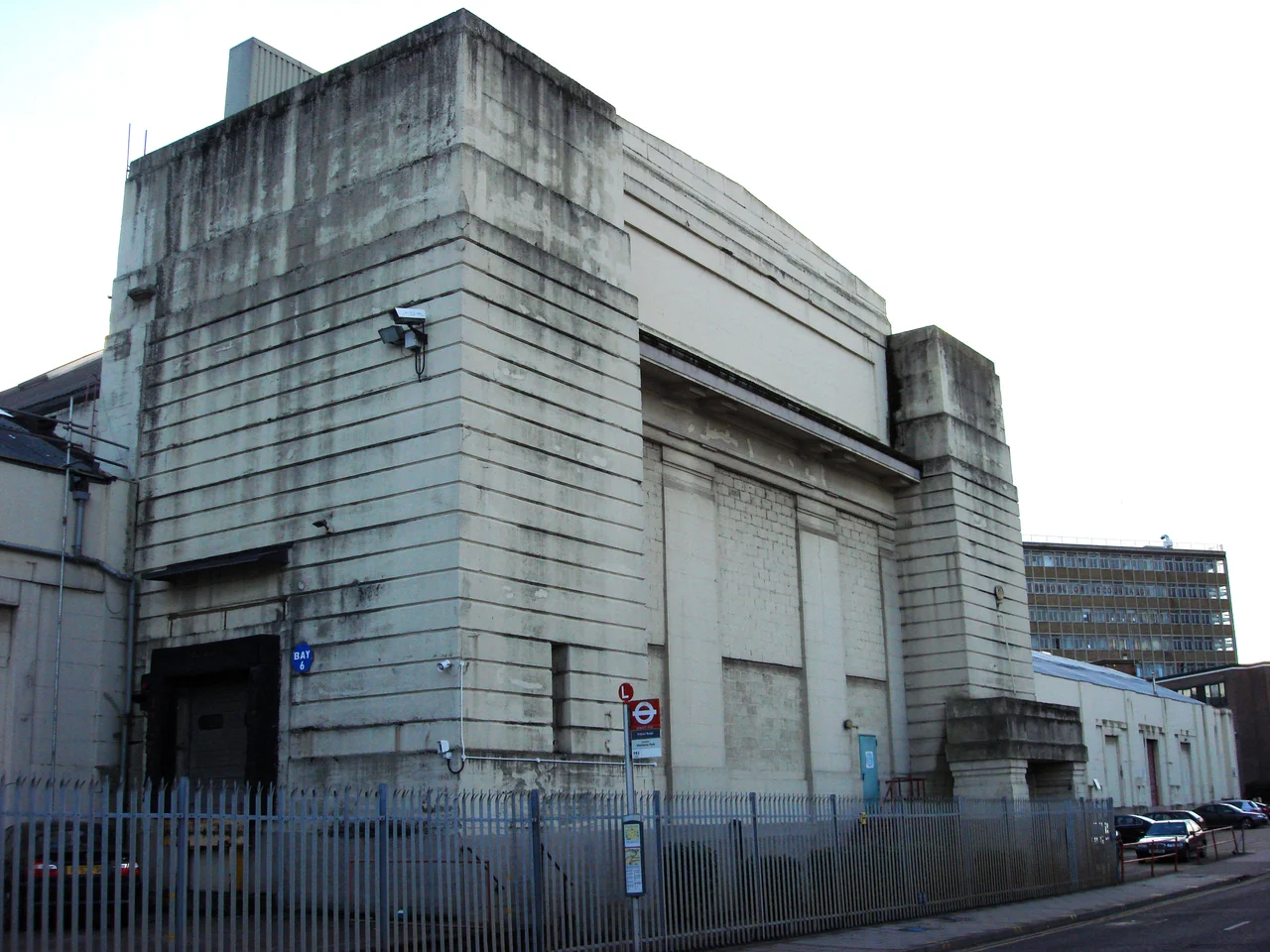
The architects John William Simpson and Maxwell Ayrton, working with the engineer Owen Williams, had a problem. The exhibition wanted dozens of buildings in dozens of styles - an Indian pavilion with towers and domes, a West African pavilion that resembled a North African fort, a Burmese temple, a South African building in Dutch revival - and it wanted them built fast. So they used reinforced concrete, called ferro-concrete at the time, for almost everything. Two thousand workers poured the structures across 1923 and 1924. The Palaces of Industry and Engineering became, briefly, the largest reinforced concrete buildings on Earth. Wembley became, briefly, the first concrete city. Rudyard Kipling was hired to name the roads. The site got Britain's first proper bus station, capable of moving 100,000 passengers a day. And at the centre rose the Empire Stadium - twin-towered, Mughal-Roman in style, holding 125,000 people - which would outlive the exhibition by seventy-eight years.
An Empire on Display
Of fifty-eight colonies and dominions, fifty-six built pavilions. The Irish Free State, newly independent and unimpressed, declined. The Gambia and Gibraltar were absent. What visitors saw was the empire reduced to taster-sized portions and arranged for entertainment. The Canada Pavilion displayed a life-sized statue of the Prince of Wales sculpted entirely in butter and kept cold behind glass. Australia exhibited a sixteen-foot ball of wool and a butter sculpture of the cricketer Jack Hobbs being bowled out by the touring Australian team. Malta's pavilion looked like a medieval fortress. But this part of the exhibition has aged badly, and it should. The West African pavilions featured what was called an African village in which real people - performers brought from the Gold Coast, Sierra Leone, Nigeria - lived and worked in front of paying crowds who came to look at them. They were paid; they had agency; but the framing was unmistakably one of human display. Bengali, West African, and Indian commentators wrote about the exhibition at the time, and not all of them came away charmed.
Diversions
Outside the dignified pavilions sat a funfair the American contractor Frank W. Darling boasted was the greatest pleasure park the world had ever seen, costing some two million pounds. There was a scenic railway called the Great Racer. There was a slope-rider called the Great Switchback. There were dodgem cars, brand new from America. There was a full-scale replica of the tomb of Tutankhamun, two years after the original was opened in Egypt, parked in the funfair because Egypt had just become formally independent and could not very well be exhibited as a colony. There was the Pears' Palace of Beauty, where ten women dressed as historical beauties - Cleopatra, Helen of Troy, Mary Queen of Scots - sat in soundproofed rooms while three-quarters of a million visitors filed past. Bertie Wooster, in a P. G. Wodehouse story, preferred the Green Swizzles at the Planters Bar. He may have spoken for many.
London Defended
For three weeks in May and June of 1925, the stadium hosted one of the strangest displays in inter-war entertainment. Six nights a week, No. 32 Squadron RAF flew Sopwith Snipes over Wembley painted bright red with white lights on the wings and tail. They fired blanks into the stadium crowds. Pyrotechnics dropped from the planes to simulate falling shrapnel. Charges on the ground produced the effect of bombs. They called it London Defended. Less than a decade later, the Blitz would arrive and London would learn what an air attack actually looked like. One of the pilots in the show, Flying Officer C. W. A. Scott, would later win the MacRobertson Air Race from England to Australia in 1934. The Pageant of Empire, with thousands of actors and music composed by Edward Elgar, played to packed houses. An Imperial Scout Jamboree brought thirteen thousand Boy Scouts to camp on the grounds - the largest gathering of Scouts the world had then seen.
What Survived
Financially, the exhibition was a disaster. Eighteen million people came in 1924 and the project still failed to break even. They reopened for a second season; nine million more came and it still lost money. The trade magazine Variety called it the world's biggest outdoor failure. Most of the concrete buildings were meant to be temporary and were eventually demolished, though the Palace of Engineering survived until 1982 and a chunk of the Palace of Industry until the 2010s. The Empire Stadium itself was saved by the entrepreneur Arthur Elvin, who had been hired to clear the site, and it became simply Wembley - the home of English football for the rest of the century. The film The King's Speech opens with the future George VI stammering through a closing-ceremony speech at the exhibition on 31 October 1925. The empire that built Wembley was already, even then, beginning to dissolve. The stadium, rebuilt in 2007, still stands.
From the Air
Located at 51.56 degrees N, 0.28 degrees W in the London Borough of Brent, north-west London. The modern Wembley Stadium, built on the same site, is the most visible landmark - its 134-metre arch is one of the largest single-span roof structures in the world and is illuminated at night, visible from cruising altitude. Nearest airports: EGLL (Heathrow) about 9 nautical miles south-west, EGGW (Luton) about 18 nautical miles north, EGWU (Northolt) about 6 nautical miles west. Best viewed at 5,000-10,000 feet in clear weather.
Nearby Stories
- Stevenage 5.7 km away
- Malling Abbey 5.7 km away
- 1952 Farnborough Airshow Crash 7.7 km away
- Ingatestone Hall 8.2 km away
- Hellfire Caves 9.1 km away
- The Carrington Event: The Solar Storm That Could Happen Again 9.8 km away
- Bletchley Park 16 km away
- Castle Hedingham 23 km away