
The Gurkhas in the Jungle
The telegram from London arrived in December 1962, and within hours British troops were moving from Singapore toward a rebellion they had not expected. The Brunei Revolt against Sultan Omar Ali Saifuddien III was short-lived, but its consequences were not. When the fighting ended, the soldiers stayed. More than six decades later, they are still there -- Gurkha riflemen patrolling the dripping canopy of Borneo's equatorial jungle, training in conditions that most modern armies avoid altogether.
Born from a Revolt
British Forces Brunei traces its origins to a crisis. In December 1962, the North Kalimantan National Army launched a coordinated uprising across the protectorate, targeting government buildings, police stations, and oil installations in the town of Seria. British troops rushed from Singapore to suppress the revolt, and their presence became permanent when the Indonesia-Malaysia confrontation erupted shortly after. Brunei's Sultan needed military support; Britain needed a strategic foothold in Southeast Asia. The arrangement proved durable. When Brunei gained full independence in 1984, the new nation's sovereign chose to keep the British garrison under a renewable five-year agreement. The Sultan pays to help support the British presence, and in return, the forces stand ready to assist Brunei while remaining available for deployment elsewhere with the broader British Armed Forces.
Where the Canopy Never Breaks
The garrison's most distinctive role is jungle warfare training. Brunei's interior -- dense primary rainforest, steep terrain, rivers that flood without warning -- offers conditions that cannot be replicated on any exercise ground in the United Kingdom. The Jungle Warfare Division, part of the Infantry Battle School, runs the Jungle Warfare Advisor's Course from facilities at Medicina Lines. Soldiers who pass the course earn one of the British Army's most respected qualifications. The training area at Sittang Camp sits in the middle of the country just outside Tutong, surrounded by forest so thick that navigating a few hundred meters can take hours. Heat, humidity, and insects are constants. The jungle does not care about rank or reputation; it simply tests whether a soldier can function when soaked, exhausted, and disoriented.
The Gurkha Tradition
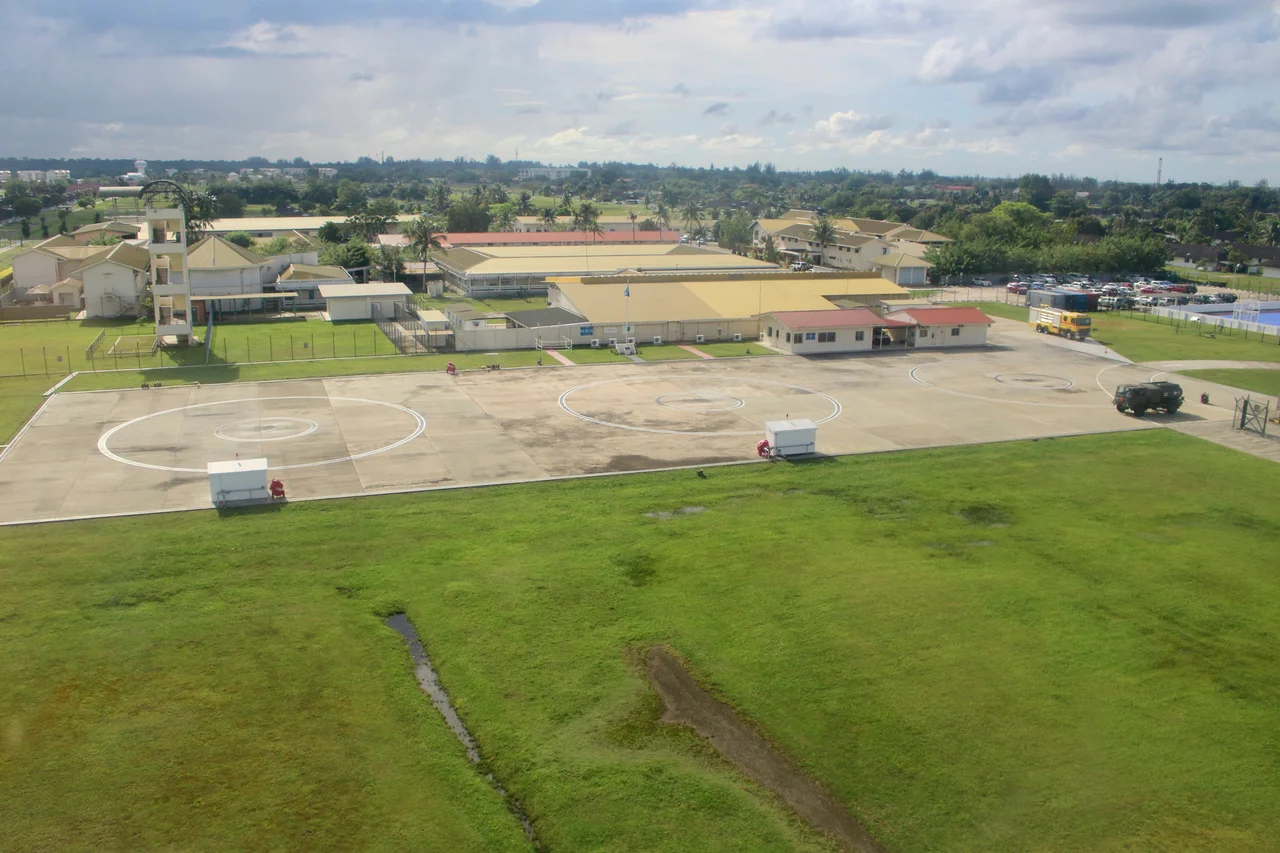
At the heart of the garrison is a battalion of the Royal Gurkha Rifles, rotated every three years. These Nepalese soldiers have served alongside the British since 1815, and Brunei is one of their principal homes. The resident battalion operates as the British Army's acclimatized Far East reserve, a force that can deploy quickly across the region. That capability has been tested repeatedly -- Gurkha units from Brunei have deployed to Afghanistan on multiple occasions as part of Operation Herrick, and to East Timor during the crisis there. Tuker Lines, the garrison's headquarters near the oil town of Seria in Belait District, houses both the Gurkha battalion and the support services that keep the operation running. Medicina Lines, nearby, is home to the training division and to No. 230 Squadron RAF, which operates Puma helicopters that replaced the garrison's older Bell 212 fleet in 2022.
Last Outpost East of Suez
Since the handover of Hong Kong in 1997, the Brunei garrison has become one of Britain's last military footholds in the Far East. The phrase "East of Suez" once described a vast network of bases stretching from the Middle East to Singapore and beyond. Today that network has contracted to a handful of installations: Diego Garcia in the Indian Ocean, HMS Juffair in Bahrain, a logistics base in Oman, a support unit in Singapore, and the garrison in Brunei. The arrangement suits both parties. Brunei gains a trained military force and a visible security relationship with a major power. Britain retains jungle training grounds that would otherwise not exist and a deployable reserve positioned in a strategically important region. It is a quiet posting -- no combat zone, no headlines -- but the soldiers who serve here know that the jungle is always demanding, and that the next deployment order could arrive at any time.
From the Air
Located at 4.61N, 114.31E near Seria in Brunei's Belait District. From the air, look for the cleared military compounds of Medicina Lines and Tuker Lines adjacent to the oil town of Seria along the coast. The garrison sits between dense jungle interior and the South China Sea. Nearest airports: Brunei International Airport (WBSB) approximately 80 km northeast. Recommended viewing altitude: 3,000-5,000 feet for camp layout; higher for regional context showing jungle training areas extending inland.
Nearby Stories
- The Sultan's Gurkhas 2.4 km away
- The Town That Splits a Nation 12 km away
- Kelabit Highlands 20 km away
- The Billion-Dollar Playground That Michael Jackson Opened 45 km away
- The Ants of Borneo 56 km away
- Niah National Park 66 km away
- Similajau National Park 156 km away
- Luconia Shoals 185 km away