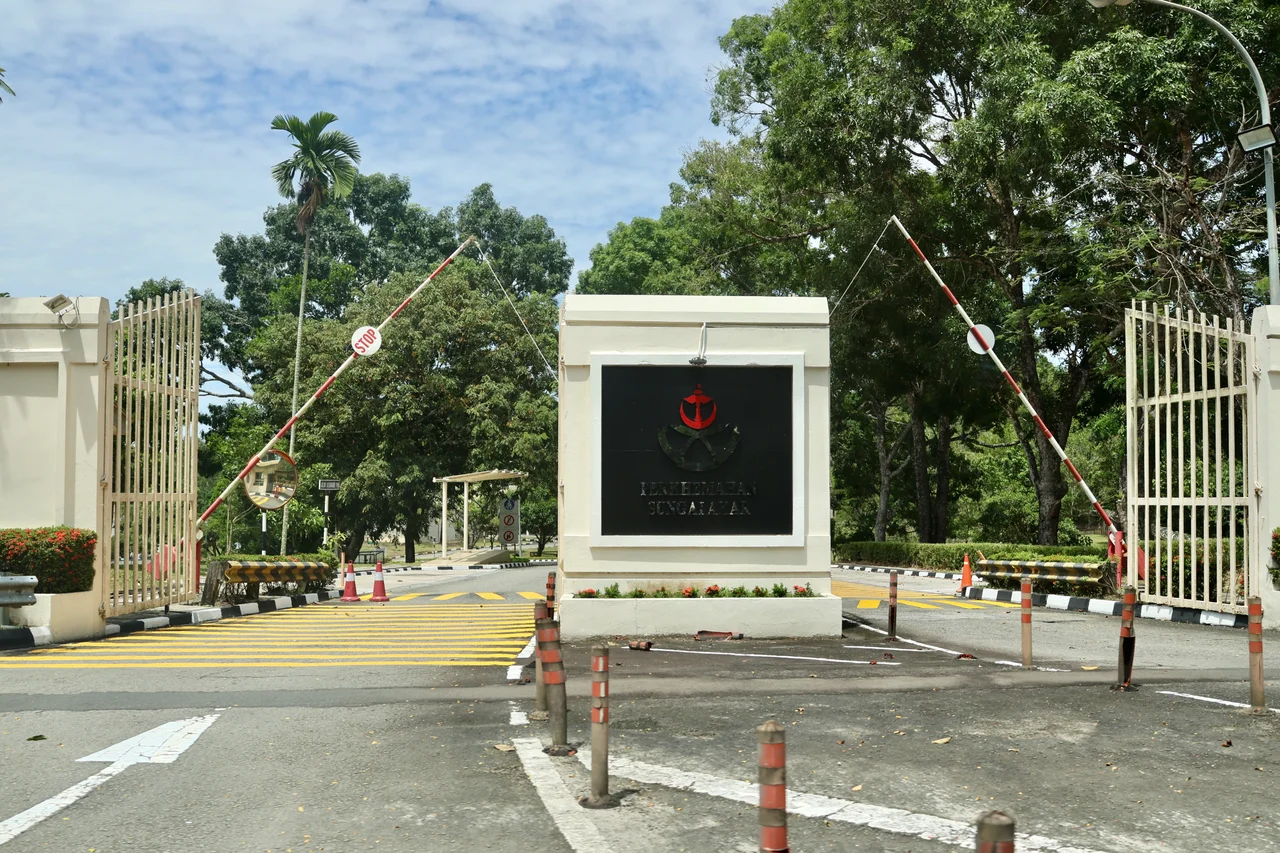

The Sultan's Gurkhas
In 1973, political prisoners from the failed Brunei revolt of 1962 escaped from Berakas Prison, reportedly with the help of a foreign warden. The breakout shook the small sultanate. Brunei's own police and military regiment were already stretched thin, and the escape exposed a vulnerability the ruling family could not afford. The Sultan turned to a solution with deep roots in the British colonial world: Gurkha soldiers from Nepal, warriors whose reputation for loyalty and ferocity had been forged across two centuries of imperial service. Within a year, the first contingent of ex-British Army Gurkhas arrived in Brunei, beginning a relationship that endures to this day.
From the Himalayas to the South China Sea
The Gurkha tradition of foreign military service stretches back to the Anglo-Nepalese War of 1814-1816, when the British were so impressed by their opponents that they began recruiting them into the British Indian Army. When the Indian subcontinent gained independence in 1947, a tripartite agreement between Britain, India, and Nepal divided the Gurkha regiments: six went to the Indian Army, four to the British Army. Those transferred to Britain served across the empire's remaining outposts, from Malaya during the Emergency to Hong Kong and Singapore. It was from these far-flung postings that Brunei drew its recruits. The sultanate formally established the Gurkha Reserve Unit in 1974, building it from former Royal Gurkha Rifles troops through an extensive recruiting campaign launched in 1976. Unlike their counterparts in the British Army, these Gurkhas answered directly to the Sultan of Brunei.
A Praetorian Guard in the Tropics
The comparison to Rome's Praetorian Guard is not accidental; military analysts have used the term to describe the unit's role. Approximately 2,000 Gurkha soldiers serve in Brunei, tasked with protecting the royal family, the citizenry, and the country's major oil installations. The unit falls under the Ministry of Home Affairs rather than the military proper, and its commandant is personally selected by the Sultan. Every member holds the legal powers of a police officer and is classified as a government employee under Brunei's Penal Code. They are well-paid and well-housed, a standing professional force in a country with a population of roughly 450,000. Prior to Brunei's independence in 1984, their deployment was governed by a confidential agreement between Brunei and Whitehall, and the battalion remained in the sultanate at Brunei's expense under that arrangement.
A Forgotten Rebellion
The relationship between the Gurkhas and their employer has not always been smooth. At one point, more than 2,400 of the approximately 2,500 Gurkha soldiers in Brunei organized, forming a governing committee and subcommittees to press their grievances. They submitted a written memorandum requesting better treatment, including an end to what they described as maltreatment by officers and a demand for higher pay. One of their most dramatic requests was the abolishment of the GRU itself. The memorandum was rejected. In a remarkable act of collective defiance, the Gurkhas returned all their weapons to the Brunei government in a single night. The standoff resolved quietly: the unit resumed its security role, and the episode faded from public memory, a footnote that the Nepali Times later described as a forgotten Gurkha rebellion.
Guarding Brunei's Future
Today the Gurkha Security Unit, as it has been renamed, comprises three main branches: the Guard Unit, the Support Unit, and a K-9 Section. The K-9 program expanded in 2019, when Dog Force Australia provided a Train the Trainer Course to six seasoned handlers, focusing on explosive detection, search, and patrol duties. The unit rotates personnel from its headquarters, with members historically moving through postings at Seria, home to Brunei's oil fields. Recruitment remains bound by strict terms: no member may serve past age 40 without the Minister's consent and the Commandant's recommendation. Service contracts define the relationship from start to finish. For the young Nepali men who make this journey, the posting represents something complicated: a well-compensated career far from home, defending another nation's wealth, carrying forward a tradition that began when their ancestors faced the British and earned their respect through combat rather than surrender.
From the Air
Located at approximately 4.94N, 114.97E in Bandar Seri Begawan, the capital of Brunei. The unit operates in the capital area and at oil installations near Seria. Brunei International Airport (WBSB) is the nearest major airfield, approximately 10 km northeast. Overflying at 3,000-5,000 feet provides views of the compact capital along the Brunei River. The South China Sea coastline and dense tropical forest define the landscape.
Nearby Stories
- Labuan 9.7 km away
- Sabah State Railway 12 km away
- Brunei's Billion-Dollar Bet on Urea 16 km away
- Brunei's Green Jewel Across the Bay 18 km away
- Where the River Meets the Sea 26 km away
- Starcevich Monument 38 km away
- Raid on Kalabakan 206 km away
- Luconia Shoals 238 km away