
The Tallest Building in Brunei Town Was Built by Teachers
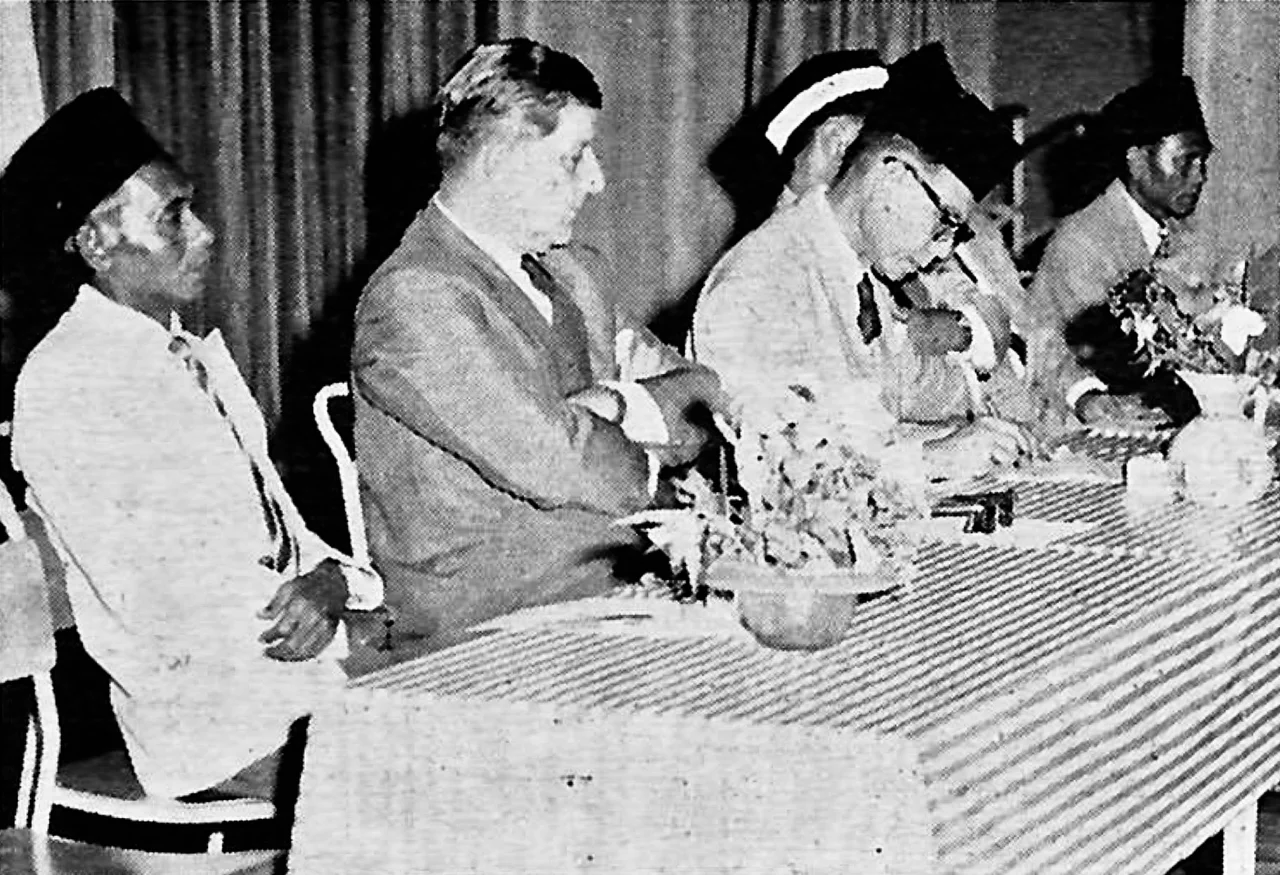
In 1965, Bandar Seri Begawan got its first elevator. It was not installed by a property developer or a government ministry. It rose inside a six-story tower on the banks of the Kianggeh River, built entirely by an organization of schoolteachers. The Brunei Malay Teachers Association -- known by its Malay acronym PGGMB -- had spent three decades accumulating an influence that far exceeded what anyone might expect from a professional union. Founded in 1937 by a handful of graduates from the Sultan Idris Training College across the water in Perak, PGGMB would go on to birth Brunei's first nationalist movement, challenge the colonial government in the State Council, and construct a real estate portfolio spanning schools, apartment buildings, and investments stretching from Kuala Belait to Sydney.
Graduates with a Purpose
The story begins at the Sultan Idris Training College in Tanjong Malim, Perak, where young Bruneians traveled to earn teaching credentials in the 1930s. Marsal Maun led the founding effort, joined by Othman Bidin, Basir Taha, and Pengiran Muhammad Ali. These were not radicals -- they were educators who wanted better pay and professional standing for Malay teachers in a country still administered by British Residents. By 1938, they had launched a magazine to keep far-flung members connected and share educational resources across Brunei's scattered communities. The association gained legal recognition in 1939, adopting a democratic leadership structure that was itself a quiet statement in a sultanate. What set PGGMB apart from a typical professional body was how seriously its founders took collective self-improvement -- not just in pedagogy, but in economic independence and political awareness.
From Classrooms to the State Council
After World War II reshaped Southeast Asia, PGGMB reshaped itself. The association helped establish BARIP, Brunei's first nationalist organization, seeding the country's independence movement from within a teachers' lounge. When the 1948 Societies Enactment curtailed political organizing and dissolved BARIP, PGGMB pivoted but did not retreat. It became one of the most vocal critics of the government, filling a void that more overtly political groups could no longer occupy. By the 1950s, PGGMB members had won seats on the State Council, carrying their advocacy from staff rooms into legislative chambers. The teachers' union had quietly become one of the most consequential civic institutions in Brunei -- a transformation no one would have predicted when Marsal Maun gathered his small circle of SITC alumni in the mid-1930s.
A Cooperative Empire
Pengiran Muhammad Ali understood that political influence without economic muscle was fragile. On 14 January 1953, he registered PGGMB's cooperative savings fund, requiring every new member to contribute at least B$20 monthly. From that modest seed capital grew an enterprise of startling ambition. The association built the six-story Wisma Puri and Wisma Jaya on Jalan Pemancha in 1991, acquired store units in Beribi, purchased houses in Kampong Sungai Hanching, and founded schools in Sungai Akar, Lambak Kanan, and Madang. A travel agency followed in 1997. By 2000, PGGMB was investing in the Australian Technology Park in Sydney -- a teachers' cooperative from Borneo placing bets on the knowledge economy half a world away.
The Tower on the River
The association's most visible legacy stands on Jalan Kianggeh, where the river bends through the capital's heart. On 2 August 1963, Pengiran Bendahara Pengiran Muda Hashim laid the foundation stone for the Brunei Malay Teachers Building, a six-story structure budgeted at under B$1,100,000. Sultan Omar Ali Saifuddien III presided over the silver jubilee celebration and building opening on 26 February 1965. For the remainder of the decade, it was the tallest and most modern building in the city -- remarkable for any organization, extraordinary for a teachers' union. The original tower was eventually demolished and rebuilt in the 21st century as a 17-story structure, officially opened in May 2002 at a cost of B$30 million. Today it houses commercial spaces, cineplexes, service apartments, offices, and a conference hall, a vertical monument to what collective action can build when teachers decide they want more than a staff room.
Still Teaching, Still Building
As of 2005, PGGMB counted over 2,500 members among its ranks -- teachers and educational officers united under the same banner their founders raised nearly seven decades earlier. The association's goals have not changed in their essentials: unify Malay teachers, ease their financial burdens, elevate their social standing, and advance education across Brunei. What has changed is scale. The cooperative that once pooled B$20 monthly contributions now manages a portfolio of properties, schools, and investments. The 17-story headquarters tower looms over the Kianggeh River, dwarfing the six-story original that once seemed impossibly ambitious. In a nation where oil wealth tends to dominate the narrative of prosperity, PGGMB offers a different story -- one built on chalk dust, savings books, and the stubborn conviction that educators deserve to shape more than curricula.
From the Air
Located at 4.89N, 114.94E in the heart of Bandar Seri Begawan, Brunei. The PGGMB headquarters tower is visible along the Kianggeh River waterfront. Nearest airport is Brunei International Airport (WBSB), approximately 8 km northeast. The building stands out among the low-rise commercial district of Pusat Bandar. Best viewed from low altitude approaches over the Brunei River.
Nearby Stories
- From Residency to Memory 28 km away
- Twenty Years on the Seattle Run 30 km away
- The Abode of Peace on Borrowed Coastline 31 km away
- USS Salute: The Minesweeper That Found the Last Mine 33 km away
- The Ants of Borneo 50 km away
- Sabah State Railway 55 km away
- Starcevich Monument 74 km away
- Luconia Shoals 209 km away