
Twenty Years on the Seattle Run
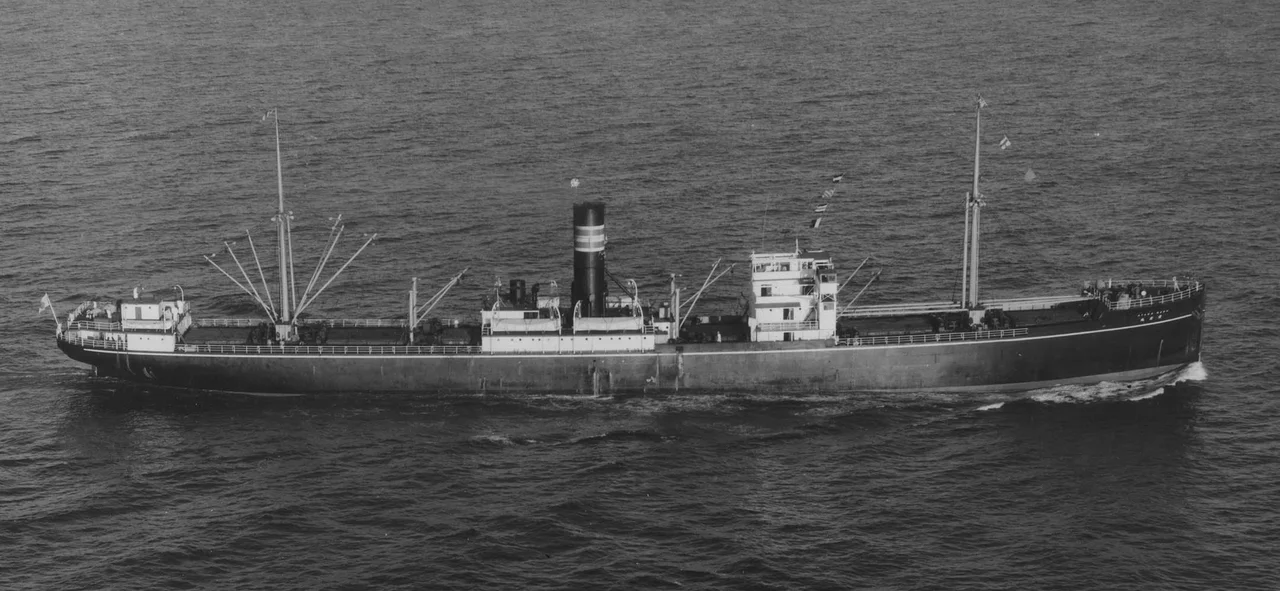
For nearly two decades, the Atago Maru was a creature of routine. She loaded cargo at Yokohama or Kobe, steamed across the North Pacific, and unloaded at Seattle -- one of a fleet of Nippon Yusen freighters that stitched Japan to the American West Coast with regular sailings through the 1920s and 1930s. Built in Glasgow by Lithgows & Sons in 1924, she was among the first diesel-powered cargo ships under Japanese registry, her twin Sulzer engines a sign of the industry's shift away from coal-fired steam. Nobody building her on the Clyde would have guessed she would end up an oil tanker, sunk by B-24 bombers, resting on the mud off Borneo.
Scottish Steel, Japanese Flag
Atago Maru slid down the ways at Glasgow on 17 June 1924, yard number 762, and was completed five months later. At 134.1 meters between perpendiculars with a beam of 17.4 meters, she was a substantial vessel for her era. Her twin Sulzer diesel engines, rated at 2,000 horsepower, drove two propellers and gave her a cruising speed of 13 knots -- modest but economical, which was the point. Diesel engines burned less fuel than steam boilers and freed cargo space that coal bunkers would otherwise claim. Nippon Yusen, Japan's largest shipping line, was modernizing its fleet, and ships like Atago Maru represented the transition. She was assigned to the trans-Pacific route between Kobe, Yokohama, and the ports of the American and Canadian West Coast, where she found particular success on the Seattle run.
War Reshapes Everything
When Japan attacked Pearl Harbor in December 1941, Atago Maru's peacetime career evaporated. The trans-Pacific trade routes she had plied for seventeen years closed overnight. By August 1942, she was sailing military convoys from Cap Saint Jacques in Vietnam. That December, the Imperial Japanese Navy requisitioned her for conversion to an emergency oil tanker at Sasebo Naval Arsenal. Japan was desperate for fuel. Its war machine consumed petroleum at rates its domestic production could never match, and tanker losses to Allied submarines were mounting. Atago Maru emerged from conversion in February 1943, her cargo holds reconfigured to carry crude oil. The vessel that once hauled manufactured goods between continents now shuttled fuel between refineries and frontline ports.
Running the Gauntlet
From 1943 through late 1944, Atago Maru sailed a dangerous web of convoy routes connecting Japan, Formosa, the Philippines, and Borneo. Each voyage grew more hazardous as American submarine patrols intensified. In August 1944, sailing with Convoy MI-13, she watched a U.S. submarine sink one of her convoy mates near Formosa. Days later, departing Manila for Miri, submarines struck again, sinking two more merchant ships from the same convoy. On her next round trip with Convoy MI-25 in November, three more vessels were lost to submarine attack on the approach to Miri. Atago Maru survived each engagement, but the attrition was relentless. Japan's merchant fleet was being bled dry, and the tankers that remained were the most urgent targets -- without fuel, the warships could not move.
Last Anchorage at Lutong
On 28 November 1944, Atago Maru lay at anchor just offshore of the Lutong oil refinery near Miri, Borneo. Consolidated B-24 Liberator bombers of the U.S. Thirteenth Air Force found her there. The bombers struck, and the ship that had survived two years of submarine-haunted convoys went down within sight of the refinery she had come to serve. She settled upright on the seabed in just 14 meters of water, about a mile offshore. For years afterward, her masts and superstructure protruded above the surface. Monsoon waves gradually battered the exposed structure apart, and by the 1980s the last visible remnants slipped beneath the waterline.
A Reef with a History
Today, Atago Maru is one of the most popular dive sites in Sarawak. The wreck lies about twenty minutes by boat from Miri, accessible to recreational divers of moderate experience. At 100 meters long, she is large enough to explore across multiple dives, and visibility in the area ranges from 20 to 40 meters depending on weather and currents. Moray eels thread through her rusted corridors. Schools of jacks and barracudas patrol above her decks. Coral has colonized her hull plates, transforming wartime steel into living reef. The ship that crossed the Pacific hundreds of times, that carried freight and then fuel through a war that consumed her world, has found her final use -- not as cargo hauler or tanker, but as habitat. The sea has made something new of what the war left behind.
From the Air
Located at 4.483N, 114.000E approximately one mile offshore from Lutong, near Miri, Sarawak. The wreck lies in shallow water (14 meters / 46 feet) and is not visible from the surface, but dive boats frequently mark the site. From the air, look for the Lutong coastal area north of Miri along the Sarawak coast. Nearest airport: Miri Airport (WBGR), approximately 15 km south. Recommended viewing altitude: 2,000-3,000 feet to see the offshore dive area in relation to the Lutong refinery coastline.
Nearby Stories
- The Last Cathedral of Trees 5.8 km away
- The Black Lake and the White Crocodile 15 km away
- The Billion-Dollar Playground That Michael Jackson Opened 33 km away
- Sarawak Chamber 34 km away
- Where the River Meets the Sea 58 km away
- Similajau National Park 95 km away
- Luconia Shoals 170 km away
- Crown Colony of Sarawak 206 km away