
The Telegram That Kept a Nation
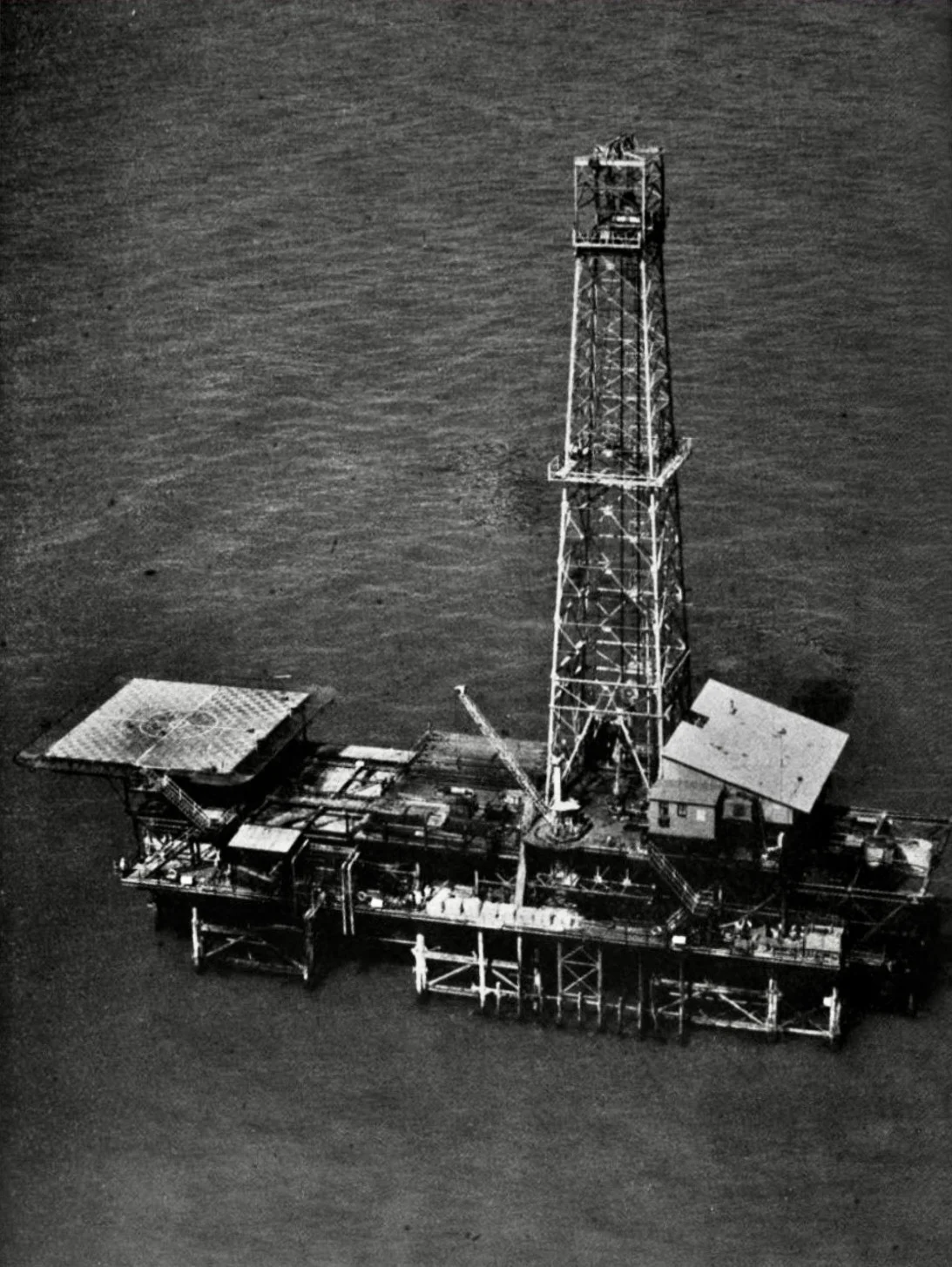
While Sultan Omar Ali Saifuddien III sat in meetings with the Malayan government in Kuala Lumpur, debating whether Brunei should join the new Federation of Malaysia, a telegram arrived from the oil fields back home. Brunei Shell Petroleum had struck a major commercial discovery at the Southwest Ampa Field, offshore in the South China Sea. The company's message carried an implicit warning: joining Malaysia could mean surrendering control of these very resources to the Federation. The Sultan chose to stay out. That decision -- made in 1963, shaped by geology as much as politics -- defined Brunei's independence and its extraordinary per-capita wealth for generations to come.
Prospectors in the Jungle
The story begins not with a gusher but with a string of failures. In 1922, the British Malayan Petroleum Company was established under the Royal Dutch-Shell group and granted mining and prospecting rights across Brunei, paying a royalty of two shillings per ton to the government. BMPC began drilling at Labi, in Brunei's interior, where previous companies had found nothing. The jungle was unforgiving and the results were no better. After years of frustration, the company shifted its focus to the coastal lowlands between the Seria and Bera rivers. In April 1929, the drill bit finally found what the prospectors had been searching for. The Seria oil field would become one of the most productive in Southeast Asia, and the small coastal town that grew around it would define Brunei's economy for the next century.
A Company Becomes a Country's Engine
In 1957, BMPC was reorganized and registered locally as Brunei Shell Petroleum, a name the Sultan personally approved. The rebranding was more than cosmetic. It signaled that Brunei intended to be a partner in its own petroleum industry, not merely a territory where foreign companies extracted resources. BSP's exploration expanded from Seria to Labi, Tutong, and Brunei Town -- now Bandar Seri Begawan -- and pushed offshore in 1952. The 1962 Brunei Revolt tested the arrangement when TNKU rebels targeted BSP's oil installations in Seria alongside government buildings and police stations. British troops suppressed the revolt, but the attack underscored how deeply oil was woven into the country's political fabric. By 1963, BSP had exchanged older, less productive concessions for new ones covering roughly 4,000 square kilometers of continental shelf, plus an additional 680 square kilometers around the Seria field.
Oil, Power, and the Sultan's Gambit
The Bruneian government's relationship with BSP evolved steadily from dependency toward partnership, then toward control. In 1973, the government acquired a 25 percent stake. By 1975, the arrangement was formalized as a 50-50 joint venture with Royal Dutch Shell. In 1985, the government increased its holding to a full 50 percent. Security for Shell's operations was supported by a battalion of British Gurkha troops stationed in the country, with Brunei covering their expenses. The government officially denied any connection between the defense arrangement and Shell's concessions, though the symbiosis was hard to miss. A Petroleum Unit under the Prime Minister's Office shaped policy on production, conservation, and pricing. In 1993, the Brunei Oil and Gas Authority was created to set output levels and grant concession rights, further consolidating state oversight.
Ten Thousand Square Kilometers
By 1997, BSP held concessions covering 10,107 square kilometers, 73 percent of them offshore. Despite the presence of competitors -- Jasra-ELF, Sunray Borneo Oil Company, Superior Oil, Clark Brunei Oil, and Woods Petroleum -- BSP dominated exploration and production. The company had grown into a conglomerate of five interlocking businesses. BSP itself handled core exploration and production. Brunei Shell Marketing sold petroleum products domestically. Brunei LNG, a three-way venture with the government and Mitsubishi, operated the Lumut liquefaction plant. Brunei Coldgas managed LNG marketing, and Brunei Shell Tankers shipped cargoes to Japan. The first LNG shipment had left Brunei for Japan in 1972, and the trade became a pillar of both nations' energy strategies.
Still Drilling, Still Finding
BSP's story did not end with its 20th-century dominance. In 2001, the company installed a 40-inch pipeline, the largest in Borneo at the time. In 2009, the Bugan field delivered first oil just 20 months after discovery, developed using standardized platform designs. In 2011, BSP found oil in the deepwater Geronggong prospect, roughly 100 kilometers offshore in 1,000 meters of water -- its deepest find. And in April 2017, the company made its first onshore oil discovery in 37 years at the Layang-Layang Well in the aging Seria field, proof that the ground which started it all still had secrets to yield. The Billionth Barrel Monument, erected in Seria in 1991, marks a milestone that now looks modest against the cumulative total. BSP also sponsors the Brunei Shell Joint Venture Scholarship Scheme, established in 1972, which funds undergraduate education for Bruneian students -- a small acknowledgment that oil wealth, to endure, must eventually become something else.
From the Air
Located at 4.61N, 114.29E near Seria in Brunei's Belait District. From the air, the Seria oil field is visible as a dense network of pump jacks, pipelines, and tank farms along the coast, with offshore platforms dotting the South China Sea. The Billionth Barrel Monument is a landmark near Seria town. Look for the Anduki Airfield used by BSP's helicopter fleet, and the Lumut LNG plant further along the coast. Nearest airport: Brunei International Airport (WBSB) approximately 80 km northeast. Recommended viewing altitude: 5,000-10,000 feet for the full extent of onshore and near-shore operations.
Nearby Stories
- The Sultan's Gurkhas 2.4 km away
- The Town That Splits a Nation 12 km away
- Kelabit Highlands 20 km away
- The Billion-Dollar Playground That Michael Jackson Opened 45 km away
- The Ants of Borneo 56 km away
- Niah National Park 66 km away
- Similajau National Park 156 km away
- Luconia Shoals 185 km away