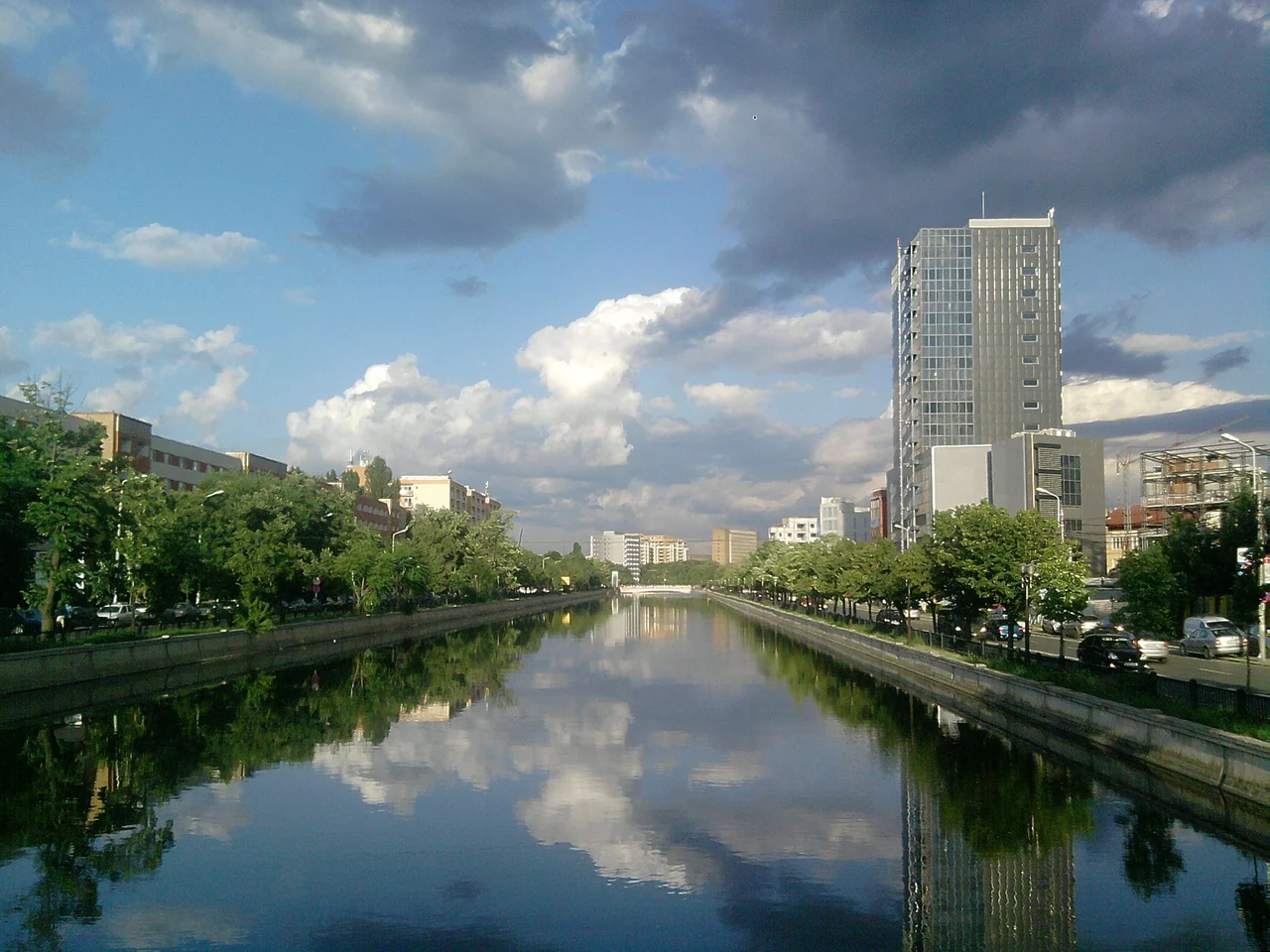

Bucharest
In Romanian, the word stem bucurie means joy. The legend says a shepherd named Bucur founded a settlement on the banks of the Dambovita and gave it his name, so that in Romanian Bucuresti carries the buried sense of city of joy. The legend is probably half-true, half-made up. The shepherd may have lived; he may not. Either way, the city he supposedly founded has been called many things since the first written mention of it in 1459 - Little Paris, the Paris of the East, the most utopian Communist project this side of Pyongyang, a shopping mall economy, a tech boom. The joy in the name keeps surfacing, even after the worst of the demolitions.
Vlad's Citadel, Then a Capital
The city first appears in writing as the Citadel of Bucuresti in 1459, a fortified seat for the ruler of Wallachia. That ruler, in the same year, was Voivode Vlad III - the man Western Europe would later remember as Dracula and Romanians remember as Vlad the Impaler, defender of the realm against the Ottoman Turks. The Old Princely Court, Curtea Veche, still stands in fragments in the Lipscani district, where commerce in late-medieval Bucharest hummed loudest. For centuries the city competed with Targoviste for the title of capital, but after 1698 the Wallachian court settled here permanently. In 1862, after Wallachia and Moldavia united into the Principality of Romania, Bucharest became the capital of a country for the first time. King Carol I made it official in 1881.
Paris of the East
The decades between unification and the world wars were Bucharest's belle epoque. Gas lamps lit the Calea Victoriei, which Romanian writers liked to call their Champs-Elysees. Horse-drawn trams clattered through the lower town. The Romanian Athenaeum opened in 1888, with its dome and circular concert hall paid for partly by public donations - one leu at a time, on a campaign poster that read give a leu for the Athenaeum. The Cantacuzino Palace went up in 1901 in French Beaux Arts. Architects like Ion Mincu invented a Romanian Revival style that wove Wallachian medieval motifs into modern facades. The city grew fast - 30,000 new residents a year in the interwar period - and the bourgeoisie spoke French at the dinner table. Then on 23 March 1847 a fire had taken 2,000 buildings, a third of the city, in a single afternoon. The rebuilding shaped much of what survives today.
What Ceausescu Took
Then came the second shock, slower and more deliberate. Nicolae Ceausescu came to power in 1965, and after a 1971 visit to North Korea he returned with ideas. The 1977 earthquake centered in Vrancea, 135 kilometres away, claimed 1,500 lives and gave him a pretext. In the 1980s his program of systematization leveled an estimated eight square kilometres of historic Bucharest - monasteries, churches, synagogues, a hospital, an Art Deco sports stadium, neighbourhoods that had stood for centuries. Forty thousand people were displaced to make room for the Centrul Civic and the Palace of the Parliament, the second-largest administrative building in the world. The former chief architect of Bucharest, Alexandru Budisteanu, said simply: the sight of a church bothered Ceausescu. It didn't matter if they demolished or moved it, as long as it was no longer in sight. An engineer named Eugeniu Iordachescu saved a number of historic churches by literally rolling them on rails to less prominent sites. People lived through this period - some believed in the project, more endured it, many lost homes they had owned for generations. The wounds in the city map are still visible from the air.
After the Revolution
In December 1989 the protests that began in Timisoara reached Bucharest, and within days the regime collapsed. Ceausescu and his wife Elena were executed on Christmas Day. The Memorial of Rebirth, a marble pillar unveiled in 2005, marks the moment - locals nicknamed it the olive on the toothpick. The 1990s were rough. Then, slowly through the 2000s, the city found new footing. The historic centre was restored beginning in the mid-2000s. Tech firms moved in - Microsoft, Amazon, Oracle, Ubisoft, IBM all run major operations here, and the Bucharest fixed broadband ranked sixth in the world for speed in 2023. The Speedtest numbers are real; the contradiction is too. A capital of one and a half million carries one of the highest population densities in the EU - third behind only Paris and Athens - and most of that density still lives in Communist-era apartment blocks built four to ten storeys tall.
Layers, Visible and Buried
Today's Bucharest is layered like archaeological strata. In the centre, restored nineteenth-century arcades like the Pasajul Macca-Vilacrosse open onto cobbled streets where Vlad the Impaler's court once stood. A few blocks away, the Palace of the Parliament squats on its raw concrete plinth, big enough that clouds reportedly form near its ceiling. Beyond the centre, blocuri stretch in every direction - the Drumul Taberei estate, the Berceni towers, the windswept boulevards of the Pantelimon district. In the north, glass towers rise above Lake Herastrau where the Village Museum preserves 272 transplanted peasant houses from across Romania, the country's pre-industrial life held under glass. South of the river, the unfinished Vacaresti basin - meant to be a flood reservoir, abandoned at the revolution - is now a national park, a wild marsh in the middle of the city where 97 species of birds have made themselves at home. The Delta of Bucharest, locals call it. The joy keeps finding the gaps.
From the Air
Bucharest is centered at approximately 44.43 N, 26.10 E on the Romanian Plain, served by Henri Coanda International (LROP/OTP) 16.5 km north of the city centre and Aurel Vlaicu (LRBS/BBU) just inside the northern city limits. Recommended viewing altitude 3,000-6,000 m AGL. The city's roughly circular footprint, two ring roads, and the unmistakable bulk of the Palace of the Parliament make Bucharest easy to identify from above. The Carpathian foothills rise 100 km to the north.
Nearby Stories
- National Transport Museum, Bulgaria 34 km away
- Slanic Mine 68 km away
- Sinaia 79 km away
- Great Basilica, Pliska 87 km away
- Sinaia Monastery 108 km away
- Holy Forty Martyrs Church, Veliko Tarnovo 115 km away
- Shumen Fortress 126 km away
- Danube Delta 227 km away