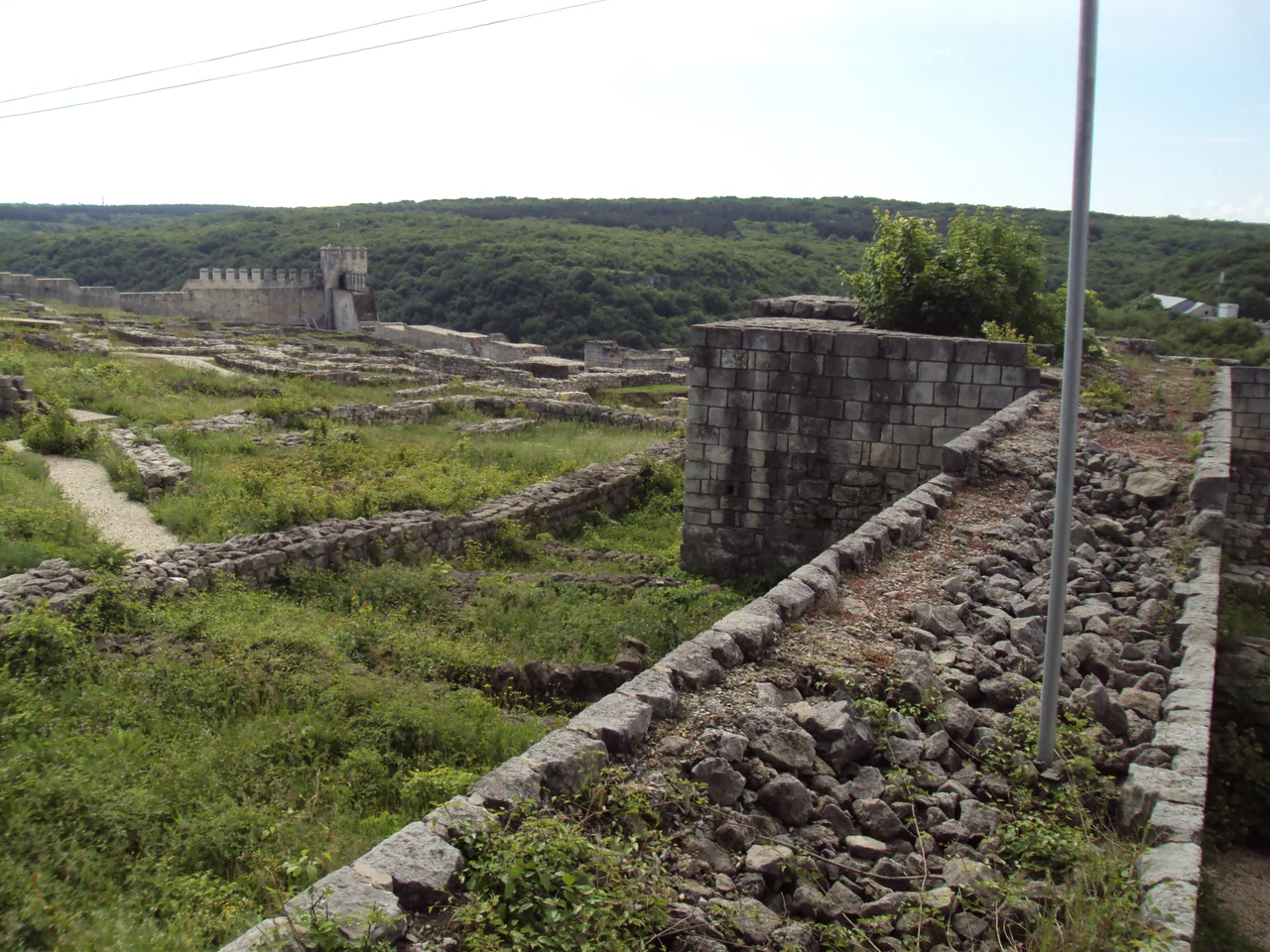

Shumen Fortress
When the Ottoman commander left this fortress in flames in 1444, he was answering a young king who had tried to drive his empire out of Europe and failed. King Wladyslaw III of Poland, only twenty years old, had assembled a Christian army of Polish, Hungarian, and allied troops with the explicit goal of breaking Ottoman power in the Balkans. He died at the Battle of Varna on the Black Sea coast in November 1444. Within weeks, the Ottomans returned to Shumen, looted what remained, and burned the rest. After more than two thousand years of continuous habitation, the fortress was abandoned for the next five and a half centuries.
Two Thousand Years of Inhabitants
Archaeologists working here since 1957 have found something at almost every layer they have dug through. The earliest village dates to roughly the fourth century BC, in the Iron Age. Then came the Thracians, who controlled the territory from the 5th to the 2nd century BC. The Romans took over from the 1st century BC to the 3rd century AD, building towers and walls of the standard imperial pattern. The early Byzantines refurbished the place from the 4th to the 6th century, using it as a garrison town along the disputed Danube frontier. Then came the Bulgars. They were a semi-nomadic Turkic people, distinct from the modern Turks, who arrived south of the Danube in the late 7th century and founded the First Bulgarian Empire. The fortress on this hill became part of a defensive system protecting the Bulgarian capitals of Pliska and Preslav and the religious center of Madara, where the famous Madara Rider relief still stands carved into a cliff face.
Rise and Fall and Rise
Shumen's importance rose and fell with Bulgarian fortunes. During the 4th to 6th centuries, under Roman and early Byzantine control, the fortress was at its glory in terms of economic prosperity and military might. During the 10th to 12th centuries it functioned only as a minor outpost, eclipsed by other Bulgarian centers. Then it prospered again in the 13th century as the Second Bulgarian Empire reasserted itself and pushed back against Byzantine encroachment. When Byzantines temporarily took control of nearby Preslav in 1278, during the peasant Uprising of Ivaylo, Shumen rose in administrative importance. The 14th century saw it thrive as the best-developed citadel in the region. Then in 1388 the Ottoman commander Candarli Ali Pasha, the empire's first vizier, captured it during a campaign that swept across northeastern Bulgaria. Bulgarian rule did not end immediately. The Ottomans installed garrisons but allowed local administration to continue, and Shumen remained inhabited until the catastrophe of 1444.
What the Seals Tell
Among the artifacts unearthed at Shumen are coins and seals belonging to specific identifiable Bulgarian rulers. A circular bronze seal showing a two-headed eagle has been identified as belonging to Tsar Ivan Alexander, who reigned from 1331 to 1371. The double-headed eagle was a common symbol on 14th-century Bulgarian seals, often executed in gold and silver as well. Another carved limestone projection bears a double-headed eagle and a three-pointed crown set between the birds' heads. Archaeologists have suggested this may have been carved to commemorate a royal visit, or perhaps it represents Ivan Shishman, the last emperor to rule from the Bulgarian capital of Tarnovo from 1371 to 1395. An inscription on the fortress wall, dated to the 13th century, references repeated terror attacks by the Mongols, who had swept through the region in earlier generations and remained a memory worth recording in stone. Excavations in 1970 by archaeologist Karel Skorpil also uncovered the remnants of a medieval church just south of the main fortress.
The Day at Varna
The Crusade of Varna in 1444 was a serious attempt to push the Ottomans back across the Bosphorus. Pope Eugene IV had called for it. King Wladyslaw, who already wore the crowns of both Poland and Hungary, gathered an army that crossed the Danube and marched south through Bulgaria, hoping to link up with a Venetian fleet that would prevent Ottoman reinforcements from crossing from Asia. The plan unraveled. The Ottoman fleet outmaneuvered the Venetians. Sultan Murad II brought his army across the Bosphorus and met the crusaders near the Black Sea port of Varna on 10 November 1444. In the battle Wladyslaw was killed, reportedly leading a charge against the Ottoman center, and his army shattered. He was twenty years old. With the crusader threat broken, the Ottomans turned their attention to consolidation. Shumen Fortress, which had served as a stronghold for resistance, was systematically destroyed and left as a ruin. It would not be inhabited again.
Walking It Today
Restoration began in 2012 under a project called Bulgaria Begins Here, partially completed in 2015 with funding from the European Economic Area and Norway Grants. The work covered the fortress walls, added walking tracks and turnstiles, installed artistic lighting, and put in equipment for temperature and humidity control to preserve what remains. The fortress sits on a hill within the Shumen Plateau Nature Park, about five and a half kilometers from the city's monumental Tombul Mosque. Three kilometers from the entrance stands the Creators of the Bulgarian State Monument, a vast concrete structure erected in 1981 during the communist era to mark the 1300th anniversary of the Bulgarian state. From the fortress walls the view runs across the Bulgarian plain. At the foot of the hill, monasteries and churches have been excavated, some reconstructed in the 1980s, marking where medieval monastic life clustered around the secular stronghold above.
From the Air
Shumen Fortress sits at 43.26N, 26.89E, on a hill within the Shumen Plateau Nature Park overlooking the city of Shumen in northeastern Bulgaria. The fortress and the modern city occupy a clear topographic position on the edge of the Bulgarian plateau, with views east across the Danubian plain toward the Black Sea coast. Recommended viewing altitude is 3,000-5,000 feet for the fortress walls, the Creators of the Bulgarian State monument three kilometers away, and the Shumen Plateau itself. Closest airports are Varna (LBWN) about 50 nautical miles east on the coast, and Burgas (LBBG) about 100 nautical miles southeast. Sofia (LBSF) lies 200 nautical miles west. The terrain rises gradually from the Danube to the Balkan range south of Shumen; visibility is generally good year-round outside of winter fog episodes in the river valleys.
Nearby Stories
- Varna Necropolis 38 km away
- National Transport Museum, Bulgaria 44 km away
- Tsarevets Fortress 64 km away
- Buzludzha Monument 87 km away
- Bucur Church 112 km away
- Bridges of Edirne 156 km away
- Battle of Constantinople (922) 169 km away
- Danube Delta 243 km away