
National Transport Museum, Bulgaria
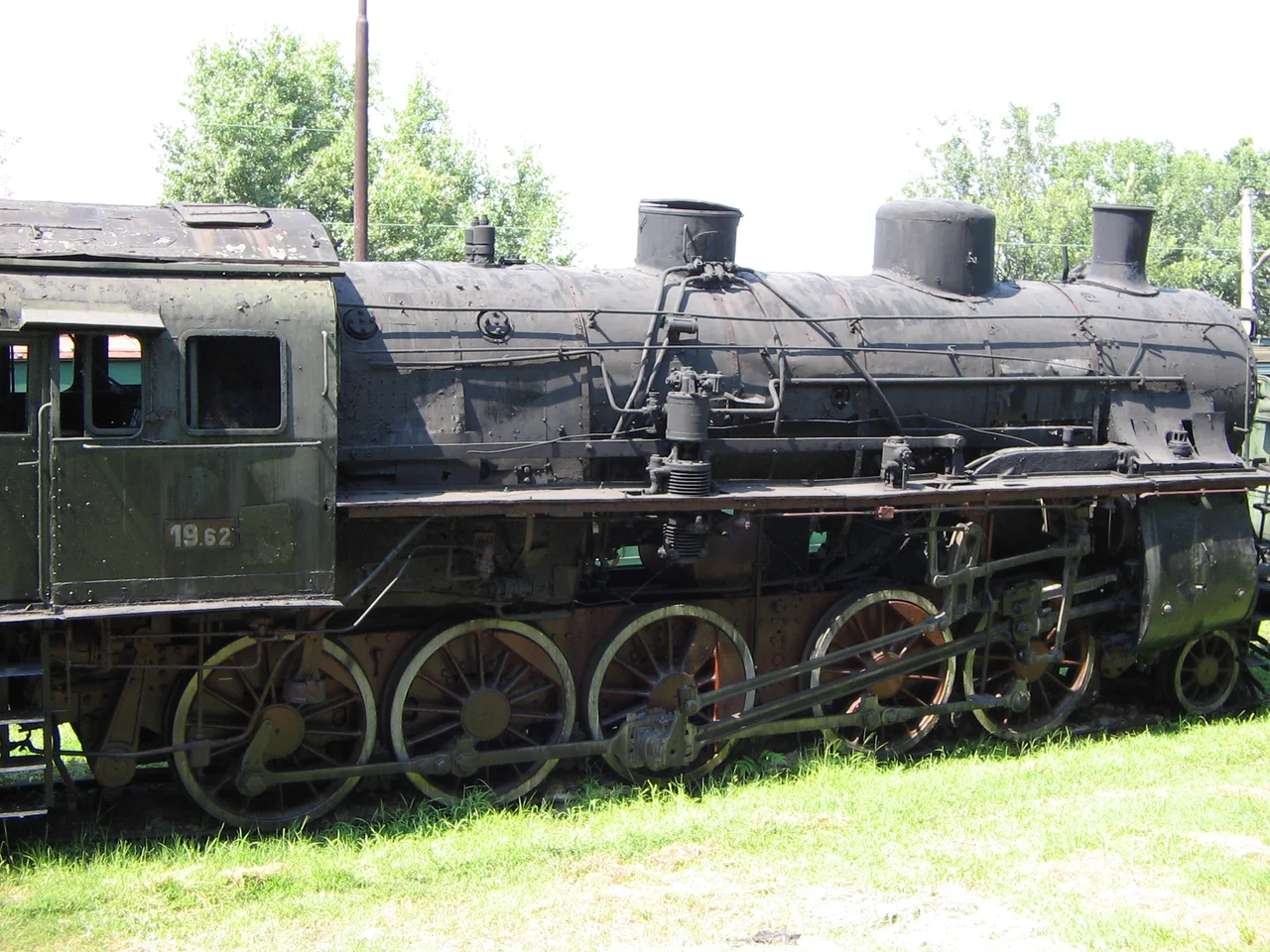
The Sultan's wagon is still here, though the empire that built it has been gone for more than a century. So is the carriage that carried King Ferdinand of Bulgaria across his country, and the one that carried his son Boris III, both kings now buried in different cemeteries. The locomotives are here too, more than ten of them, including a class P 3/3 z built in Sheffield in 1868, the oldest preserved steam engine in Bulgaria. They sit outside, under the open Danube sky, paint flaking, axles seizing, the river damp wearing them away year by year. The museum cannot afford to keep them indoors. It cannot quite afford to lose them either.
Why a Railway in the First Place
The Ottoman Empire wanted faster mail to Istanbul. The British wanted faster mail to India. The French and Austrians wanted access to the Black Sea. Caught in the middle, Bulgaria, then still Ottoman territory, got its first railway. Construction on the Ruse-Varna line began in 1863 under pressure from London, Paris, and Vienna, and the line opened in 1866. It was meant to shave five or six days off the journey from London to Istanbul by linking the Danube to the Black Sea overland, bypassing the slow Ottoman rail network and the long sea route around Greece. The plans were drawn by the Birkleck brothers, English engineers whose first names history has lost. A consortium headquartered in London ran the operation. Most of the actual workers, clerks, and telegraph operators were Bulgarian. Some, like Ilarion Dragostinov, would later become national heroes for their role in the 1876 April Uprising against Ottoman rule.
The Station on the High Bank
The station was set on the high bluff above the Danube, just upstream from where the river bends past Ruse and looks across to Romanian Giurgiu. It was a stone building of decent dimensions for the era: a waiting room, a stationmaster's office, a clerks' room, a few service spaces, all built from white limestone quarried in the surrounding villages. A water tower and supporting wall went up alongside it. For a few decades the station handled enormous traffic, much of it tied to the river port nearby, and it became one of the busiest in the eastern Balkans. When the Ruse-Tarnovo line opened in 1900, the original station was renamed Ruse East. It kept working until June 1954, when a new classification yard made it obsolete and it became, by default, the National Transport Museum.
The Sultan's Carriage
Of all the rolling stock outside the museum, the Sultan's wagon is the one visitors stop at first. Built in 1866 to carry Sultan Abdulaziz on a ceremonial inspection of the new line, it is heavy, ornate, and now in obvious decay. The varnish has dulled. The interior fabrics, where they remain, are darkened. The Bulgarian royal carriages of Ferdinand and Boris III sit nearby, dating from a later era, when Bulgaria was independent and its kings rode in carriages built to imperial standards. Boris III died in 1943 in disputed circumstances after returning from a meeting with Hitler, and his three-year-old son Simeon II became king for a few months until the Communists abolished the monarchy. Each carriage carries a fragment of a vanished political world.
Slow Decay
The museum was officially redesignated the National Museum of Railway Transport and Communications on 26 June 1996, marking the 100th anniversary of Bulgarian railways and earning the building landmark status. Funding has not followed prestige. The locomotives stand in the open. The damp Danube air, the freeze-thaw cycles of the eastern Balkan winters, and decades of deferred maintenance have done what only time and water can do to iron and wood. Volunteers and rail enthusiasts do what they can. Some carriages have appeared in films, including the Russian-Bulgarian Turkish Gambit and the historical drama Capitan Petko Voivoda, the small revenue helping a little. But for visitors who care about industrial heritage, walking past these machines feels like watching a slow farewell.
Across the Water
From the high bank where the station sits, you can see across the Danube to Giurgiu, on the Romanian side. For most of the railway's history, that crossing required a ferry. The Friendship Bridge, opened in 1954 and now called the Danube Bridge, finally linked the two countries by road and rail. A second bridge, the New Europe Bridge, opened far to the west at Vidin in 2013. But the old Ruse station predates them all. It sat on the river when the only way across was by boat, when the trains ended here, when the river was the border between two empires and now between two EU member states. The boundary has moved. The station, slowly losing its battle with the weather, has not.
From the Air
The old Ruse East station sits at 43.8607 N, 25.9636 E on the high south bank of the Danube, in the eastern part of Ruse. From above, look for the riverbend with Romanian Giurgiu directly opposite, the modern Ruse port and railyard sprawling west, and the 1954 Friendship Bridge crossing the Danube about 1.5 km downstream. Bucharest Henri Coanda (LROP) is 75 km north-northwest. Recommended viewing altitude 1,000 to 2,500 ft AGL; the Danube floodplain is largely flat, with strong river breezes.
Nearby Stories
- 2025 Rahova Gas Explosion 37 km away
- Shumen Fortress 56 km away
- Holy Forty Martyrs Church, Veliko Tarnovo 59 km away
- Great Basilica, Pliska 80 km away
- Curtea de Arges Cathedral 126 km away
- 1928 Chirpan-Plovdiv Earthquakes 154 km away
- Poenari Castle 175 km away
- Danube Delta 275 km away