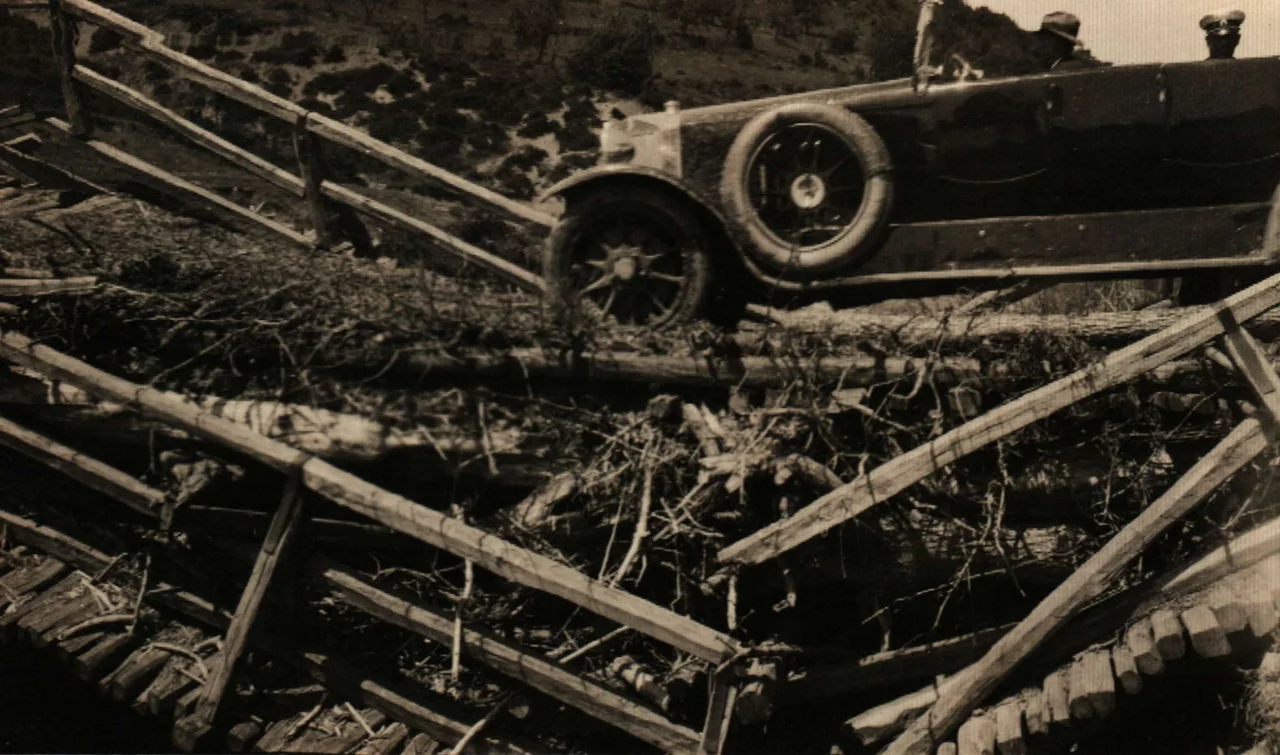

1928 Chirpan-Plovdiv Earthquakes
On the morning of 14 April 1928 - Holy Saturday by the Orthodox calendar - the people of Chirpan, Parvomay, and Plovdiv were not inside their houses. They were in churches, in courtyards, on the roads between villages bringing bread and lamb and eggs to relatives, doing the slow social work of the day before Easter. When the ground heaved at magnitude 7.1, that ordinary religious observance became the difference between a tragedy and an annihilation. Tens of thousands of buildings collapsed. More than 264,000 people lost their homes. And yet the death toll, by the standards of an earthquake that flattened nearly every structure in two cities, stayed remarkably low - around 127 dead - because the holiday had emptied the buildings before the buildings came down.
Two Earthquakes, Four Days Apart
The first quake struck south of the Sredna Gora, the long east-west range that runs across central Bulgaria. Then, four days later on 18 April, the ground broke again. The second mainshock was geologically tied to the first - the Coulomb stress released by the April 14 rupture had been transferred along the fault, loading the next segment until it failed. Plovdiv, which had been badly damaged on the 14th, was hit harder by the second event because its epicenter lay closer to the city. Both earthquakes registered between IX and X on the Medvedev-Sponheuer-Karnik scale and X-XI on the older Mercalli intensity scale - the upper end of the destructive ranges. The second event ruptured ten separate fault structures stitched together along a single weakness in the crust, the kind of complex multi-fault break that modern seismologists are still learning to model.
What Was Lost
The numbers are blunt. At least 74,570 buildings obliterated. Another 21,000 partially destroyed. 240 towns and villages affected. In Chirpan and Parvomay, nearly every building came down. Railway tracks bent and snapped where the earth lurched sideways underneath them. In Plovdiv - one of Europe's oldest continuously inhabited cities, layered with Roman, Byzantine, Ottoman, and Bulgarian-revival architecture - whole neighborhoods turned to dust. An estimated 402 schools were destroyed. The schools were empty for the holiday, which is why Bulgaria did not have to bury hundreds of children that week. Survivors slept outdoors for weeks afterward, terrified that the aftershocks would bring down whatever was still standing. In Greece, the shaking was severe enough to damage homes in Komotini and Eleftheroupoli, where a police station collapsed; panic spread through Thessaloniki. The earthquake was a Bulgarian disaster that touched its neighbors.
The Tsar Who Showed Up
Tsar Boris III was at Vrana Palace, his country residence outside Sofia, when the first quake hit. He was twenty-eight years old, only ten years into his reign, and Bulgaria - a country still recovering from the catastrophe of the Balkan Wars and the First World War - did not have much spare capacity for another disaster. Boris went to Chirpan, then to Plovdiv, and personally led relief efforts on the ground. Photographs from those days show him in plain clothes, climbing through rubble, talking to families standing in front of what used to be their homes. The image mattered. In a young constitutional monarchy where the king's role was being negotiated almost daily, Boris's decision to put himself among the survivors became part of his political identity. He would lead Bulgaria for another fifteen years, into the disasters of the Second World War, but the Holy Saturday earthquakes were the first emergency that defined him to his people.
The Quiet Country
Bulgaria does not rank in most lists of earthquake-prone nations the way Turkey or Greece do, and that itself is part of why 1928 was so devastating: nobody had built for this. The country sits on a complex tectonic margin where the African plate is slowly grinding the Aegean and Anatolian micro-plates against the bulk of Eurasia, but the slip rates are slower than along the North Anatolian Fault to the south, the periodicity longer. A Bulgarian shepherd in 1928 might never have felt a serious tremor in his life; his grandfather might not have either. The Chirpan-Plovdiv earthquakes were the wake-up call. Modern Bulgarian building codes, seismic monitoring stations, and the engineering memory of how to put a stone wall together so it does not fall on its inhabitants - all of it traces back, in one way or another, to those four April days. The country still observes the anniversary. The faults underneath the Sredna Gora are still loading.
From the Air
The 1928 earthquakes are centered in the Upper Thracian Plain at roughly 42.21°N, 25.29°E, between the Sredna Gora ridge to the north and the Rhodope Mountains to the south. From the air, the relevant geography is a broad agricultural plain stitched with rivers running east toward the Black Sea, with Plovdiv on the Maritsa River as the most prominent city. Chirpan lies about 50 km east of Plovdiv. Best viewed at 10,000-20,000 feet on clear days. Nearest airports are Plovdiv (LBPD) to the northwest, Sofia (LBSF) further west, and Burgas (LBBG) east on the Black Sea coast.
Nearby Stories
- Buzludzha Monument 30 km away
- Batak Massacre 33 km away
- Battle of the Gates of Trajan 58 km away
- Complex of Sultan Bayezid II 81 km away
- Battle of Plovdiv (1878) 94 km away
- Bridges of Edirne 98 km away
- Museum of Socialist Art 103 km away
- Round Church, Preslav 115 km away