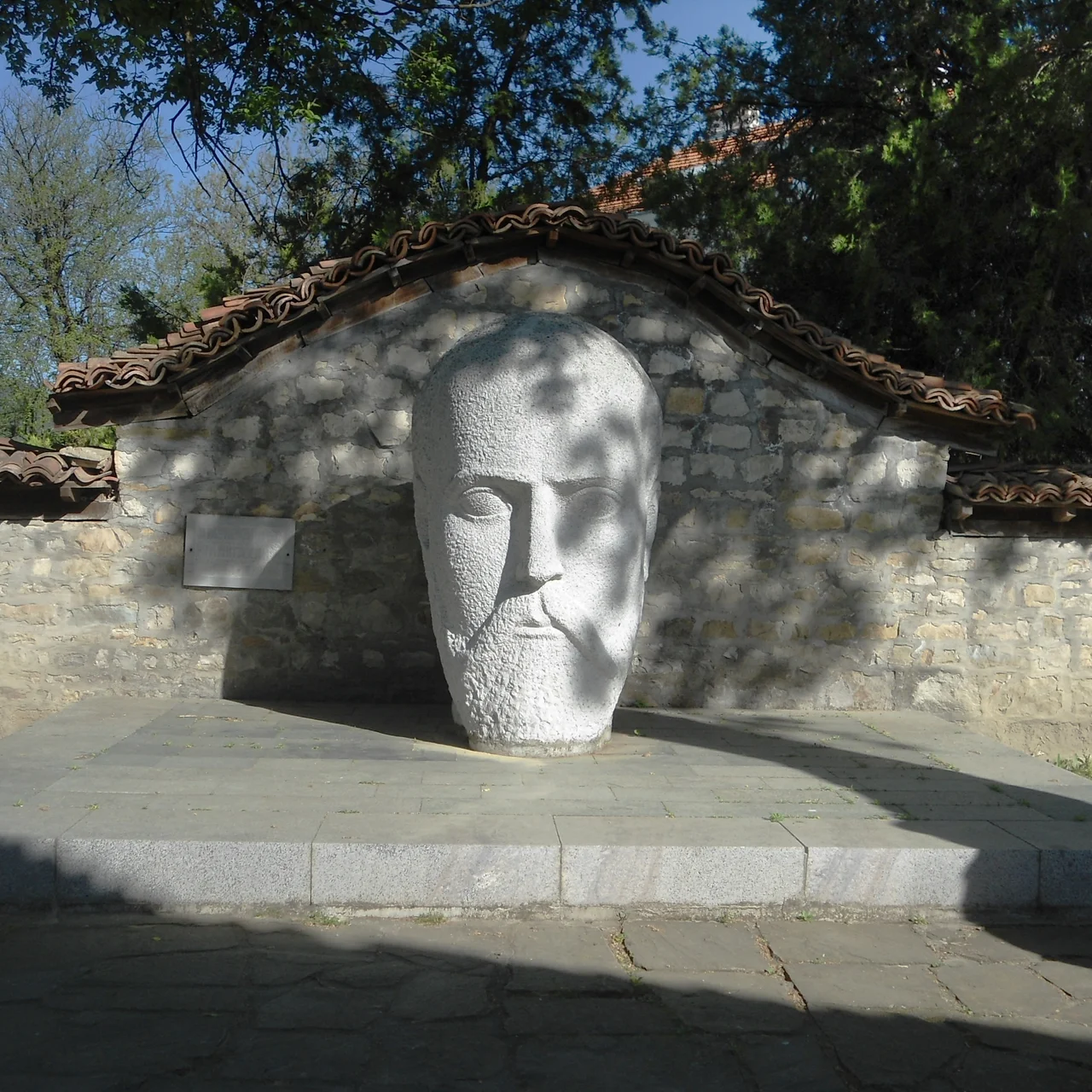

Batak Massacre
The mayor's daughter-in-law was named Bosilka. She watched them kill her father-in-law Trendafil, the village leader, and then a soldier impaled her infant son Vladimir on a sword in front of her. Her testimony to the American journalist Januarius MacGahan in the summer of 1876 became one of the documents that changed European public opinion about the Ottoman Empire. The Batak massacre happened in a Bulgarian Rhodope mountain village of about 8,000 people in roughly 900 households at the start of the April Uprising of 1876. Most of the most reliable contemporary estimate, by the American diplomat Eugene Schuyler, places the dead at around 5,000. Other estimates range from 1,200 to 8,000. The British commissioner Walter Baring, sent by the embassy in Constantinople and known to be sympathetic to the Ottoman position, confirmed Schuyler's figure and described what he found at Batak as perhaps the most heinous crime that has stained the history of the present century.
A Village That Volunteered to Hold Out
Batak was assigned a difficult role in the rebellion. The April Uprising was Bulgaria's attempt, after nearly five centuries of Ottoman rule, to claim independence. The plan called for Batak's fighters to capture Ottoman storehouses in nearby villages, block the roads, and become a refuge for any rebel cheta whose own attack failed. The local voivode, Petar Goranov, led the initial action. His men killed several Ottoman officials, but the news reached the authorities, and the response was disproportionate. A paramilitary force of roughly 5,000 bashi-bazouks, irregular soldiers under Ahmet Aga of Barutin, surrounded the town. After an opening engagement, the villagers tried to negotiate. Ahmet Aga said he would withdraw if Batak laid down its arms. The villagers laid down their arms. The bashi-bazouks attacked anyway and beheaded the men who had brought out the weapons.
Three Days at the Church
Many of those who could not flee took shelter in the Church of Saint Nedelya, whose stone walls promised more protection than the wooden houses being burned around them. They held the church for three days. The bashi-bazouks shot at the doors and windows continuously. Some climbed onto the roof and tried to enter from above. Inside, there was no water; people dug at the floor with their hands hoping to reach groundwater. On the third day, dehydrated past endurance, the survivors opened the doors. Only those who agreed to convert to Islam were spared, and there were not enough conversions to repopulate the village as Ahmet Aga had planned. The bashi-bazouks tried to burn the church. The stone walls held. The wooden furniture and the icons did not. Three months later, when a Russian commission inspected Batak, the Ottoman authorities had tried to bury the bodies and paint over the bloodstains on the walls. The smell remained. So did the stains, eventually.
The Witnesses Who Made It Matter
Three foreign visitors recorded what was at Batak before lime could be poured over it. Eugene Schuyler, an American diplomat, was the first eyewitness on site and gave the most detailed early account. Januarius MacGahan, an Irish-American journalist writing for the New York Herald and the British Daily News, accompanied Schuyler and produced dispatches that landed on William Ewart Gladstone's desk in London. Gladstone wrote a pamphlet titled Bulgarian Horrors and the Question of the East that became a political weapon against the Disraeli government's pro-Ottoman policy. Walter Baring, sent specifically because he was a known Turcophile and his report was expected to soften the story, instead confirmed it. Schuyler's description of what he saw is plain: human bones on every side, skulls and ribs and complete skeletons, heads of girls still adorned with braids of long hair, bones of children, the school house where 200 women and children had been burned alive, the church and churchyard where roughly a thousand half-decayed bodies were piled high enough that arms and feet protruded from the stones thrown over them.
How a Massacre Made a Country
The events at Batak shifted European policy. The British public outcry, fueled by MacGahan's reporting and Gladstone's pamphlet, made it politically impossible for Disraeli to support the Ottomans against Russia. When the Russo-Turkish War began in 1877, Britain stood aside. Bulgaria emerged from the 1878 Treaty of San Stefano and the Treaty of Berlin as a separate state for the first time since 1396. The victims of Batak were canonized as saints by the Bulgarian Orthodox Church on 3 April 2011, an act the church had not performed for more than a century. The site is a memorial today, and the name Batak in Bulgarian is shorthand for what national survival cost. A 2007 academic conference about how the memory of the massacre was constructed produced a furious controversy when Bulgarian media reported, incorrectly, that the researchers were denying the events. The Bulgarian Academy of Sciences refused to host the meeting. The researchers later clarified that they had been examining the iconography of memory, not the facts of the killing. The facts of Batak are not in serious dispute. The lime is gone. The walls are still there.
From the Air
Located at 41.943N, 24.219E in the Rhodope Mountains of southern Bulgaria, in the Pazardzhik Province about 150 kilometers southeast of Sofia. Recommended viewing altitude 6,000 to 9,000 feet to take in the dense pine forests and the Batak Reservoir, the largest in the western Rhodopes, just north of the town. Nearest airport is Plovdiv (LBPD) about 90 kilometers northeast, with Sofia (LBSF) the major hub farther west. The terrain is rugged and forested; the village sits in a small upland valley. Best in late spring or early autumn when the slopes are clear and the reservoir is full. The memorial church and ossuary are at the center of town.
Nearby Stories
- Battle of the Gates of Trajan 23 km away
- Roman Forum of Philippopolis 27 km away
- Battle of Kresna Gorge 36 km away
- Battle of Kleidion 55 km away
- Museum of Socialist Art 56 km away
- 1928 Chirpan-Plovdiv Earthquakes 56 km away
- Battle of Philippi 74 km away
- Samothrace temple complex 150 km away