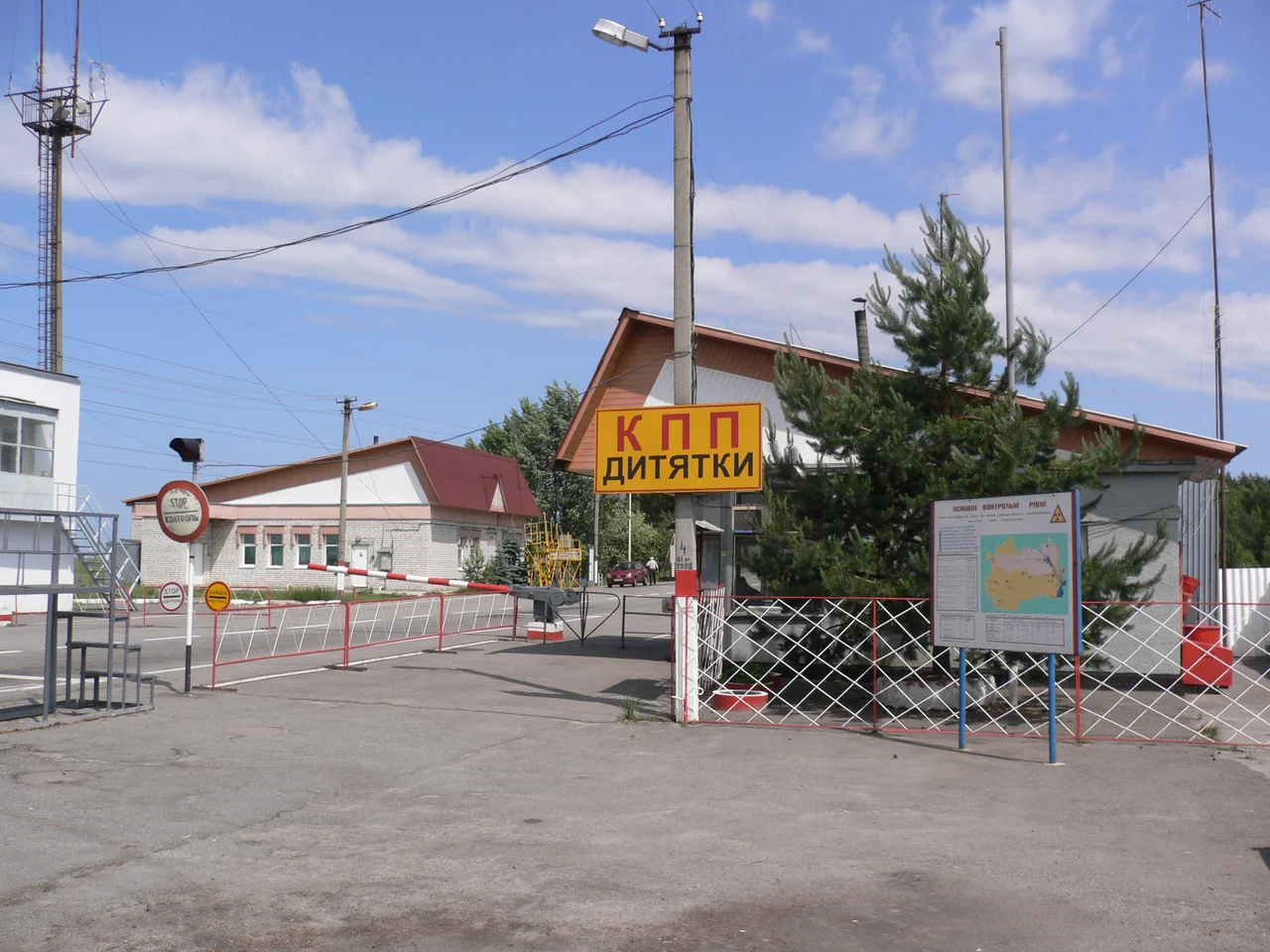

Capture of Chernobyl
At seven in the morning on February 24, 2022, the workers showing up for the morning shift at the Chernobyl Nuclear Power Plant were turned around at the gate. The shift change had been canceled. Russia had invaded. By two in the afternoon, Russian armored vehicles were at the plant administration building. By nightfall the entire Chernobyl Exclusion Zone, the most contaminated patch of ground in Europe, was under Russian occupation. The 169 Ukrainian National Guard soldiers stationed at the plant carried only light weapons. Surrender was the only option that did not end with a firefight inside the world's most damaged nuclear site. For the next thirty-five days, the people who happened to be on shift that morning kept Chernobyl safe at gunpoint.
The Shortest Route to Kyiv
Chernobyl sits 130 kilometers north of Kyiv, just south of the Belarusian border. The road from Chernobyl to Kyiv, regional route P02, is in good condition. For Russian planners staging their main thrust through Belarus, this was the obvious approach: cross the Pripyat River, pass through the abandoned exclusion zone, drive south to the Ukrainian capital. They had rehearsed it. Russian troops had run exercises a year earlier at the Kursk Nuclear Power Plant in Russia, an RBMK reactor complex nearly identical to Chernobyl's. They knew the layout. The Ukrainian garrison did not have armored vehicles. The 1st Nuclear Power Plant Protection Battalion was equipped to repel saboteurs and intruders, not to engage Russian Special Operations Forces in Tigr armored vehicles. After several hours of negotiations between Ukrainian commanders and the arriving Russian unit, the plant surrendered. The IAEA reported no casualties and no damage to the industrial site that day. The catastrophe was averted by giving up.
Working at Gunpoint
About 300 people were inside the exclusion zone when it fell. Roughly 100 were nuclear staff, including engineers and operators. The rest were medical staff, firefighters, and the 169 National Guard soldiers. The Russians refused to let any of them leave. The day shift simply did not end. They worked through the night, then through the next day, then for twelve consecutive days without a shift change. The IAEA grew increasingly worried about decision-making by exhausted personnel. Russian forces tried to bring Ukrainian staff in front of cameras for the Russian Ministry of Defense television channel Zvezda. The staff refused. They continued maintaining the plant, monitoring the New Safe Confinement structure over the destroyed Reactor 4, watching the spent fuel storage. On March 9, the plant lost grid power. Diesel generators kept cooling water moving. On March 20, after more than three weeks, the Russians allowed a partial swap: some of the original staff went home; volunteers from outside the zone came in to replace them.
Trenches in the Red Forest
The Red Forest is the four square kilometers of pine woodland adjacent to Reactor 4. In the days after the 1986 disaster, the trees absorbed so much fallout that they turned a rusty orange-red and died. The topsoil there is among the most radioactive surface ground on the planet. Russian troops dug trenches in it. Photographs that emerged after the withdrawal show foxholes and field fortifications carved into the contaminated soil; Ukrainian workers, returning, found discarded ration packets and abandoned positions still measurably radioactive. Reuters reported, citing local workers, that Russian soldiers had moved through the forest without dosimeters and without protective equipment. One Russian trooper was reported by The Telegraph to have died of radiation effects after the withdrawal; broader Ukrainian claims of mass radiation poisoning could not be independently verified, and the Russian military denied them. What is documented is that the trenches existed, that they were dug in soil that had been off-limits to humans for thirty-six years, and that they were dug for no useful military purpose.
The Withdrawal
By late March the Russian thrust on Kyiv had stalled. On March 29, Russian Deputy Defense Minister Alexander Fomin announced a withdrawal from the Kyiv area. On April 1, Ukraine's State Agency on Exclusion Zone Management confirmed Russian troops had completely left the Chernobyl plant. Staff at the plant raised the Ukrainian flag back over the building. Ukrainian forces re-entered the exclusion zone on April 3. They found significant looting: laboratory equipment was missing, computers had been taken, and according to Ukrainian scientists and workers cited by Business Insider, radioactive samples had been removed from research labs. The Independent later reported damage to plant equipment estimated at 135 million dollars. Five weeks of Russian occupation had produced no successful Russian military objective and a measurable degradation of the systems that keep Chernobyl from becoming dangerous again.
The Drone, and What Came After
President Volodymyr Zelenskyy called the seizure of the exclusion zone a declaration of war against the whole of Europe. The IAEA insisted, repeatedly, that the safe operation of the nuclear facilities should not be disrupted. Both statements aged. In February 2025, a Russian drone struck the New Safe Confinement, the 105-meter steel arch built between 2010 and 2016 with 864 million euros in international donations to seal the destroyed reactor. The strike caused a fire and damaged the inner and outer protective layers. By December 2025, IAEA Director General Rafael Grossi reported that the structure had lost its primary safety function as a confinement. The load-bearing arch and the monitoring systems remained intact, but the engineering achievement that was supposed to last a century had been undermined in a single night. The capture of Chernobyl in 2022 was the opening act. The damage is still ongoing.
From the Air
The Chernobyl Nuclear Power Plant sits at 51.27N, 30.22E, about 130 km north of Kyiv and 16 km south of the Belarusian border. The closest international airport is Kyiv Boryspil (UKBB), roughly 160 km south. From the air, the exclusion zone is a striking patch of dense second-growth forest interrupted by the rectangular cooling pond of the plant and the abandoned grid pattern of Pripyat 3 km to the northwest. The New Safe Confinement arch over Reactor 4 is visible as a polished metal dome from considerable distance. As of 2026 the zone remains restricted Ukrainian airspace; the plant is again under Ukrainian control.
Nearby Stories
- Slavutych 12 km away
- Polesie State Radioecological Reserve 17 km away
- Oster 21 km away
- 1995 Borodianka Mid-Air Collision 28 km away
- Malyn 30 km away
- Ovruch 51 km away
- Liubech 52 km away
- Nesvizh Castle 272 km away