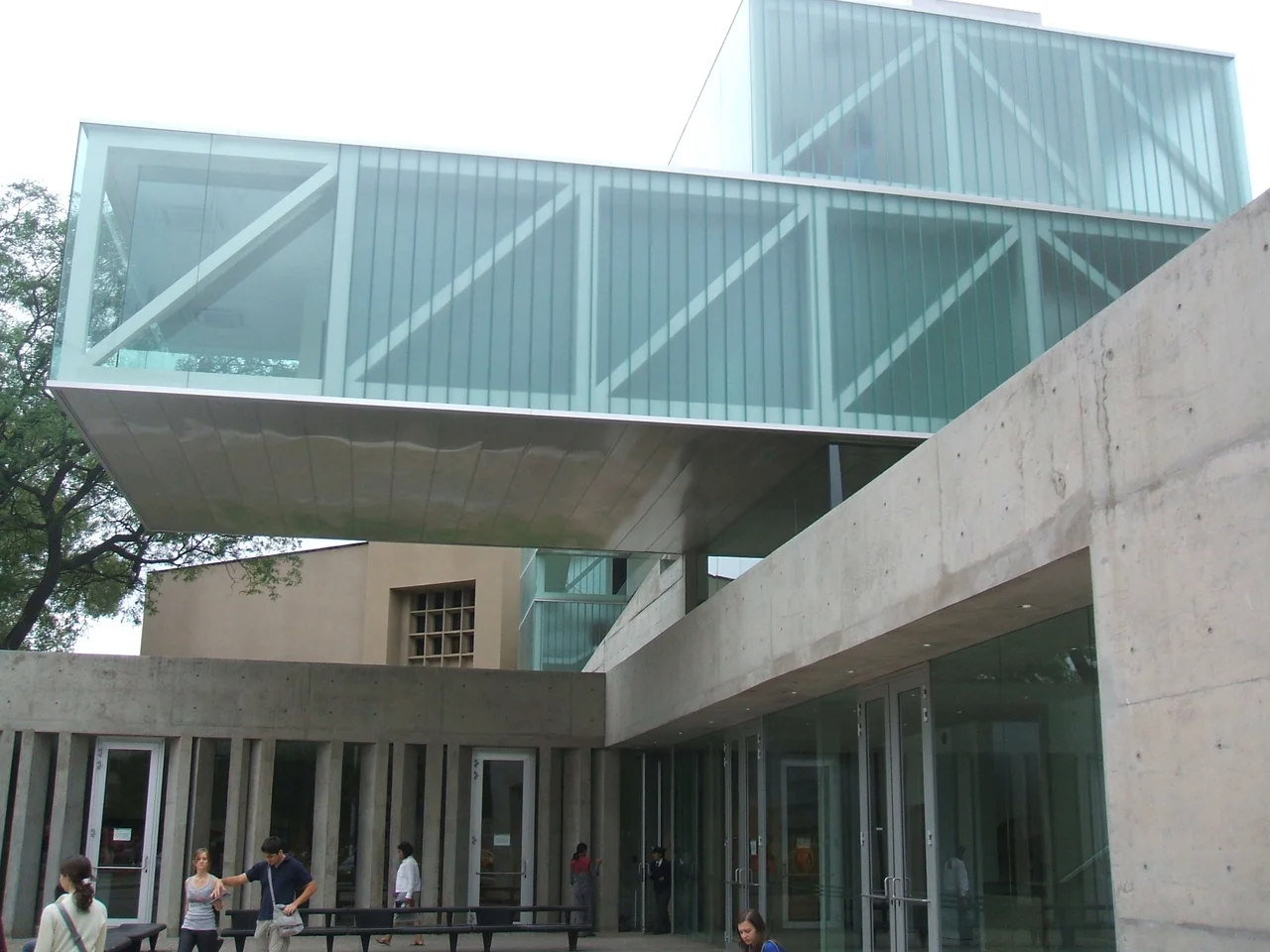

Caraffa Fine Arts Museum
One of the first buildings in Argentina ever raised specifically to hold an art collection opened without a single speech. In 1916, the new museum on the edge of Córdoba's Sarmiento Park was simply handed over - the construction had run late, the governor who commissioned it was leaving office, and the moment slipped past the newspapers unremarked. There was no ribbon, no crowd. Yet the neoclassical building designed by the Hungarian-born architect Juan Kronfuss would become an architectural icon of the city, and over the next century it would grow into the Emilio Caraffa Provincial Fine Arts Museum, a place hung with Goya, Picasso, and the strongest names in Córdoba's own art history.
A Building Ahead of Its City
Kronfuss had to try twice. In 1912 the governor rejected his first proposal, a neocolonial design judged out of step with an Argentina hungry for progress. So Kronfuss returned with a neoclassical building, all columns and symmetry, and this time it was accepted. The site mattered as much as the style: a prominent corner beside what is now Plaza España, in the newly fashionable Nueva Córdoba neighborhood, where the city was reinventing itself. Only a small portion of Kronfuss's full vision was ever built. Even so, the structure announced an ambition rare for its time - that a provincial capital in the Argentine interior deserved a temple to art as fine as any in the capital.
The Painter Who Gave It His Name
The museum did not become the Caraffa until 1950, when it took the name of Emilio Caraffa - a painter who had shaped art in Córdoba long before. Born in Catamarca in 1862, Caraffa settled in the city in 1896 and founded its Provincial Academy of Fine Arts. He began as a landscape painter and turned, after 1900, toward post-impressionism, a style largely ignored by Argentine collectors that he helped bring into view. When the province first organized a painting and sculpture gallery in 1911, it was Caraffa, then directing the academy, who was entrusted with the task. Naming the museum after him decades later closed a circle: the institution honored the man who had helped teach the city to see.
A Collection Built Slowly
The collection grew the patient way, painting by painting, donation by donation. It began with a single landscape bought in 1910, kept at first in a government office. Over the following decades the museum acquired works by the great figures of Córdoba and Argentine art - Fernando Fader, Emilio Pettoruti, Juan Carlos Castagnino, Lino Enea Spilimbergo, the sculptor Pablo Curatella Manes - alongside lithographs by Pablo Picasso and paintings by Francisco Goya and the Japanese-French master Tsuguharu Foujita. Today nine exhibition halls hold the result, supported by a restoration workshop, the provincial art archive, and a library named for Deodoro Roca, the writer who became the museum's first director in the building's quiet opening year.
Glass Over Stone
A century in, the old building could no longer hold its own ambitions. Fragmented rooms, awkward ceilings, and a difficult entrance hindered the simple act of moving through the galleries. So between 2006 and 2008 the architects GGMPU and Lucio Morini reimagined the museum, more than tripling its usable space. Rather than erase Kronfuss's work, they wrapped and connected it. A new structure of metal and glass - sheeted in panels that shift between transparency and opacity - threads the old buildings together while letting each keep its character. A street-level square became the new entrance, finally solving the access problem, with a café and art library opening onto it. The neoclassical temple now sits inside a luminous modern frame, old stone and new glass in continuous conversation.
From the Air
The Emilio Caraffa Provincial Fine Arts Museum stands at 31.43°S, 64.18°W, on the western edge of Sarmiento Park in Córdoba's Nueva Córdoba district, beside Plaza España. The nearest major field is Ingeniero Ambrosio L.V. Taravella International Airport (ICAO: SACO, IATA: COR), Córdoba's Pajas Blancas, about 9 km north-northwest of the city center. From the air the museum is best located by the broad green of Sarmiento Park on the near-southern side of central Córdoba, with the circular Plaza España and the dense urban grid of Nueva Córdoba immediately adjacent. The Suquía (Primero) River curves through the city to the north. A viewing altitude of 2,000-3,000 feet over the city frames the park, plaza, and surrounding neighborhood. Córdoba sits on an open plain east of the sierras, so haze rather than terrain is the usual visibility factor; calm, clear mornings give the cleanest light.
Nearby Stories
- Jesús María, Argentina 16 km away
- Alta Gracia 26 km away
- Pampa de Achala 31 km away
- Mina Clavero 31 km away
- Mar Chiquita Lake 116 km away
- Battle of Quebracho Herrado 135 km away
- Villa San Agustín 271 km away
- Predelta National Park 289 km away