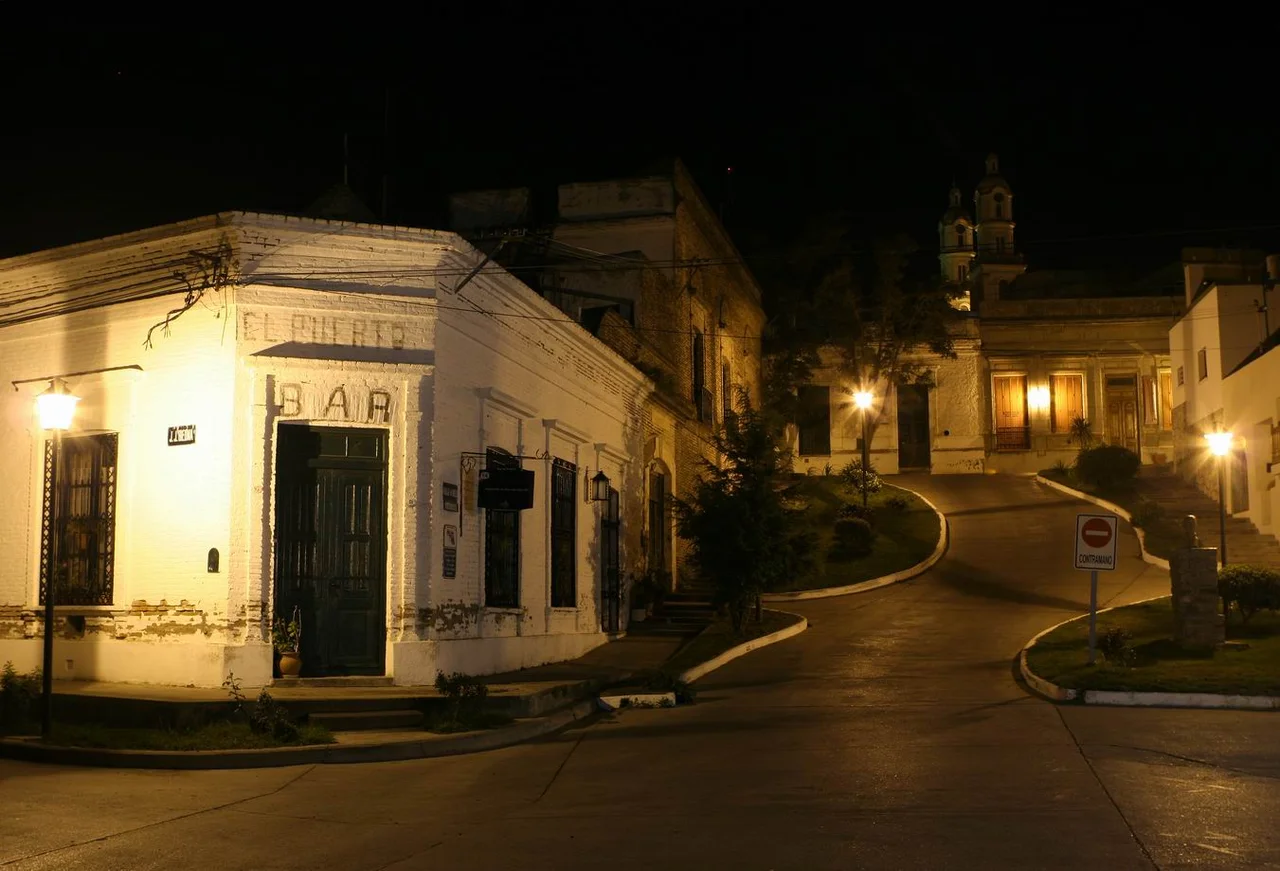

Carmen de Patagones
Seven captured battle flags hang in the church of Nuestra Señora del Carmen, two of them survivors of nearly two centuries. They were taken from the Imperial Brazilian Navy on a single day in March 1827, not by an army but by the townspeople themselves, who picked up muskets and repelled an invasion of their own riverbank. Carmen de Patagones has guarded that memory ever since. Perched on the north bluff of the Río Negro near where the river meets the Atlantic, it is the oldest town in all of Patagonia, and it wears its age proudly.
The Maragatos of the Black River
The town began as a fort and settlement, Nuestra Señora del Carmen, founded on 22 April 1779 by Francisco de Viedma y Narváez, an explorer sent by the Spanish crown to colonize the Patagonian coast. That autumn, the first colonists arrived, families from León, Galicia, Asturias, and above all from La Maragatería, a hardscrabble corner of northwestern Spain. Their origin stuck. To this day, people born in Patagones are called maragatos, a name carried across an ocean and held onto for more than two centuries. They settled the high north bank of the Río Negro, the Black River, looking across the water toward what would become Viedma, the twin town and provincial capital on the southern shore.
The Day the Town Fought a Fleet
By the 1820s the little river port had become strategically vital. During the Cisplatine War, Brazil's navy blockaded the great estuary of the Río de la Plata, forcing Argentine shipping to shelter at Patagones instead, and the town turned into a naval base. Brazil moved to seize it. On 7 March 1827, imperial troops landed to take Carmen de Patagones, and the defense fell largely to its own residents, militia and townsfolk who knew the ground. They held. The attackers were thrown back, and seven of the fleet's battle flags were captured. The victory is still celebrated every 7th of March, and those flags, two of them preserved in the central church on the very site of the original fort, remain the town's proudest relic.
A Prison, a River, a Frontier
Carmen de Patagones has long been a place where the country's edges met. In the early 19th century, after the May Revolution of 1810, its fort served as a prison for royalists, Spaniards and their sympathizers who opposed Argentine independence, exiled to the farthest reach of the new nation. The town remains a kind of boundary marker today: capital of the Patagones Partido, it is the only district of Buenos Aires Province that lies within Patagonia. The river is the line. Cross the Río Negro and you leave one province for another, stepping from Buenos Aires into Río Negro in a single short ferry ride or a walk across the bridge.
The Capital That Never Came
For one strange, hopeful stretch in the 1980s, this remote pair of river towns nearly became the center of Argentina. In 1986, President Raúl Alfonsín unveiled the Patagonia Project, a plan to move the national capital out of crowded Buenos Aires and into a new federal district straddling Carmen de Patagones and Viedma, here at the mouth of the Río Negro. Congress approved it in 1987. For a moment, this windswept frontier imagined itself as the seat of government. Then the economy faltered, Alfonsín's term ended, and his successor Carlos Menem dissolved the commission overseeing the move in 1989. The capital stayed where it was, and Patagones returned to being what it had always been: quietly, stubbornly historic.
From the Air
Carmen de Patagones lies at 40.78°S, 62.97°W on the north bank of the Río Negro, roughly 30 km from the Atlantic and about 937 km southwest of Buenos Aires. From the air it is paired with Viedma directly across the river to the south; the dark ribbon of the Río Negro between the two towns is the unmistakable landmark, with bridges linking the provinces of Buenos Aires and Río Negro. The nearest airport is Gobernador Edgardo Castello Airport at Viedma (ICAO SAVV), just minutes away across the water. Look for the historic riverfront and the church on the bluff. The regional climate is dry and breezy with generally clear skies and good visibility.
Nearby Stories
- San Antonio Oeste 112 km away
- Islote Lobos National Park 124 km away
- Desert Campaign (1833–1834) 125 km away
- Valdés Peninsula 167 km away
- Port Belgrano Naval Base 210 km away
- Punta Alta 225 km away
- Chimpay 268 km away
- Disappearance of ARA San Juan 653 km away