
Carnifex Ferry Battlefield State Park
The state park opened in October 1935, the same year Congress passed the Historic Sites Act formalizing federal historic preservation authority. Carnifex Ferry was one of the earliest battlefield state parks anywhere in the United States. The 156 acres on the rim of the Gauley River Canyon preserve the Henry Patterson farm where Brigadier General John B. Floyd's Confederate forces threw up entrenchments in late August 1861, and where William S. Rosecrans's Union brigades attacked on September 10 of that year. The Patterson House still stands. Three overlooks let visitors see down into the Gauley River Canyon. A weekend Civil War reenactment fills the meadows after Labor Day. Listed on the National Register since 1974, the park is part of the first generation of American battlefield preservation.
Why the Park Exists
In 1861, the western counties of Virginia were the frontier of the Civil War's first year. Unionist settlers there had begun the process of separating from Confederate Virginia. Confederate Brigadier General John B. Floyd marched in to recover the region. After a tactical victory at Kessler's Cross Lanes on August 26, Floyd dug in at the Henry Patterson farm above Carnifex Ferry, on the high rim of the Gauley River Canyon. Rosecrans came south from Clarksburg with three Union brigades. The battle on September 10 was a tactical Confederate success - the Union assaults were repulsed with significant Federal casualties - but Floyd's position was untenable. He withdrew across the ferry that night. The campaign that followed pushed Confederate forces out of western Virginia and helped pave the way for West Virginia statehood in 1863. The Patterson farm, with its earthworks still legible in the ground, became one of the most significant Civil War battlefields in the new state.
The Patterson House
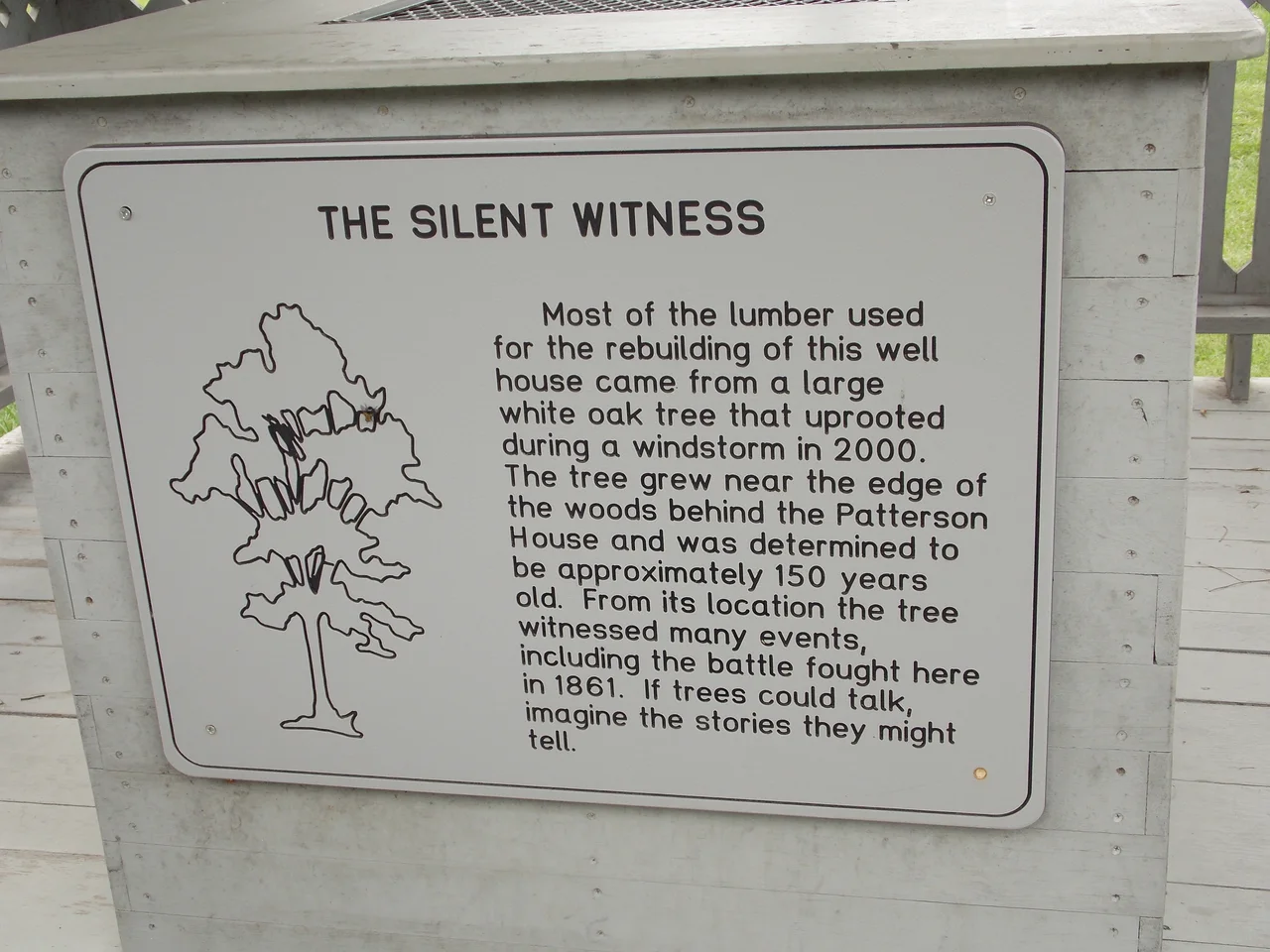
The frame house at the center of the park belonged to Henry Patterson and his family at the time of the battle. The structure stood directly behind Floyd's entrenchments during the engagement. Soldiers used it for shelter, command, and medical care. After the war, the Patterson family returned and continued to live there for decades. When the state acquired the property in 1935, the house was preserved as a museum. Today it serves as the visitor center for the battlefield, with displays of period artifacts, maps of the engagement, and interpretive material on the broader Western Virginia campaign. The Patterson House Museum is one of the oldest battlefield-museum installations in West Virginia and a rare example of an actual structure that witnessed a Civil War engagement still standing on its original site.
Walking the Ground
The park's 156 acres include the Confederate entrenchment line, the open meadow where Union attacks formed, and a network of hiking trails that lead from the Patterson House out to three overlooks above the Gauley River Canyon. The Gauley drops nearly a thousand feet here, a steep walled valley that determined the tactics of the 1861 engagement. From the overlooks, visitors can see the river where Floyd's troops crossed in their night retreat, the curving line of road that led down to the ferry, and the wooded ridges on the south side where the Confederates rallied. Picnic facilities, a small playground, and several pavilions support family visits during summer. The setting is quieter than the battlefield's significance suggests - a working farm landscape, returned to grass and trees, with the bones of the 1861 fortifications barely visible under the cover of more than 160 years.
The Reenactment
Each year on a weekend after Labor Day, Civil War reenactors gather at Carnifex Ferry to commemorate the September 10 battle. Hundreds of participants set up authentic period camps - Union and Confederate - and stage a recreation of the engagement on the original ground. Visitors can walk between the camps before and after the fighting, talk to reenactors about period uniforms and tactics, and watch the battle itself across the Patterson farm meadow. The reenactment is one of the oldest and most respected in West Virginia, drawing units from across the eastern United States. It is part performance, part living history lesson, and part annual ritual of remembrance for a battle that did much to determine the political shape of the state where it was fought.
From the Air
Carnifex Ferry Battlefield State Park sits at 38.21 N, 80.94 W, on the north rim of the Gauley River Canyon in Nicholas County, West Virginia, about 4 miles south of Summersville on WV Route 129. Recommended viewing altitude is 2,500 to 4,500 feet AGL. The Patterson House, the open meadows of the battlefield, and the canyon edge are visible from the air. Nearest airports are Summersville Lake Airport (KSXL) about 8 miles north and Yeager (KCRW) in Charleston about 45 miles west.
Nearby Stories
- New River Gorge National Park and Preserve 4.2 km away
- Greenbrier County, West Virginia 5.5 km away
- End of the World Turn 7.9 km away
- Kanawha State Forest 8.8 km away
- Webster Sycamore 13 km away
- Cranberry Wilderness 16 km away
- Buffalo Creek Flood 21 km away
- Battle of Winfield 29 km away