
Carrick-on-Suir
The town sits on both sides of the river, joined by a stone bridge first thrown across in 1447. North of the water is Carrig Mór - the big rock. South of it is Carrig Beg - the small rock. Between them, the River Suir reaches its tidal limit here at Carrick, the place where the salt and the sweet finally meet. For a town its size, Carrick-on-Suir has produced an improbable share of the people who shaped modern Ireland: the first president of the GAA, the Clancy Brothers, an Olympic gold medallist, two cyclists who won the biggest races in the world, and a cardinal who took the same name as the cyclist - though no relation. The shadow of the Butlers, who ran this part of Tipperary for four hundred years, still stretches the length of Main Street.
Carrig Mac Griffin
The town began as an island. The original settlement was called Carrig Mac Griffin, and a 1247 charter from the Crown to Matthew Fitzgriffin granted three annual fairs - the first hard record of a community here. The little rivers around the island were diverted in the 18th century, leaving the town on dry ground but keeping the name 'rock' that the Norman settlers had given it. By the early 14th century the Hiberno-Norman Butler family - the same dynasty that later dominated Thurles and gave its name to the Earls of Ormond - had taken control. Edmond le Bottilier was created Earl of Carrick in 1315. His son James lost the Carrick title but gained the Earldom of Ormond seven years later, and the Butlers' Tudor manor extension still stands today: Ormonde Castle, built by Black Tom Butler in the 1560s, the only major Elizabethan manor house in Ireland, refurbished by the state in the 1990s and open to visitors.
Stones, Songs, and Massacres
The same Earl Edmond raised two heavy castle keeps - the Plantagenet Castle - on the north bank just east of Main Street. In the 15th century a four-towered castle replaced them; two of those towers were eventually incorporated into Black Tom's Manor House. In 1583, Archbishop Dermot O'Hurley was arrested at the Manor House and taken away to be tortured and hanged in Dublin - one of the 24 Irish Catholic Martyrs. A line from a 16th-century Carrick love song, Cailín Óg a Stór, surfaces in Shakespeare's Henry V as 'Caleno custure me'; the song was being sung along the Suir before Shakespeare ever heard it. In 1649 the Cromwellians took the town by stealth, slipping in through an undefended gate during the Siege of Waterford. A Major Geoghegan led a force of Ulster soldiers in a counter-attack to retake Carrick; over 500 of his men were killed in the attempt.
Wool, Tannery, Hard Times
In 1670 the Duke of Ormond set up a woollen industry in the town that grew through the 18th century. By 1799 Carrick's population had reached an extraordinary 11,000 people; it has never been that big since. That same year a river barge capsized near the bridge and around 91 people drowned in a single afternoon. Through the 19th century British taxes on Irish wool throttled the industry, and the Famine emptied the town further. The 20th century brought new factories - a creamery, cotton mills, and from the 1930s the Pollack & Plunder tannery, which became the largest employer in town. When the tannery closed in 1985 the population had already dropped to about 4,000, and the closure put hundreds out of work. The recession of the late 1980s and early 1990s pushed many to emigrate. SRAM, the bicycle component maker, ran a plant here until 2006; today the town is largely a commuter base for Waterford and Clonmel.
Maurice Davin's Field
Carrick gave the GAA its first president. Maurice Davin, born just outside town, was the chairman who stood up at the 1884 founding meeting in Thurles and accepted the role; he led the association through its first three years and shaped much of its rulebook. The 1904 All-Ireland Senior Hurling final was eventually played in Carrick - on Davin's own land, on 24 June 1906 - between Cork and Kilkenny. Kilkenny won by a single point, 1-9 to 1-8. The local Carrick Davins GAA club still bears his name. The town's three GAA clubs (Carrick Davins and Carrick Swans on the Tipperary side, St Molleran's on the Waterford side) carry on the work, and a brief flowering of association football and rugby has joined them over the years. The 1986 English Greyhound Derby champion, Tico, was also a Carrick dog.
The Cyclists, the Singers, the Bridge
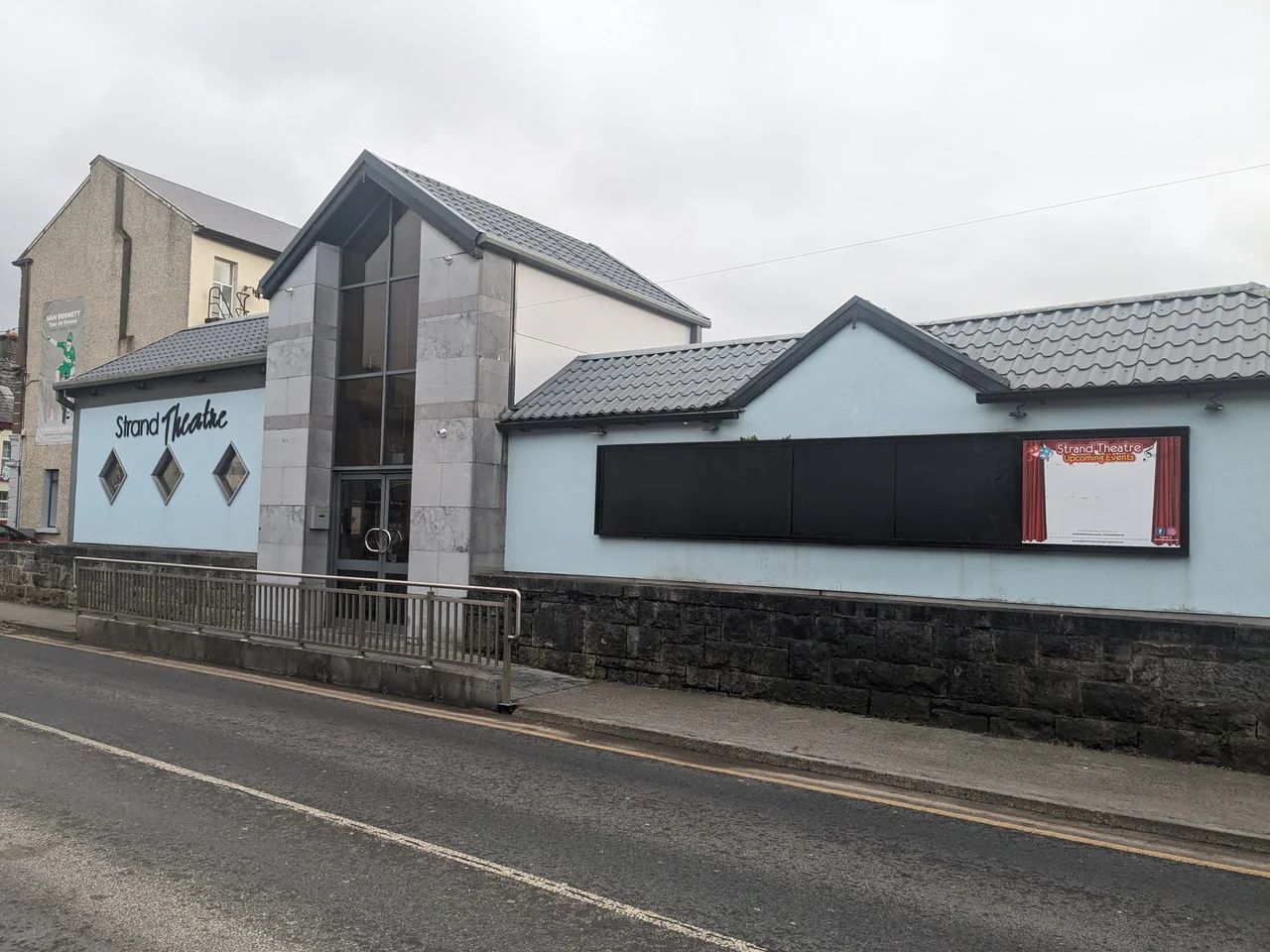
Modern Carrick's deepest reputation may be in cycling. Sean Kelly - winner of the 1988 Vuelta a España, four Paris-Nice titles, a Milan-San Remo and a Liege-Bastogne-Liege - grew up on a farm just outside town and rode for the Carrick Wheelers club. Sam Bennett, a ten-time Grand Tour stage winner and the 2020 Tour de France green jersey, came up through the same club. The Sean Kelly Sports Centre carries Kelly's name. The town's other cultural export is the Clancy Brothers - Paddy, Tom, Bobby and Liam - who took Irish folk music from Carrick-on-Suir to the Ed Sullivan Show and the world. Liam Clancy's voice is still on the Spotify playlists of people whose grandparents danced to him in New York pubs in the 1960s. The Old Bridge from 1447 still carries traffic; the Tholsel at the West Gate keeps its 1784 clock tower; and the Strand Theatre, opened in 1974 by Micheál Mac Liammóir, still puts on a season.
From the Air
Carrick-on-Suir sits at 52.35°N, 7.41°W on the River Suir in south-eastern County Tipperary, near the borders with Waterford and Kilkenny. From the air, look for the river curving past the town, the Comeragh Mountains rising to the south, and the N24 road running through the town parallel to the river. The Old Bridge (1447) is the obvious central crossing. Nearest civil airports: Waterford (EIWF) about 25 km east, Cork (EICK) about 95 km west-south-west, Shannon (EINN) about 130 km north-west.
Nearby Stories
- Young Ireland rebellion 3.7 km away
- Clonmult Ambush 4.2 km away
- Dunbrody Abbey 5 km away
- Old Parish 5.8 km away
- Doon, County Limerick 12 km away
- Mitchelstown Castle 13 km away
- County Carlow 18 km away
- Ramsey Island 117 km away