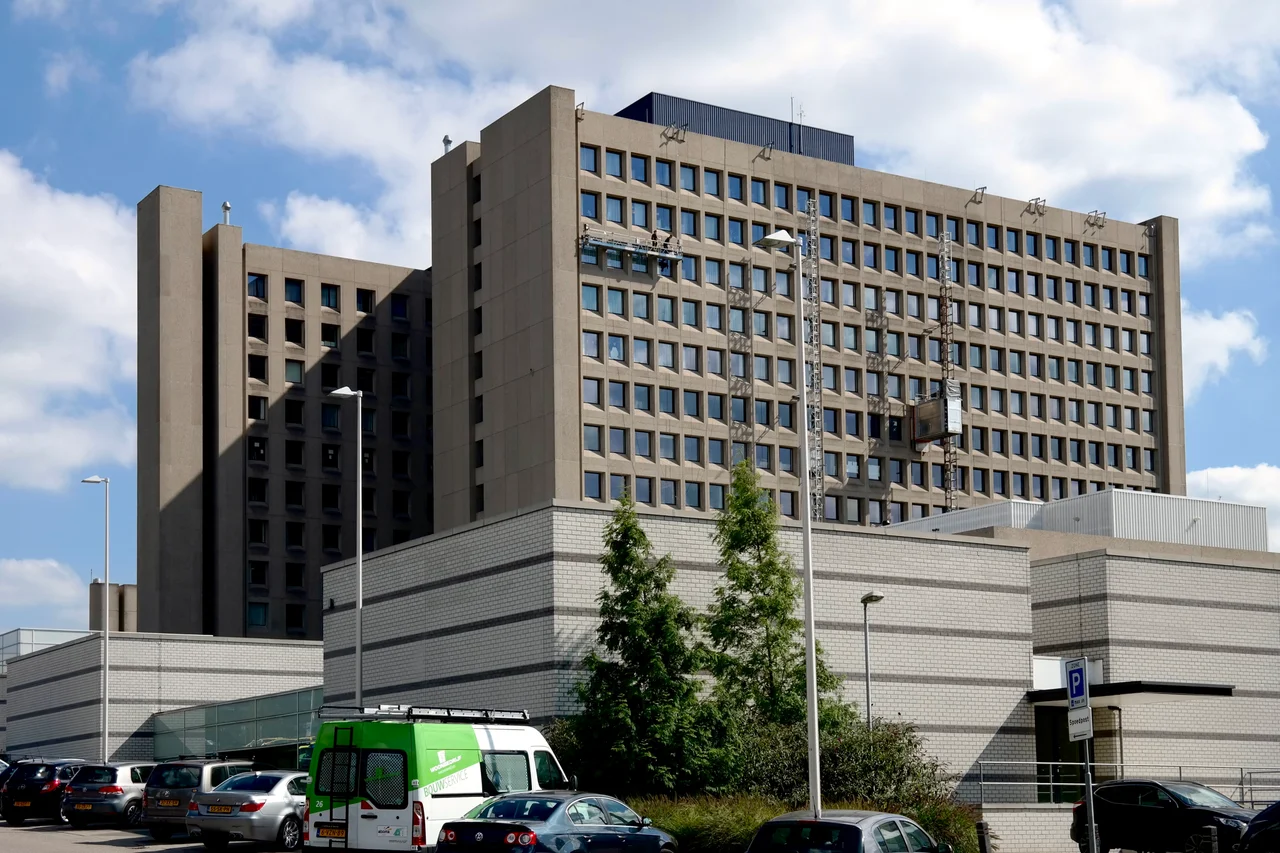

Catharina Ziekenhuis
In 2022, a heart surgeon named Ferdi Akca performed a coronary bypass at the Catharina Hospital in Eindhoven without doing the one thing patients and television have always associated with open-heart surgery: he never opened the breastbone with a reciprocating saw. He had watched colleagues do minimally invasive heart-valve replacements during his training and became convinced the same approach could work for bypasses. He was the first heart surgeon in the Netherlands to prove it. Two years later he was teaching the technique to colleagues across the country and abroad. This is the kind of thing the Catharina Hospital does, regularly, with relatively little fanfare.
Seven Sisters from Tilburg
The hospital began with a parish-council request in 1843. The Catharina parish in Eindhoven wanted healthcare in the city, and seven sisters from the Sisters of Charity congregation in Tilburg came to set it up. What evolved was the Roman Catholic Inner Hospital, run for decades from a building on the Vestdijk in the city centre - the spot where the Heuvel Galerie shopping mall now stands. It carried the patronage of Saint Catherine of Alexandria, who in Roman Catholic tradition is the patron saint of hospitals, sharing the name of the church that had launched the whole project. By the early 1960s the building was overcrowded and outdated. Construction on a new site at Michelangelolaan in Woensel began in 1968 and finished in summer 1973. The move came at an awkward moment: the thoracic surgery department was in the news over disagreements about a heart surgeon's performance. The opening of the new building doubled as a rebrand: it became the Catharina Hospital.
The Cancer Discovery Hidden in the Fallopian Tube
In 2004, gynaecological oncologist Jurgen Piek published a finding that has reshaped how the medical world thinks about ovarian cancer. Studying women with a hereditary increased risk, he was the first to demonstrate that the precursor abnormalities were not in the ovaries at all - they were in the fallopian tubes. Subsequent research from groups around the world confirmed it and extended it: at least 60 percent of non-hereditary ovarian cancers appear to originate in the fallopian tube. The implication for prevention has been substantial. The work came out of a hospital that is technically not a university hospital - a category that, in the Dutch system, does not receive government funding for scientific research.
The Angioplasty Adjustment That Crossed the Ocean
In 2009 the Catharina Hospital was the driving force behind a small but worldwide change in angioplasty. Two of its cardiologists, Pim Tonino and Nico Pijls, led an international study involving one thousand heart patients across twenty hospitals in Europe and the United States. The change they were testing was modest. The result was not. The technique they validated produced a measurable global decrease in deaths following angioplasty. The New England Journal of Medicine published the findings. A 'top clinical' Dutch hospital - one tier below the university hospitals - had quietly altered the standard of care for one of the most commonly performed cardiac procedures in the world.
The Largest Heart Center in the Country
Catharina is one of only eight non-university hospitals in the Netherlands authorised to perform open-heart surgery. Its cardiovascular department is the largest of its kind in the country, and its Catharina Cancer Institute, complete with radiotherapy, is the other supraregional specialty. The hospital trains doctors and nurses in close partnership with Maastricht UMC+ and the Eindhoven University of Technology just down the road; 19 professors hold positions at the hospital. It belongs to Santeon, a quality-focused alliance of seven major Dutch top-clinical hospitals. Since 2024 its heart surgeons have been on call for the trauma surgeons at Elisabeth-TweeSteden Hospital in Tilburg when stab or gunshot wounds reach the heart. In February 2025 Newsweek placed it 236th on its list of the World's Best Hospitals - a respectable showing for a non-academic institution in a city of 240,000.
Hospitals That Watch You at Home
In 2023 the Catharina launched a home monitoring centre, where specialist nurses watch patient data in real time through screens and headsets while the patient stays on their couch with a phone or tablet. The supported pathways are unglamorous and useful: COPD, COVID, influenza, gestational diabetes, heart failure, strokes. Fewer hospital visits, more continuous data. The same year the hospital was halfway through scaling up Value-Based Healthcare across its conditions - measuring outcomes, costs, and process quality on a per-condition basis and iterating. Because Catharina cannot draw on government research funding the way academic hospitals can, it runs the Catharina Research Fund as an alternative pipeline. A heart surgery without a saw. A finding about fallopian tubes that reshaped oncology. An angioplasty tweak adopted globally. The hospital keeps producing firsts on a research budget that has to fund itself.
From the Air
Coordinates 51.4658 N, 5.4717 E, in the Woensel district of Eindhoven on Michelangelolaan. Best viewing altitude 1500-2500 ft AGL; the large multi-block Catharina complex sits on the north side of the city. Nearest airports: Eindhoven Airport (EHEH) 7 km west, on a typical approach path - mind the controlled airspace. Weeze (EDLV, Germany) 65 km east.
Nearby Stories
- Geertruidenberg Castle 4.8 km away
- Castle of Westerlo 7.6 km away
- Binnendieze 9.8 km away
- Hoogstraten Castle 9.9 km away
- Steyl 14 km away
- Kleve 17 km away
- Heinsberg-Lindern Railway 17 km away