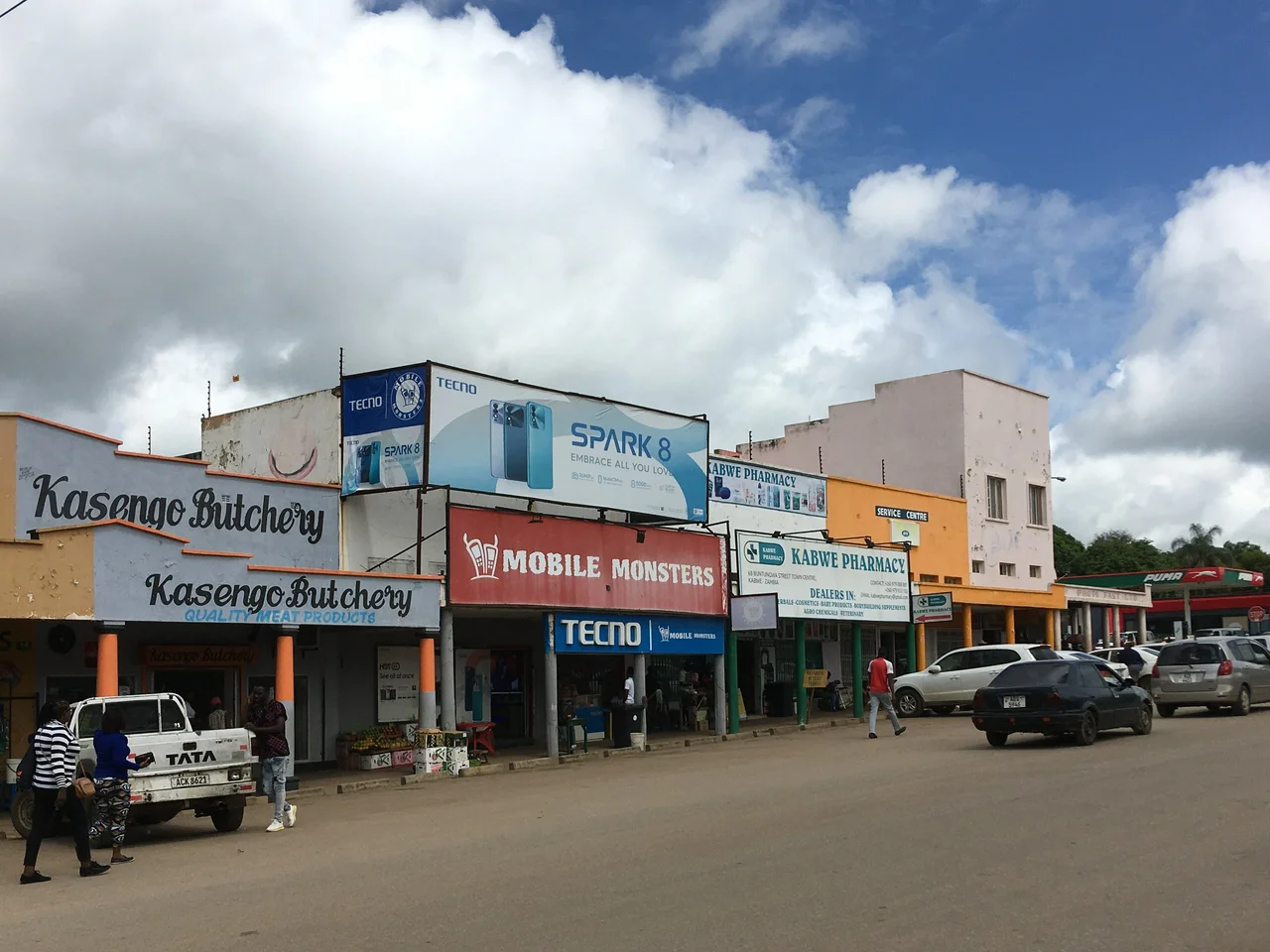

Central Zambia
Lusaka's airport hums with flights from Johannesburg, Dubai, Nairobi, Addis Ababa, and Istanbul. The overnight coach from Gauteng pulls in rumpled at dawn. Trains from Livingstone clatter along the Zambia Railways line into the capital's fringes. Every arterial road in the country points here like spokes to a hub. And yet drive thirty minutes out of Lusaka in nearly any direction and you are in Central Zambia proper - a landscape where the Lenje, the Lala, and the Kaonde hold festivals that draw hundreds of thousands of people, and where a fig tree can be a national landmark.
Lusaka, Kabwe, and the Big Tree
Central Zambia, loosely defined, covers Lusaka Province with the capital city Lusaka and Central Province with Kabwe and its surroundings. Lusaka itself has several cultural facilities, including the Lusaka National Museum, whose exhibitions work through Zambia's colonial history, traditional village life, and witchcraft - three subjects that, in practice, cannot be separated from each other. Kabwe, the Central Province capital, is home to the Big Tree - a very large fig designated a National Landmark. Further north in Kapiri Mposhi sits the western terminal of the Tanzania-Zambia Railway. TAZARA connects landlocked Zambia to the Tanzanian port of Dar es Salaam and also links to Zambia Railways lines running from Kitwe in the Copperbelt through Lusaka to Livingstone at Victoria Falls. Three cities, three functions: capital, landmark, railhead.
Lechwe, Sitatunga, and Ten Million Bats
The wild country is the reason many travelers come. In Blue Lagoon National Park, herds of Kafue lechwe crowd the flooded Kafue Flats, sitatunga pick their way through the swamps, and zebra, reedbuck, and buffalo graze the drier margins. Lochinvar National Park - across the Kafue from Blue Lagoon - is extremely rich in animal life: hippos and crocodiles in the water, puku, kudu, red lechwe, impala, waterbuck, bushbuck, oribi, blue duiker, Burchell's zebra, warthogs, mongooses, Nile monitor lizards, porcupines, serval, civet, terrapin, vervet monkeys, bush babies, and Cape buffalo. Lion, leopard, and blue wildebeest move through too. Kasanka National Park on Central Province's northern edge hosts one of the planet's greatest wildlife spectacles: roughly ten million straw-colored fruit bats arrive every year in October and November, an event so dense that the sky at dusk turns into a living screen. 114 mammal species and more than 471 bird species have been recorded in Kasanka alone. And Kafue National Park, Zambia's largest, shelters a full cast of African wildlife - elephant, hippo, buffalo, zebra, lion, leopard, and an immense variety of birds.
Language in the Capital and Beyond
Language geography in Central Zambia is complicated and alive. Lamba is spoken in towns and districts of Central Province such as Kapiri Mposhi, Mkushi, Lufwanyama, and Ndola. In Lusaka Province, the most commonly spoken language is ciNyanja, a lingua franca close to ciChewa and ChiNsenga - the languages of Zambia's Eastern Province - with notable influence from Nguni languages carried north by migration. In Lusaka City itself, a dialect called Town Nyanja has become the common speech. It is a hybrid based on Nyanja that absorbs vocabulary from English, Bemba, and Nsenga, evolving in real time through taxis, markets, and radio programs. When a traveler asks which language to learn, the honest answer is: some of all of them, and people will meet you partway.
The Festival Year
Central Province runs on a calendar of traditional festivals that organize the farming year and carry the weight of identity politics. The Ikubi Lya Loongo festival takes place in Mumbwa District in July; the Ichibwela Mushi festival in Mkushi District in September. The Kaonde people hold the Musaka Jikubi festival in Mumbwa in September and the Ikubi Lya Malumbe-Munyama festival in October. The Lenje people's Kulamba Kubwalo festival, held in Chibombo District every October, draws roughly 250,000 people to pay tribute to their chief and celebrate the harvest. The Mulungushi Rock of Authority near Kabwe is called the birthplace of Zambian independence - an outcropping where the rallies of the early 1960s turned colonial Northern Rhodesia into the Republic of Zambia. Between those festival grounds and the Rock, between the bat migration at Kasanka and the daily pulse of Lusaka International, Central Zambia is less a destination than a place you keep finding yourself in, sometimes without meaning to.
From the Air
Coordinates 14.41 degrees south, 28.77 degrees east, elevation averaging 1,200 meters across the central plateau. Central Zambia occupies the country's geographic and demographic middle, with Lusaka's urban footprint and the Kafue Flats visible from significant distances. Nearest major airport is Kenneth Kaunda International (FLKK) at Lusaka, hub for most domestic flights and heavily serviced by international carriers. Cruise at 6,000 to 10,000 feet AGL to take in the sweep from the Lukanga Swamp in the north to the Kafue Flats in the south. Afternoon convection builds quickly over the plateau in summer.
Nearby Stories
- Chibombo bus crash 9.4 km away
- Zambezian flooded grasslands 32 km away
- Central Province, Zambia 38 km away
- Northern Rhodesia 59 km away
- Luangwa Bridge 133 km away
- Kasanka National Park 225 km away