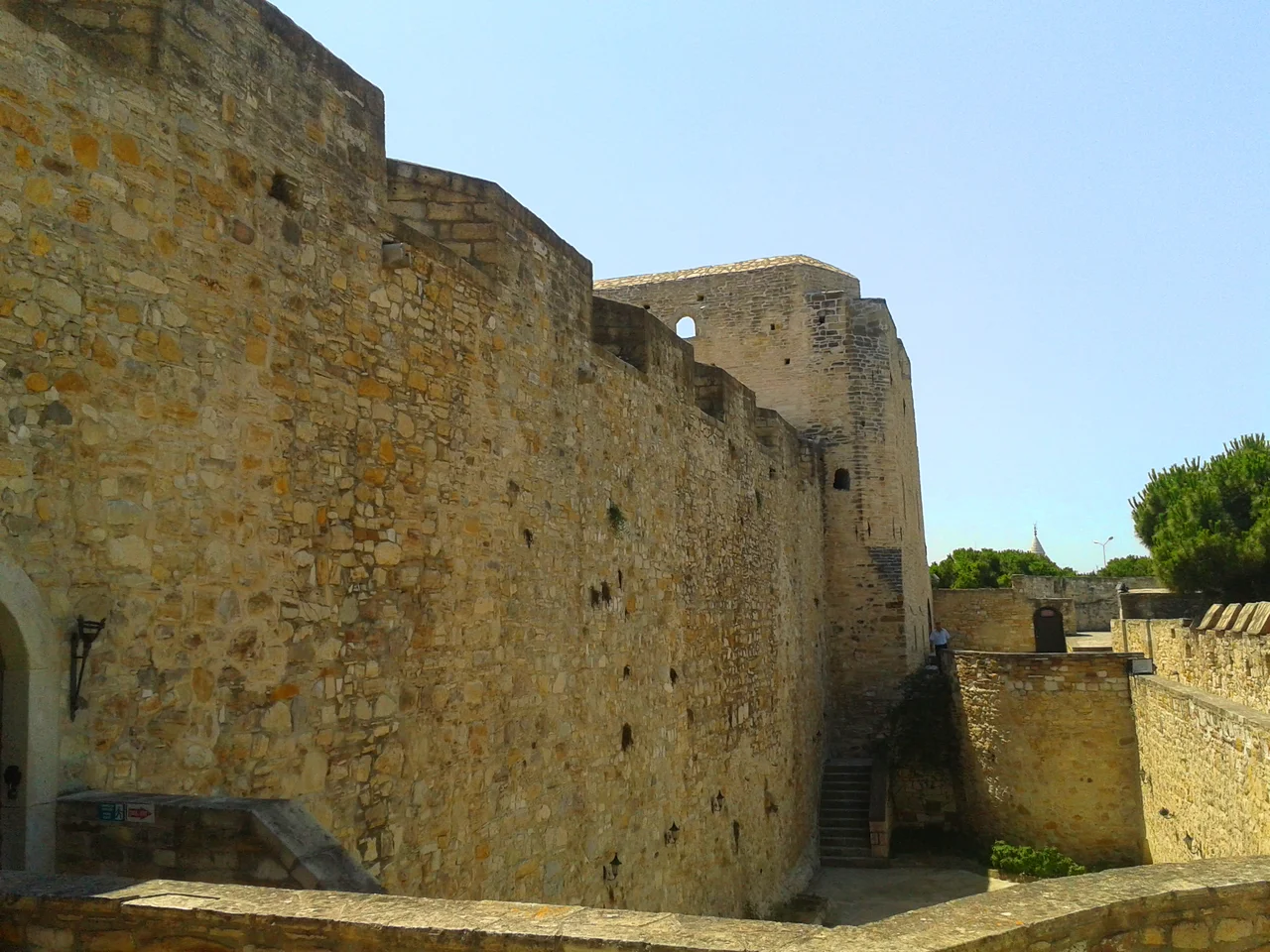

Çeşme Castle
The castle was built to stop ships, and now there are no ships beneath its walls - the Aegean has quietly retreated, leaving the fortress a little inland and slightly puzzled by its own purpose. For five centuries the bastions of Çeşme Castle watched the water for raiders. Today they watch a town of cafés and ferry queues, and in summer the courtyards fill not with soldiers but with festival crowds.
Built for the Venetians
Çeşme guards a fine natural harbor on the Anatolian coast, directly across a narrow channel from the Greek island of Chios, and that location made it a target. During the expansion of the Ottoman Empire the town was raided twice by the Venetians, in 1472 and again in 1501, and the empire decided the harbor needed proper defenses. The castle was raised in 1508, during the reign of Sultan Bayezid II, commissioned by Mir Haydar, the governor of the province of Aydın. Its plan is rectangular and businesslike: moats on three sides, six bastions, walls thick enough to absorb the cannon of the age. It was a working fortress, not a palace, built by men who had been attacked and meant not to be again.
The Bay That Burned
In July 1770 the castle witnessed one of the great naval catastrophes of the eighteenth century. During the Russo-Turkish War, a Russian fleet under Aleksey Orlov cornered the Ottoman navy in the bay of Çeşme and, over the night of the 6th and 7th, destroyed it almost entirely with fireships and bombardment. The Ottoman losses were staggering - thousands of sailors killed and the bulk of the fleet sunk or burned in a single night. The castle itself was bombarded and later had to be repaired. The Battle of Çeşme is still remembered in the town, and the museum inside these walls displays objects raised from the sunken ships, including relics of the Russian flagship that did not survive its own victory.
When the Sea Withdrew
Çeşme Castle began as a seaside castle, its feet nearly in the water. But the streams feeding the bay carried silt for centuries, and alluvial deposits slowly built the land outward. The shoreline crept away, and the fortress that once rose straight from the harbor now stands a short distance inland, its sea gate opening onto dry ground. It is a quiet reminder that coastlines are not permanent and that a building can outlive the very geography that gave it meaning. The walls that were designed to repel a fleet now look out over rooftops and a promenade.
A Fortress at Festival
The castle has found a gentler role. In 2020 it was added to Turkey's tentative list for UNESCO World Heritage status, recognized as part of the network of fortifications that once guarded Genoese and Ottoman trade routes across the eastern Mediterranean. Inside, the Çeşme Museum occupies the old stronghold, and in front of the gate stands a statue of the Ottoman admiral Cezayirli Gazi Hasan Pasha with his lion at his side. In the warm months the fortress becomes a stage: the Çeşme International Music Festival and the town's own festival fill the courtyards with music, the bastions glowing under summer light. A place built for the worst of human intentions now hosts some of the best.
From the Air
Çeşme Castle sits at roughly 38.32°N, 26.30°E on the western tip of the Çeşme peninsula in İzmir Province, Turkey, about 35 km west of İzmir. The rectangular fortress with its six bastions is easy to pick out against the harbor and resort town. Across the channel to the west lies the Greek island of Chios, with Chios Island National Airport (LGHI) about 12 nm away. On the Turkish side the nearest major airport is İzmir Adnan Menderes (LTBJ / ADB), roughly 45 nm east. Best viewed from 3,000-6,000 feet in clear conditions, with the bay of the 1770 battle spread out to the north.
Nearby Stories
- Psara 18 km away
- Battle of the Oinousses Islands 28 km away
- St. Helena Church 35 km away
- Battle of Corycus 35 km away
- Greek Islands 60 km away
- Temple of Artemis at Ephesus 61 km away
- Adramyttium 94 km away
- Skyros 101 km away