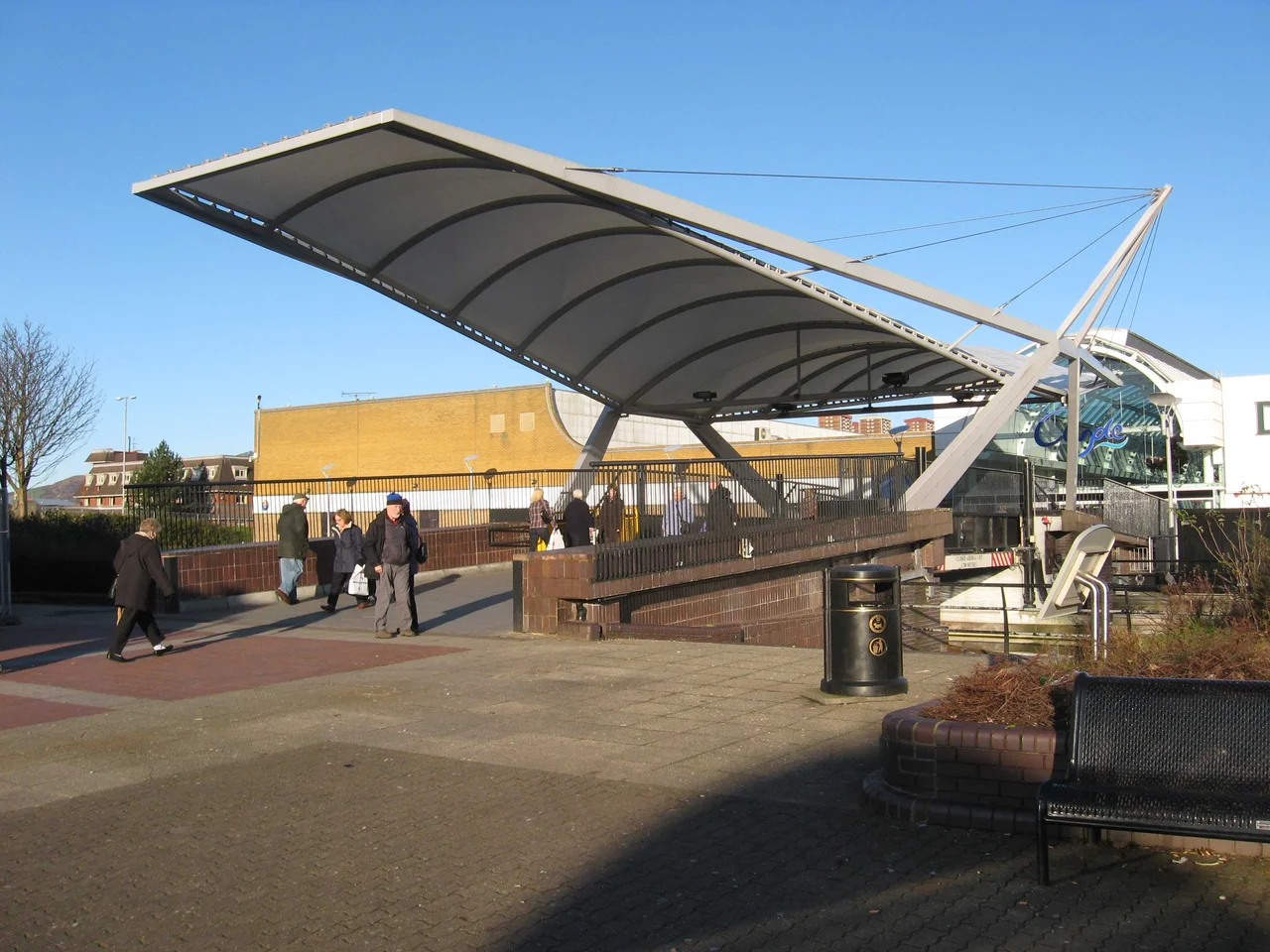

Clydebank
On the nights of 13 and 14 March 1941, the Luftwaffe came for Clydebank. The bombers were aiming for John Brown's shipyard, where the warship HMS Hood had been built and where Queen Mary and Queen Elizabeth had been launched into the Clyde, and for the Singer sewing-machine factory, which was making rifle parts and shell fuses for the war effort. Over two nights, 528 civilians were killed and 617 more seriously injured. Of the town's 12,000 homes, only seven escaped damage entirely. Eighty-five years later, Clydebank is a town of about 27,000 people on the north bank of the River Clyde, with the Titan Crane still standing where the shipyard used to be - a 150-foot reminder that the place was built by the people who built ships.
Before the Shipyard
Before 1870, this stretch of riverbank was rural and quiet, a scatter of villages with names like Kilbowie, Drumry, Hardgate, Faifley, Duntocher, Dalmuir, and Old Kilpatrick. A long-standing local legend says that Old Kilpatrick was the birthplace of Saint Patrick, the patron of Ireland. Roman engineers also passed through here: the Antonine Wall, the empire's brief northern frontier, ran through what is now Hardgate and Duntocher, with a fort at one of the regular intervals along its length. In 2008 the Wall was designated a UNESCO World Heritage Site as part of the multinational Frontiers of the Roman Empire listing. The Romans gave the place its first walls. The shipyard gave it its name.
Thomson's Buildings
In the early 1870s, the Clyde Navigation Trustees needed more quay space in Glasgow and used compulsory purchase to take the Clyde Bank Iron Shipyard in Govan from its owners, J. and G. Thomson. The Thomsons hunted for a new site downriver and bought flat land at the West Barns o'Clyde, opposite the mouth of the River Cart - a crucial detail, because that confluence gave the new yard enough draught to launch much bigger ships. Construction began on 1 May 1871. Workers were ferried in by paddle steamer at first, and then the company began building blocks of tenements to house them, the so-called 'Tamson's Buildings' that gave the new town its first streets. By 1886 the settlement had grown enough to be founded as a police burgh. A native of Clydebank became known as a Bankie, a name that still distinguishes locals from Glaswegians half a mile down the road.
Red Clydeside
Clydebank produced ships and ideas in roughly equal measure. In March 1911, 11,000 workers at the Singer factory walked out in solidarity with twelve female cabinet polishers who were protesting a reorganisation of the work process. The strike ended within weeks, but Singer fired 400 workers, including all the strike leaders and suspected members of the Industrial Workers of Great Britain. Among them was Arthur McManus, who would go on to become the first chairman of the Communist Party of Great Britain. In the four years before the First World War, days lost to strikes on Clydeside increased fourfold; Scottish Trades Union Congress membership rose from 129,000 to 230,000. The phrase 'Red Clydeside' was earned, not assigned. After the Second World War, the rebuilt Linnvale estate named its new streets after Labour cabinet ministers: Attlee Avenue, Bevin Avenue, the names of the people who had built the welfare state for the people who had built the ships.
Three Queens and a Closing
John Brown's yard, into which Thomson's was absorbed, became one of the great names in twentieth-century shipbuilding. From Clydebank's slipways went RMS Queen Mary, RMS Queen Elizabeth, and the Queen Elizabeth 2 - three of the most celebrated ocean liners ever built - along with HMS Hood and dozens of other warships. In the 1970s the yard, by then part of Upper Clyde Shipbuilders, became the site of the famous 'work-in' led by Jimmy Reid: workers occupying the yard rather than going on strike, demonstrating they could keep building ships even after the company had collapsed. The yard finally closed in 2000, the buildings cleared, the site redeveloped for housing, a college campus, and the preserved Titan Crane. The Singer factory had closed twenty years earlier, in 1980. The pop band Wet Wet Wet formed in Clydebank in 1982. Their bass player Graeme Clark later summarised the local options of that decade: 'It was either crime, the dole, football, or music - and we chose music.'
A Town That Keeps Its Names
Walk Clydebank today and the layers are still legible. The Antonine Wall ridge runs through the northern suburbs. The Forth and Clyde Canal slips quietly through the town centre, threading past the redeveloped waterfront. West Dunbartonshire Council is based in Dumbarton, seven miles north-west, but Clydebank remains the council area's largest town. The 2011 Census counted 28,799 residents. The mid-2012 estimate suggested a slight decline. Notable Bankies include the comedian Kevin Bridges, the actor James Cosmo, the footballer John McGinn, the landscape architect Ian McHarg, and Jimmy McCulloch, who played guitar with Wings and Thunderclap Newman before his early death. The town does not advertise itself heavily. It does not need to. The Clyde is still there, the cranes are mostly gone, and the streets still carry the names of strikers and prime ministers.
From the Air
Located on the north bank of the River Clyde at 55.90N, 4.40W, just west of Glasgow. The Titan Crane near the former John Brown's shipyard is a distinctive landmark, visible from altitude. The Forth and Clyde Canal threads through the town centre. Glasgow International Airport (EGPF) lies just 2-3 nm south across the Clyde - Clydebank is directly under or adjacent to EGPF's airspace and approach paths. Glasgow CTR is Class D. Coordinate with Glasgow ATC before any low-level flight. Best aerial viewing from departing or arriving traffic at EGPF. The Erskine Bridge is the major Clyde crossing immediately downriver.
Nearby Stories
- Holy Loch 0.7 km away
- Falkirk Wheel 2.2 km away
- Battle of Loup Hill 2.4 km away
- Tullibardine Distillery 5.1 km away
- Loch Katrine 7.5 km away
- New Lanark 8.5 km away
- Stewarton 8.9 km away
- HMS Dasher (D37) 12 km away