
Coachella Valley Preserve
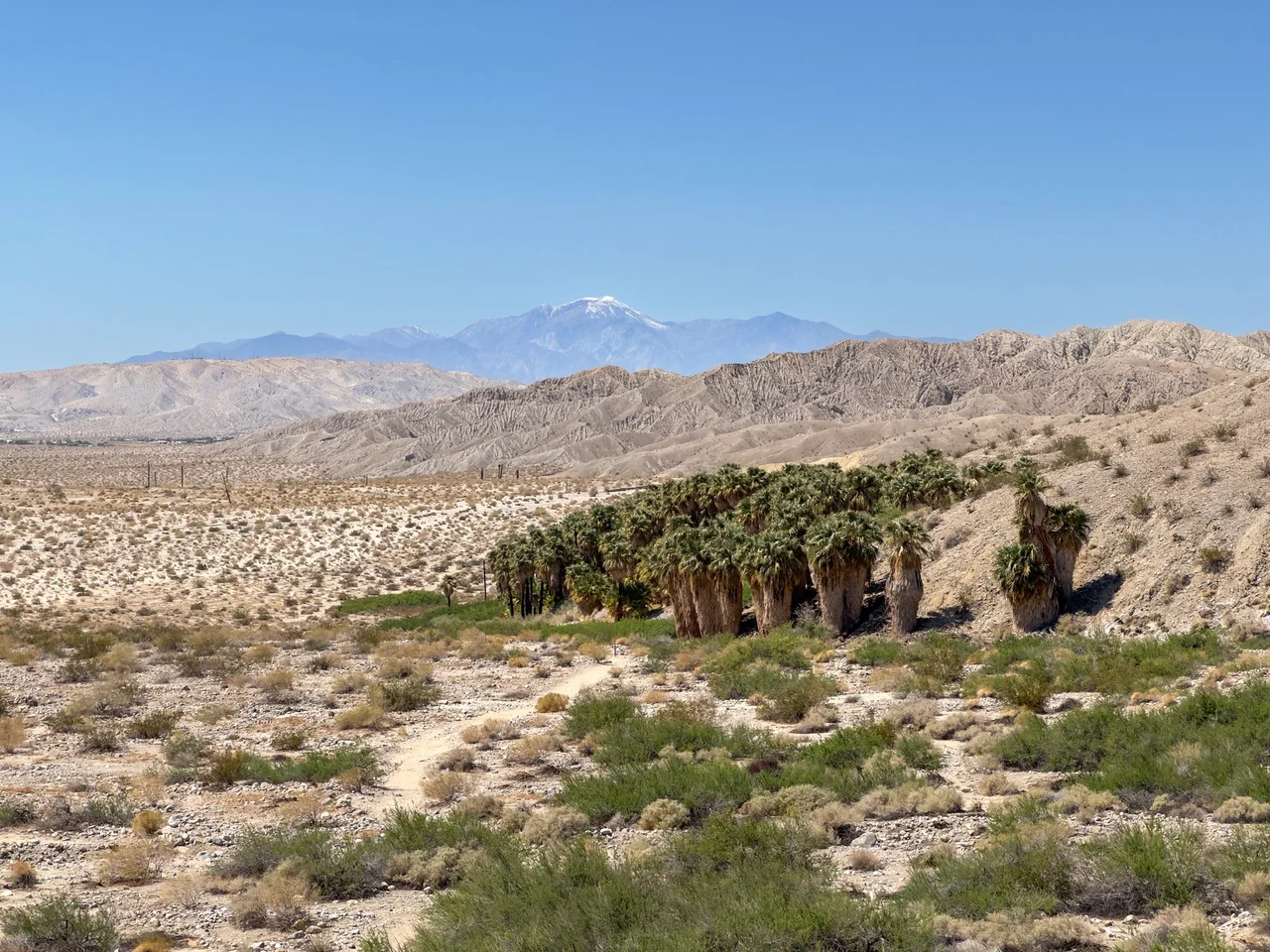
Stand at 1,000 Palms Oasis and the geology makes itself felt. The ground here is moving, slowly, as two of Earth's tectonic plates grind past each other along the San Andreas Fault. The water seeping up around the palm roots arrives from underground, forced to the surface by the pressure of that collision. The California fan palms drinking from it are native here — genuinely native, not planted — and the oasis they form in this landscape of creosote and blowing sand is as old as the fault that feeds it.
The Fault That Makes an Oasis
The Coachella Valley Preserve encompasses 2,206 acres in the central valley, but its ecological significance concentrates in the palm groves fed by San Andreas Fault groundwater. As the Pacific and North American plates slide past each other, they create fractures along which water moves toward the surface. California fan palms — Washingtonia filifera — cluster at these seeps because they need more water than the desert rainfall provides. The 1,000 Palms Oasis, the most accessible of several groves within the preserve, contains one of the most photographed groupings of native palms in Southern California, their trunks reaching 60 feet or more and their distinctive skirts of dead fronds rustling in the wind. The Nature Conservancy, which helped establish the preserve, worked to maintain these oases against the encroachments of non-native vegetation; management of the Thousand Palms Oasis Preserve was transferred to the Center for Natural Lands Management in 2013, with the Bureau of Land Management overseeing other units.
A Fish from the Ice Age
The preserve contains habitat for desert pupfish, a species that has persisted since the Pleistocene — the geological epoch that ended roughly 11,700 years ago, when the climate that supported large lakes across the Mojave and Sonoran Deserts gave way to the aridity of today. Desert pupfish are small, roughly the size of a young goldfish, and they have evolved physiological tolerance for conditions that would kill most freshwater fish: high salinity, extreme temperature variation, low oxygen levels. They survive in the oasis pools and in isolated water bodies throughout the desert southwest, relics of a wetter world marooned in the refugia that persist. The preserve's pools represent some of the most secure habitat for this species in the Coachella Valley.
A Landscape Assembled from Parts
The preserve includes several distinct units beyond the main palm oases: the Coachella Valley National Wildlife Refuge, managed primarily for the federally threatened fringe-toed lizard; the Indio Hills Palms unit, which contains additional palm groves in the rugged terrain east of the main valley; and the Thousand Palms Oasis Preserve, which encompasses the most-visited groves. Together these units protect a cross-section of valley habitats — sand dunes, palm oases, desert wash, scrub — in a connected landscape that allows species to move between them. The Nature Conservancy established the preserve through negotiations with federal and state agencies and private landowners that took years to complete.
183 Birds and Counting
Birders have recorded more than 183 species within the preserve, making it one of the more productive birding sites in the valley. The concentration of water and vegetation that the oases represent functions as a magnet during migration, when birds moving along desert corridors need water and rest. The palms themselves provide nesting sites for species that use cavities and crevices in the dead frond skirts. Raptors hunt the open desert surrounding the oases. The boundary between protected preserve and adjacent development is sharp and immediate — step outside the preserve boundaries in most directions and you are quickly in residential or commercial territory — which gives the preserve an island quality that makes its 183 species seem like a catalogue of everything that can persist when development stops at the fence line.
From the Air
Located at 33.838°N, 116.319°W, the Coachella Valley Preserve straddles the Indio Hills area of the central valley. The palm groves appear from altitude as dark-green oval clusters against the pale desert terrain, clearly distinguishable from the irrigated green of nearby agriculture and golf courses. The San Andreas Fault trace runs through this area and creates linear landscape features visible from the air. Nearest airports: KTRM (Jacqueline Cochran Regional, approximately 15 miles southeast), KPSP (Palm Springs International, approximately 15 miles west).
Nearby Stories
- Morongo Basin 7.9 km away
- Duroville 7.9 km away
- Coxcomb Mountains 9.1 km away
- Cabazon Dinosaurs 10 km away
- Cadiz Dunes Wilderness 12 km away
- Chocolate Mountains 14 km away
- San Pasqual Band of Diegueno Mission Indians 46 km away
- San Bernardino Train Disaster 58 km away