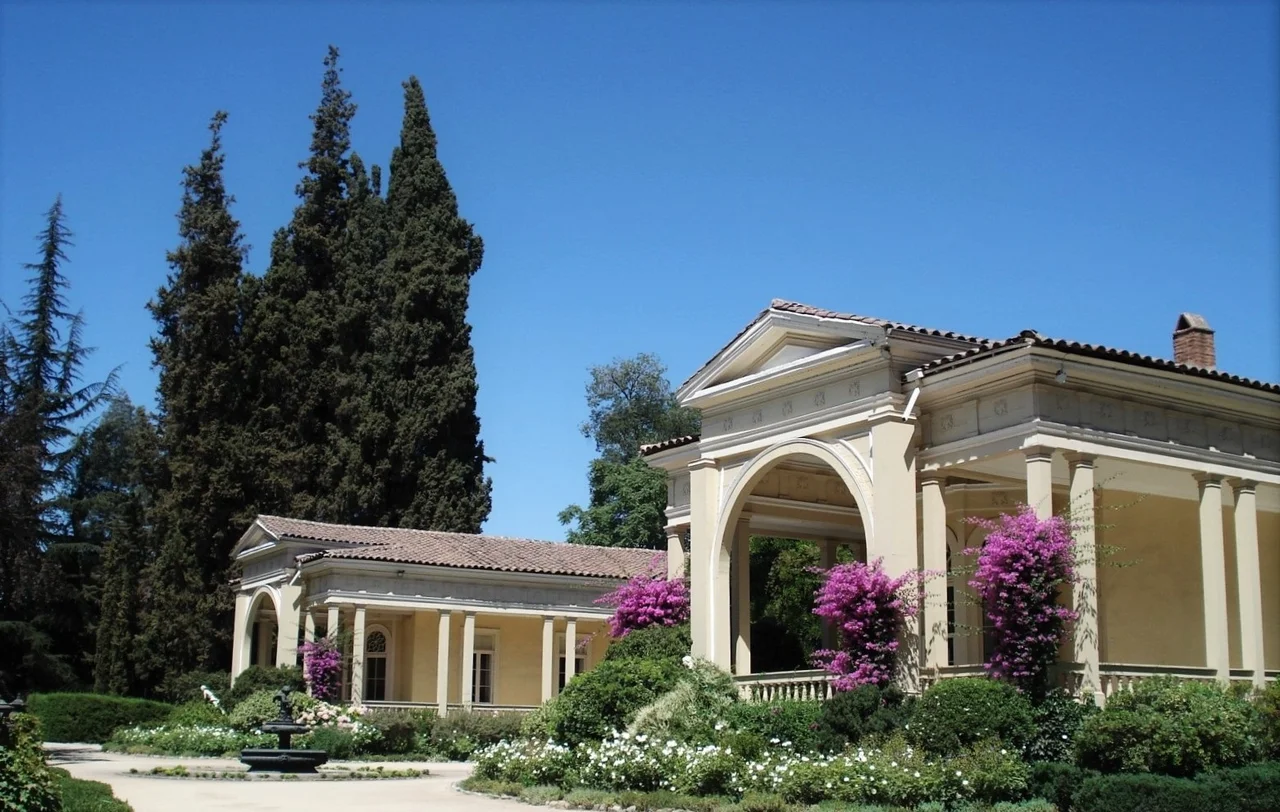

Concha y Toro
Don Melchor had a problem with thieves. His private cellar in the Maipo Valley held the finest bottles in Chile, and the townspeople knew it. So sometime in the late nineteenth century, the founder of Concha y Toro reached for a weapon older than any lock: he let it be whispered that the devil himself lived among the barrels. The disappearances stopped. More than a century later, that piece of invented folklore has become Casillero del Diablo, the "Devil's Cellar," and the winery it protects is the largest producer and exporter of wine in all of Latin America.
A Minister's Vineyard
Melchor de Santiago Concha y Toro was no farmer when he founded the winery in 1883. He was a former Chilean Minister of Finance, a man of the Santiago aristocracy who married Emiliana Subercaseaux and decided to plant something lasting in the soil south of the capital. Rather than rely on local stock, he sent to France for cuttings from the great châteaux of Bordeaux: Cabernet Sauvignon, Sauvignon Blanc, Sémillon, Merlot, and Carménère. That last grape would prove unexpectedly important. Long believed extinct in its French homeland after phylloxera, Carménère survived quietly in Chilean vineyards, often mistaken for Merlot, until it was rediscovered and embraced as the country's signature red.
The Devil's Cellar
The legend was a sales tool before anyone called it marketing. Don Melchor spread the rumor of strange nocturnal happenings, and superstition did the rest. In 1966 the company turned the story into a brand, Casillero del Diablo, and the gamble paid off on a global scale. Today it is one of the most powerful wine brands in the world, poured in more than 130 countries and familiar to football fans as a longtime sponsor of major European clubs. The ultra-premium Don Melchor, named for the founder, followed in 1987 and put Chilean wine on the same tables as the Bordeaux that inspired it.
Pirque and the Marquesado
The heart of the operation sits at Pirque, in the Santiago Metropolitan Region, where vineyards spread toward the foothills of the Andes and the roads carry names from another century: Marqués de Casa Concha, Conde de la Conquista. These are not decorations. They are inherited titles, and the family ties to Chilean nobility are still living. The company's directors have included the Marquess of Casa Concha, the diplomat Mariano Fontecilla de Santiago-Concha, a great-grandson of the founder. Control has long rested with the Guilisasti and Larraín families, binding a publicly traded company worth millions of cases a year to a lineage that predates Chilean independence.
Empire of the Vine
From that single cellar, Concha y Toro has grown into a giant. It sells tens of millions of cases each year, owns vineyards across Chile and Argentina, and reached north into California with the purchase of Fetzer Vineyards. The estate at Pirque now draws visitors who come to walk the rows, taste the Cabernet, and step into the original cellar where guides retell the story of the devil with a showman's relish. The wine is real and excellent. The devil was always a fiction. Together they built an empire.
From the Air
The Concha y Toro estate at Pirque lies at roughly 35.06°S, 71.27°W, in the wine country south of Santiago near the foothills of the Andes. From the air, look for the geometric grid of vineyards laid against the rising terrain of the cordillera. The nearest major gateway is Santiago's Comodoro Arturo Merino Benítez International Airport (SCEL), about 50 nautical miles north; the regional fields around Curicó and Talca (the Maule area) lie to the south. A viewing altitude of 3,000-6,000 feet AGL gives the best sense of how the cultivated valley floor meets the abrupt wall of the Andes. Clear, dry summer days (December-March) offer the sharpest visibility over the Central Valley.
Nearby Stories
- La Frontera (Chile) 20 km away
- Radal Siete Tazas National Park 20 km away
- Vichuquén 33 km away
- Uruguayan Air Force Flight 571 35 km away
- Santa Olga 53 km away
- Pichilemu 54 km away
- Las Leñas 54 km away
- Witches' Cave 92 km away