
Concord University
The town was once called Concord Church. The name was chosen, in 1872, for what it meant: harmony, fellowship, the kind of word a small Appalachian community would use to describe what it wanted to be after the war. In the same year, the West Virginia Legislature passed an act creating a branch of the State Normal School at Concord Church - and the founding committee was led by veterans of both the Union and the Confederacy. There were no state funds for the first building. Five local families gave land and built one anyway.
Old Main and the First Fire
Classes started on May 10, 1875, with 70 students - all of them aspiring teachers. By 1887 the state had finally appropriated funds for a proper brick building, on the site that now holds Athens Middle School. That building burned to the ground in 1910. The school relocated to its current hilltop site and built a replacement in 1912, originally named Old Main. That building still stands. It is called Marsh Hall now, after a long-serving president, and its roof carries a 48-bell carillon. Most administrative offices, the social sciences, languages, and literature programs all work out of Marsh Hall. Students call it Admin. The view from its hilltop down across the Bluestone River valley is the reason the university advertises itself, with no apparent embarrassment, as The Campus Beautiful.
The Mountain Lions
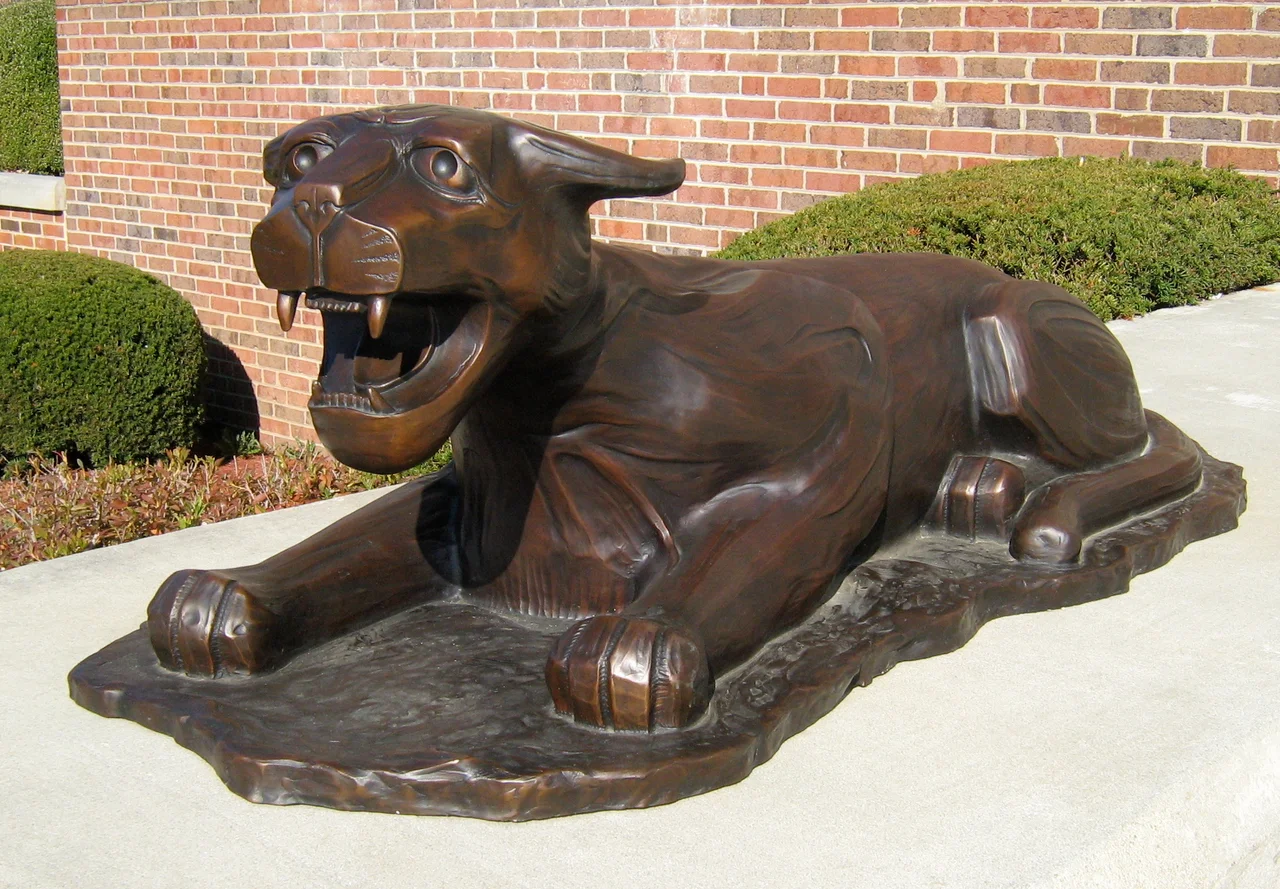
Concord competes in NCAA Division II as a member of the Mountain East Conference. The athletic teams are the Mountain Lions. Callaghan Stadium - with its artificial turf field funded by donor June O. Shott - hosts football, track and field, and tennis. Anderson Field, on the edge of campus, holds soccer, baseball, and softball. The university supports eight men's and nine women's intercollegiate teams. Christy Martin, the world champion boxer who became one of the most visible women in the sport during the 1990s, graduated from Concord. So did Bret Munsey, an Arena Football League coach. The most famous athletic alumnus, in name recognition, is probably Robert C. Byrd - the longtime US Senator from West Virginia, who studied here before his decades-long political career.
Freida Riley and the Rocket Boys
In Coalwood, West Virginia in the late 1950s, a young science teacher named Freida Joy Riley encouraged a group of mining-town high school boys to build rockets in their backyards. One of them was Homer Hickam. The boys would go on to win the National Science Fair in 1960. Hickam would write Rocket Boys, the memoir that became the 1999 film October Sky. Riley, who had Hodgkin's lymphoma, died in 1969 at age 32. She had been a Concord graduate. The school treats her memory with the seriousness it deserves - the kind of quiet pride that comes from knowing that a graduate of a small West Virginia teachers' college helped four boys believe they could build a rocket and reach the stars.
The Rahall Center and the Erma Byrd Building
Senator Byrd was not only a graduate, he also brought federal money. The Erma Byrd Higher Education Center, in nearby Beaver, opened in 2007 as a partnership facility for the region's public colleges - $10 million from the US Department of Health and Human Services, secured by Byrd, kicked off the construction. The Nick J. Rahall Technology Center on the main Athens campus, named for the long-serving congressman from the Third District, anchors Concord's Division of Business and its Entrepreneurial Studies Program. The center serves eight West Virginia counties - McDowell, Wyoming, Raleigh, Fayette, Greenbrier, Summers, Mercer, and Monroe - bringing together incubator businesses, students, and consulting faculty in a region that has had to reinvent its economic base more than once.
The Campus Beautiful
Athens, West Virginia is a small town - about a thousand people - tucked into the Bluestone region of the Appalachian Plateau. Concord University takes up most of it. The university's hilltop campus looks out across rolling Appalachian ridges in every direction. Marsh Hall's carillon chimes the quarter hours. The library - the largest in southern West Virginia, and a federal documents depository - houses the university archives, a DNA laboratory, distance education classrooms, a radio station, and a television studio in its basement. The campus observatory still operates. West Virginia's only electron microprobe lab sits on the ground floor of the Science Building. For a small school, in a small town, Concord University packs in an unusual amount of work.
From the Air
Concord University sits at 37.426 N, 81.004 W in Athens, West Virginia, at about 2,500 feet elevation atop a knoll in the Bluestone region of the Appalachian Plateau. Look for the hilltop campus with Marsh Hall's distinctive carillon tower as the highest visible feature. Athens lies about 10 miles north of Princeton on State Route 20. Nearest commercial field: Mercer County Airport (KBLF) in Bluefield, about 12 nm south-southwest. Beckley (KBKW) is about 28 nm north. Light mountain wave and turbulence are common over the Plateau ridgelines. The Erma Byrd Higher Education Center, where Concord teaches off-site classes, sits 25 nm north in Beaver, near I-77 exit 48.
Nearby Stories
- Appalachian League 8.2 km away
- Welch, West Virginia 9.4 km away
- Virginia Tech 16 km away
- Battle of Lewisburg 21 km away
- Floyd County, Virginia 21 km away
- Buffalo Creek Flood 22 km away
- Beckley, West Virginia 22 km away
- Emory and Henry University 43 km away