
Emory and Henry University
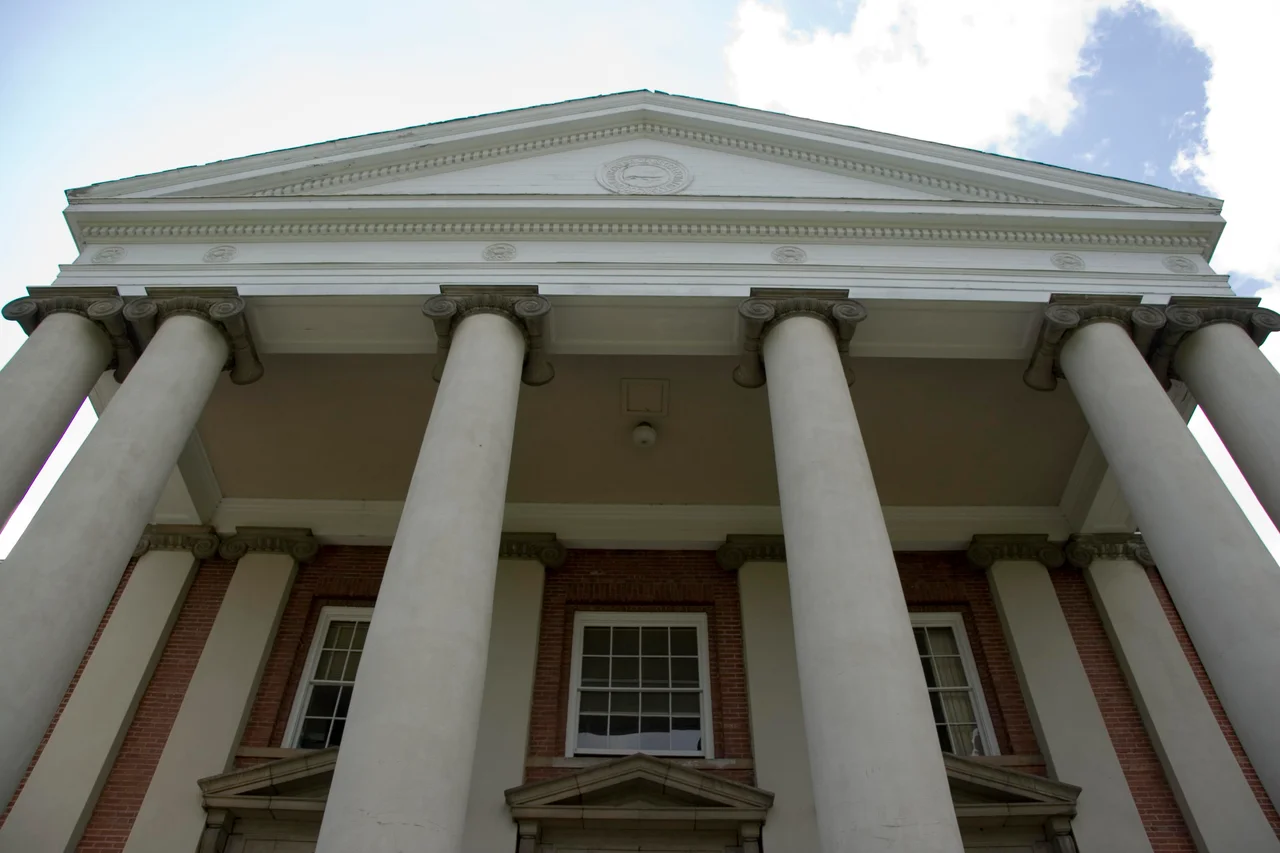
On September 30, 1836, four men - a Methodist minister named Creed Fulton, a Methodist farmer named Tobias Smyth, a Methodist businessman named Alexander Findlay, and Colonel William Byars - laid the foundation stone for Wiley Hall in the village of Emory, Virginia. They named their new college for Bishop John Emory, a Methodist bishop, and Patrick Henry, Virginia's first governor and patriot of the American Revolution. Some historians suspect the Henry actually honored Patrick Henry's sister Elizabeth Henry Campbell Russell, who lived nearby in Saltville and Chilhowie and had been a major financial backer. The college opened classes in spring 1838 with 60 students. One hundred and ninety years later it is still teaching - the oldest institution of higher learning in southwest Virginia.
The Hospital Years
Emory and Henry closed in April 1861 when its young men marched off to the war. In 1862 the Confederate States of America commandeered the campus, and Wiley Hall - barely twenty-five years old - became a military hospital until 1865. The hospital saw fighting during the Battle of Saltville, with wounded brought back from the saltworks twenty miles away. On October 7, 1864, the Confederate guerrilla Champ Ferguson walked into the hospital and murdered a Union lieutenant named Smith who lay there as a prisoner-patient. Ferguson would later hang for war crimes; the Smith murder was among the killings cited at his trial. The college reopened after Appomattox and absorbed Martha Washington College, the women's school in nearby Abingdon, from 1918 until Martha Washington's full closure in 1931.
Soldiers and Code-Breakers
James Ewell Brown Stuart - J.E.B. Stuart, the Confederate cavalry general who became one of Lee's most famous commanders - enrolled at Emory and Henry as a teenager from 1848 to 1850, before transferring to West Point. Other alumni took different paths in different wars. Thomas T. Handy, who enrolled in the early 1900s, became deputy chief of staff of the U.S. Army during World War II and signed the orders to drop the atomic bomb on Hiroshima. Frank Rowlett, class of 1929, joined William Friedman's tiny cryptanalytic team at the Army's Signal Intelligence Service and led the breakthrough that cracked Japan's diplomatic Purple cipher in 1940 - a feat that gave the United States access to Japanese diplomatic traffic before Pearl Harbor and throughout the war.
Wasps, the Rock, and the Duck Pond
The football team got its nickname after a single game. Emory and Henry played the University of Tennessee Volunteers in Knoxville, in their blue-and-gold striped socks and sleeves, and held the heavily favored Vols to a 6-0 lead at halftime through swarming, persistent defense. Knoxville sportswriters called the defenders Wasps for the way they kept stinging. The name stuck. Other campus traditions are gentler. Every athletic team at Fred Selfe Stadium touches the Rock - hauled from late assistant coach Fred Selfe's hometown - before games, honoring Selfe's locker-room creed: Trust in your teammates, trust in yourself. The Duck Pond stays open in winter because it is fed by a warm spring that runs out from beneath Wiley Hall's foundations. Ducks live there year-round.
University, and Trouble
On August 1, 2024, Emory and Henry College officially became Emory and Henry University - a name change reflecting graduate programs added over the previous decade. The change came with strain. In June 2025, the Southern Association of Colleges and Schools placed the university on Probation for Good Cause, citing significant non-compliance with financial responsibility standards. Probation for Good Cause is the most serious sanction the accreditor can impose short of revoking accreditation altogether. The school that survived a Civil War hospital occupation, the Great Depression, two world wars, and the merger of Martha Washington College now faces a more bureaucratic kind of test. The Wasps and the Duck Pond and the Rock are still there. So is Wiley Hall, where the wounded once lay - 187 years old this year, and listed on the National Register of Historic Places.
From the Air
Emory and Henry University sits at 36.77 N, 81.83 W in the village of Emory, Virginia, about seven miles east of Abingdon along U.S. Route 11 and Interstate 81 in Washington County. The 335-acre campus, with 168 acres in central use, occupies a small valley between low Appalachian ridges at about 2,000 feet elevation. From the air, Wiley Hall and Memorial Chapel are easily identified by their white-painted prominence. Nearest airports: Virginia Highlands (KVJI) at Abingdon about 7 nm west, Tri-Cities Regional (KTRI) 25 nm southwest. Recommended viewing altitude 3,500 to 5,000 feet MSL.
Nearby Stories
- Sullivan County, Tennessee 6.6 km away
- Tazewell County, Virginia 16 km away
- Wytheville Raid 17 km away
- A. P. Carter Homeplace 21 km away
- Pittston Coal Strike 23 km away
- Princeton, West Virginia 33 km away
- Watauga County, North Carolina 37 km away
- North Wilkesboro Speedway 48 km away