
Congress of Tucumán
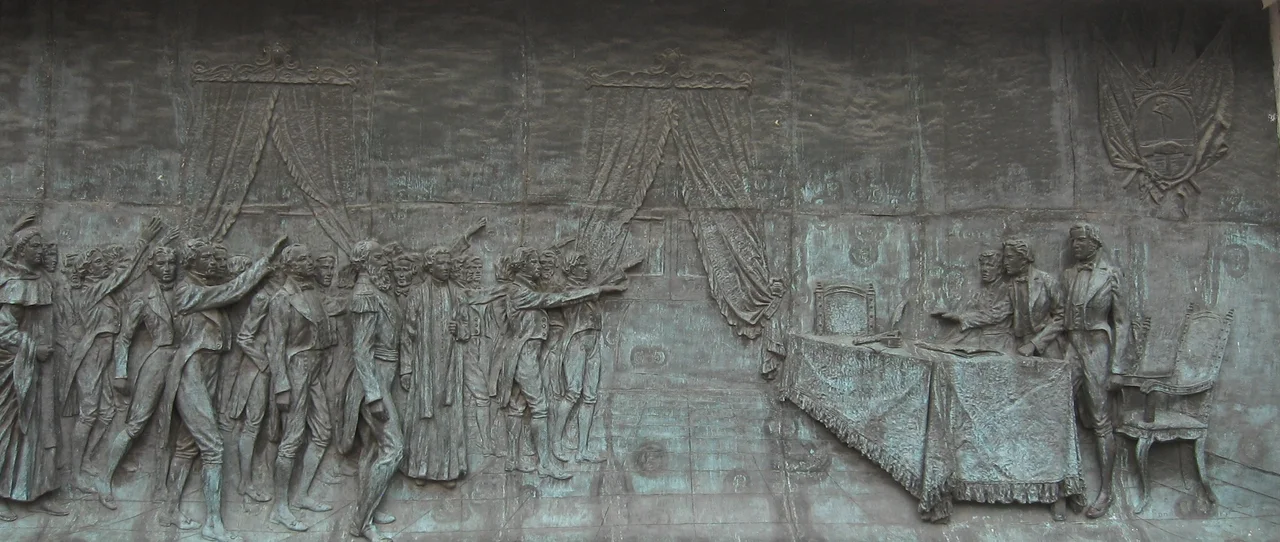
On July 9, 1816, in the front room of a private house in San Miguel de Tucuman, thirty-three men signed a country into being. They were lawyers and friars, doctors and provincial delegates, and they had gathered far from the coast on purpose - inland, away from the factional storms of Buenos Aires. The house belonged to a local widow, Francisca Bazan de Laguna, and it would never again be ordinary. With their signatures, the deputies declared the independence of the United Provinces of South America from the Spanish Empire. The date is still Argentina's Independence Day, and the building, rebuilt and preserved, is known to every Argentine schoolchild as the Casa de Tucuman.
Six Years of Limbo
Independence had been a long time coming, and it was anything but certain. The May Revolution of 1810 had swept aside the Spanish viceroy and replaced him with a local junta, but for six years the provinces had hovered in an uneasy middle ground - self-governing in practice, yet never formally free. Royalist armies from the Viceroyalty of Peru held the upper hand in Upper Peru and threatened to roll the revolution back. By 1816 the cause was in genuine danger. A general congress was called to settle the question once and for all, and delegates were sent from across the former viceroyalty, each meant to represent fifteen thousand inhabitants. They convened in Tucuman in late March and began the slow, contentious work of deciding what they were.
Who Was in the Room - and Who Was Not
The thirty-three deputies came from across a vast territory: from Buenos Aires, Cordoba, and Mendoza; from Salta, Jujuy, and Catamarca; from San Juan and La Rioja; and from the provinces of Upper Peru, today part of Bolivia, who sent their representatives despite the war raging around them. Tucuman's own deputies, Pedro Miguel Araoz and Jose Ignacio Thames, sat among them. But the room was also defined by absence. The delegates of the Banda Oriental - today Uruguay - and the other Liga Federal provinces loyal to Jose Gervasio Artigas were turned away on technicalities, their federalist vision unwelcome. Paraguay, having already declared its own independence, stood apart entirely. The nation being born was, from its first day, an argument about who belonged.
A Name for a Country Not Yet Born
The congress was a deliberative body in the fullest, most exhausting sense. Its presidency rotated month to month, and because the deputies were free to set their own agenda, the debates ran long and tangled. When the moment came, on July 9, the man presiding was Francisco Narciso de Laprida, a delegate from San Juan. They declared the independence not of "Argentina" - that name lay in the future - but of the United Provinces of South America. The choice was deliberate and hopeful: a name broad enough to welcome other Spanish American regions that might one day join the new republic. It was an act of optimism written into a founding document, an open door held out to a continent in revolt.
After the Declaration
Declaring independence was the easy part; agreeing on how to govern proved far harder. The debates turned to the form the young state should take and where its power should reside - the same questions, centralist versus federalist, that would tear at the country for decades. The congress moved its sessions to Buenos Aires in 1817 and issued a constitution in 1819, but the document was rejected, and in 1820 the congress dissolved after federalist forces from Santa Fe and Entre Rios defeated the central government at the Battle of Cepeda. The unity declared in Tucuman would take generations and several civil wars to actually achieve. The declaration was a beginning, not an ending.
The House That Remains
The original house did not survive intact, but its memory was too important to lose. It was rebuilt, declared a National Monument, and today stands restored as a museum at the heart of San Miguel de Tucuman, a city of more than half a million in the green sugar country of the northwest. Visitors file through the modest rooms where the deputies argued and signed, and on every July 9 the nation looks back to this spot. There is something fitting in the fact that Argentina chose to be born not in its great port capital but here, inland, in a provincial town - as if to insist from the start that the country belonged to all its provinces, not just to Buenos Aires.
From the Air
The Casa de Tucuman stands in central San Miguel de Tucuman at approximately 26.82°S, 65.22°W, in Tucuman Province. The city sits on a fertile plain at about 450 meters elevation, with the forested Sierra de San Javier and the Aconquija range rising sharply to the west - the defining visual landmark of the region. The nearest airport is Teniente General Benjamin Matienzo International Airport (ICAO SANT), about 8 km east of the city center. Recommended viewing altitude is 2,500-3,500 feet AGL to take in the city's grid against the green sugarcane plain and the wall of mountains behind it. The climate is humid subtropical, with hazy, storm-prone summers and clearer, drier winters; mornings generally offer the best visibility toward the cordillera.
Nearby Stories
- Calchaquí Valley 26 km away
- Amaicha del Valle 29 km away
- Santiago del Estero 90 km away
- Cafayate 93 km away
- Londres, Catamarca 154 km away
- San Fernando del Valle de Catamarca 165 km away
- El Rey National Park 205 km away
- Mailín 233 km away