
Cooks' Cottage
In 1934, a small stone house in the English village of Great Ayton was dismantled stone by stone, numbered, and packed into 253 cases and 40 barrels. It was loaded onto a ship at Hull and carried 17,000 kilometers to Melbourne, where it was painstakingly put back together in a public garden. Even cuttings of the ivy that climbed its walls made the voyage. The cottage was nearly two hundred years old already and had crossed the planet to stand in a country its builders never saw. It is, almost certainly, the only English home of its era to emigrate to Australia.
The House That Sailed
The cottage was built in 1755 in Great Ayton, North Yorkshire, by James and Grace Cook - the parents of the navigator James Cook. By the 1930s it was for sale, and the Melbourne industrialist and philanthropist Sir Russell Grimwade bought it for 800 pounds with a plan that bordered on the absurd: he would move the entire building to Australia. Each stone was marked so it could be reassembled in the correct order. The structure was crated, shipped from Hull aboard the Port Dunedin, and rebuilt in the Fitzroy Gardens. Grimwade then gave it to the people of Victoria as a gift for the centenary of Melbourne's settlement in October 1934.
A Famous Name, a Quiet Doubt
Here is the catch that delights every guide who tells it. Historians are not sure James Cook ever lived in this house. He was born in 1728, almost three decades before his parents built it, so he had already left home by the time it existed. The one documented occasion he came near it was December 1771, when he visited his father in Ayton - and even then he reportedly lodged not in the cottage but nearby at Ayton Hall. The building that carries his name across the world may have hosted the great navigator for little more than a visit. It is a monument less to where Cook lived than to how badly a young city wanted a piece of him.
Inside the Eighteenth Century
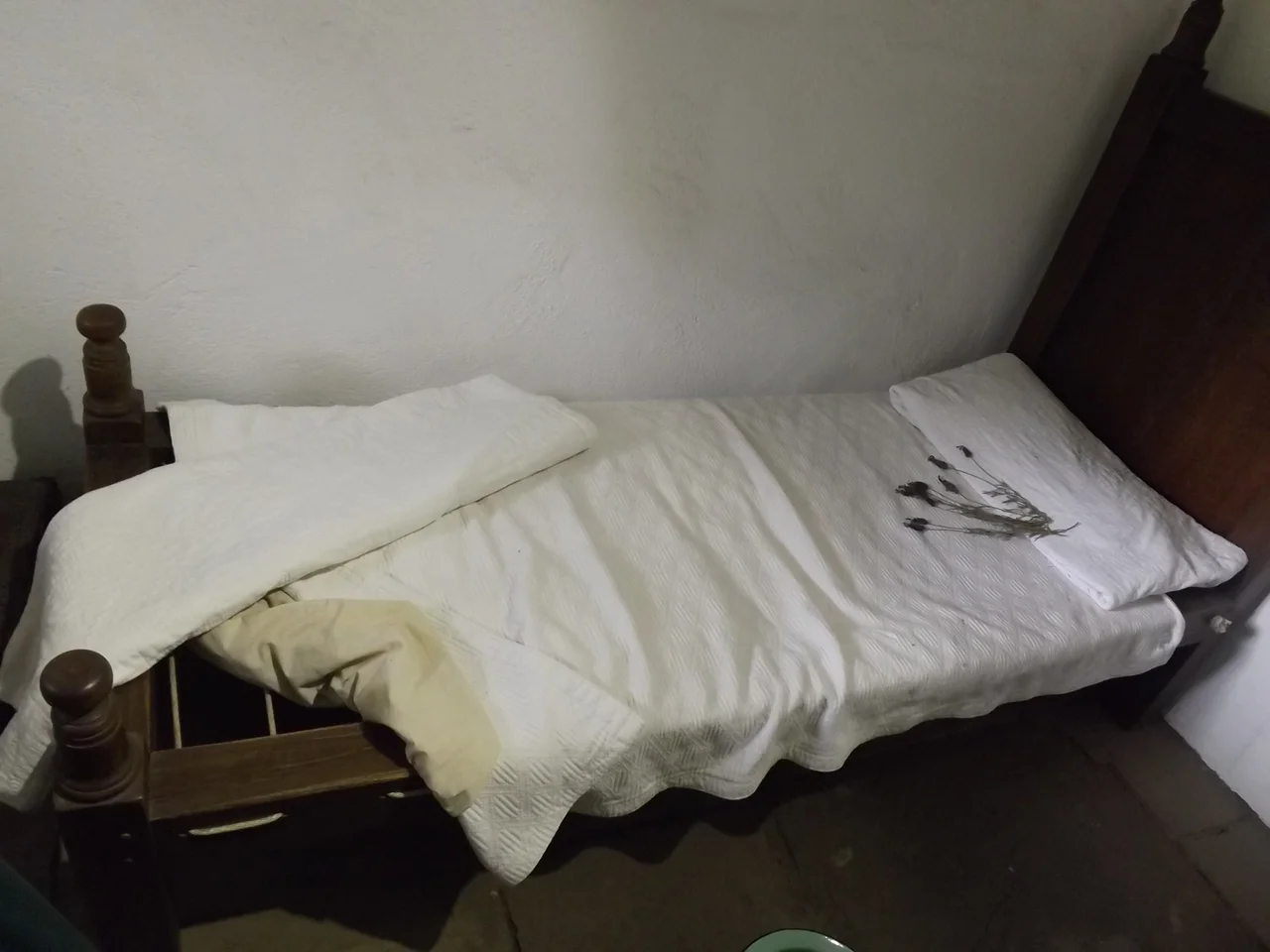
Step through the low doorway and the air changes. The rooms are furnished in the manner of the 1700s - heavy timber, a cold hearth, small windows letting in thin light. Almost none of the objects belonged to the Cook family; instead they are period antiques, chosen to be true to the era rather than to the people. Volunteer guides move through the rooms in period costume, narrating a domestic England of two and a half centuries ago. The effect is uncanny: a working slice of Georgian Yorkshire preserved inside a subtropical Australian park, the gum trees and the parakeets just outside the leadlight glass.
A Garden Built to Match
Grimwade did not just ship a building; he tried to ship its world. The ivy cuttings taken from the original walls were meant to be replanted in Melbourne, though it is unclear whether the parent plant survived fumigation by Victoria's Chief Quarantine Inspector of Plants - a small bureaucratic footnote to a grand romantic gesture. Around the rebuilt cottage, an English-style cottage garden was laid out to complete the illusion, so that visitors arriving from the wide lawns of the Fitzroy Gardens pass through a deliberate shift in scale and mood, from civic parkland into something smaller, older, and unmistakably transplanted.
A Complicated Landmark
Cooks' Cottage has become one of Melbourne's most visited historic sites, but it carries the weight of the name above its door. James Cook is a contested figure, celebrated for navigation and seamanship yet inseparable from the colonization that followed his charting of Australia's eastern coast. The cottage itself, with its real doubts about whether he slept a single night under its roof, has occasionally drawn protest. It stands now as a layered thing - a genuine Georgian house, an extraordinary feat of relocation, a generous civic gift, and a reminder that the stories nations tell about their founders are often built, quite literally, from imported stone.
From the Air
Cooks' Cottage sits in the Fitzroy Gardens at roughly 37.81 S, 144.98 E, on the eastern edge of Melbourne's central business district. From the air, look for the large rectangle of green just east of the CBD grid, bounded by Wellington Parade and Lansdowne Street; the cottage is a tiny structure within the tree canopy near the gardens' center. Best appreciated on the ground rather than from altitude, given its small scale. Nearest airports: Essendon (YMEN, 282 ft) about 9 km northwest, Moorabbin (YMMB, 55 ft) to the south, and Melbourne/Tullamarine (YMML, 434 ft) about 22 km northwest. Melbourne's changeable weather can bring rapid cloud and showers.
Nearby Stories
- Geelong 12 km away
- The Disappearance of Harold Holt: The Prime Minister Who Vanished Into the Sea 41 km away
- Eureka Rebellion 54 km away
- Yarra River 55 km away
- Sovereign Hill 65 km away
- Waterloo Plains massacre 73 km away
- Glenrowan, Victoria 142 km away
- Bass Strait 210 km away