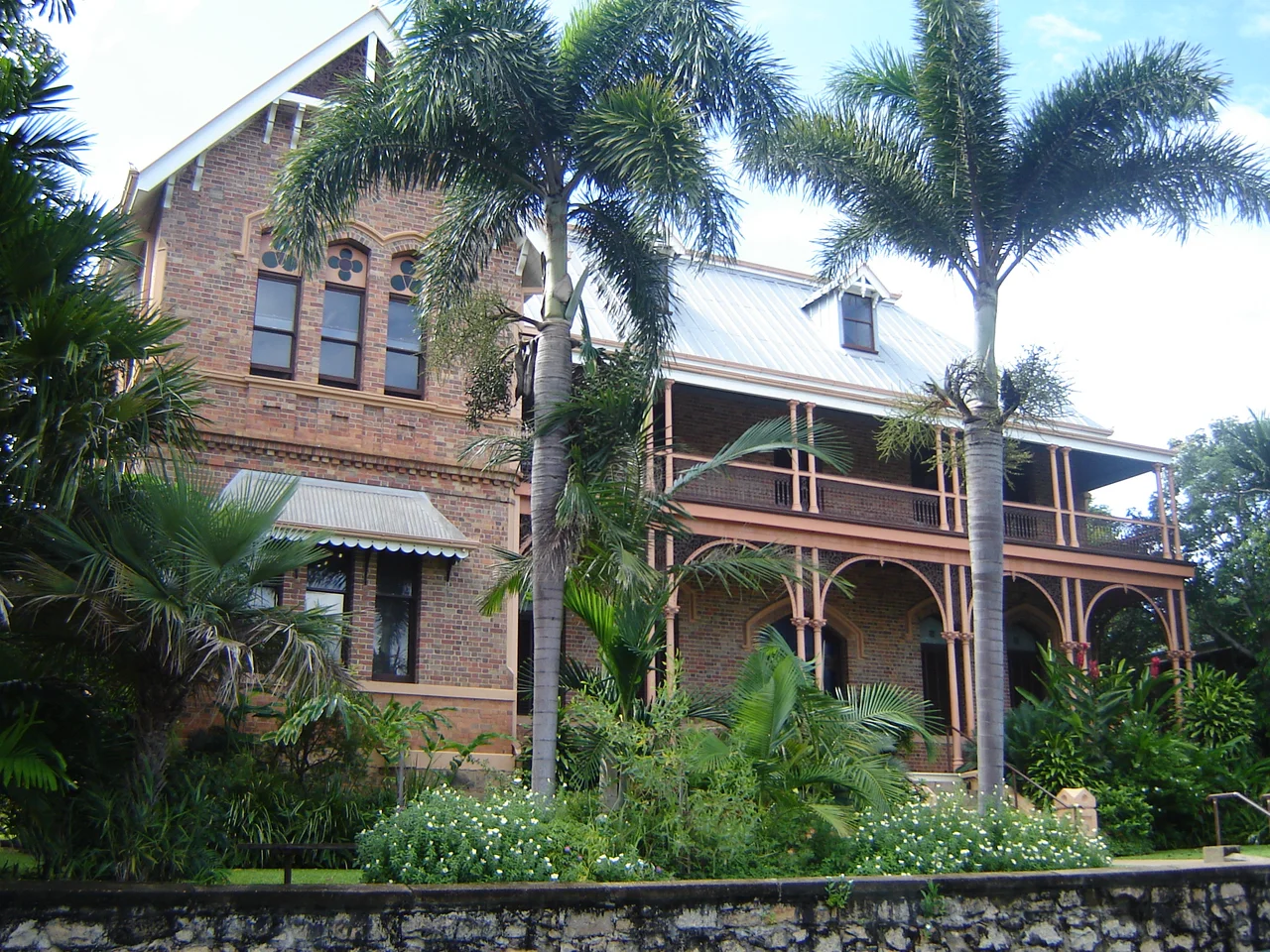

Cooktown Museum
The anchor sat on the seabed for two centuries before anyone hauled it back into the light. Now it rests inside a red-brick convent on a ridge above the Endeavour River, a few hundred metres from the spot where the ship it once steadied limped ashore for repairs in 1770. The Cooktown Museum, for most of its life called the James Cook Historical Museum, occupies the former St Mary's Convent and School, a building that nearly came down in 1969 and instead became the keeper of the most consequential story on this coast: the long, fraught, and finally peaceful meeting of James Cook's crew and the Guugu Yimithirr people, told here from both sides.
The Convent on the Ridge
St Mary's was the grandest thing Cooktown had ever built. Bishop John Hutchinson, first Vicar Apostolic of the district, commissioned it; the former colonial architect Francis Drummond Greville Stanley designed it; and Sisters of Mercy from Ireland came to staff it. Built in 1888 and 1889 of red brick on a Cooktown granite plinth, with paired cast-iron columns marching across its front verandah, it was the most imposing structure in town, finished before the bank on Charlotte Street. Most of the bricks and much of the skilled labour came up by sea from Brisbane, because in the 1880s there was no other way in. Bishop Hutchinson opened the school in May 1889. Set high on the ridge running south from Grassy Hill, the convent could be seen from ships approaching the harbour, a white-and-red landmark announcing that the gold port meant to last.
Cook on the Endeavour River
In June 1770, Cook beached the damaged Endeavour at the river mouth below this ridge and stayed seven weeks while his carpenters rebuilt the hull. It was the longest the expedition spent anywhere in Australia, and it produced the most extensive contact Cook had with Aboriginal people during the entire voyage. The naturalist Joseph Banks and Dr Daniel Solander botanised along the river, cataloguing 186 plants; the museum's grounds, the Joseph Banks Memorial Garden, grow about forty of them, each one native to the Cooktown district. It was here, too, that Banks recorded a Guugu Yimithirr word for a large hopping animal, gangurru, which English absorbed as "kangaroo." The encounter was not the museum's invention. It happened on the ground now beneath the visitor's feet.
Two Peoples, One Story
The Guugu Yimithirr had watched the crippled ship come up their coast and make camp on their land. For weeks the two groups circled each other warily. Tension finally broke over green turtles the sailors had caught and refused to share, a serious breach of local law; the Guugu Yimithirr set fire to the grass around the camp, and Cook wounded a man with a musket. What happened next is why the museum tells this story so carefully. An elder, described in the journals as a little old man, walked forward and offered Cook a broken-tipped spear, a deliberate gesture of peace. The bloodshed stopped. Australians now mark that moment as one of the earliest recorded acts of reconciliation between Indigenous and non-Indigenous people, and the rocks where it happened, near Furneaux Street, are called Reconciliation Rocks. The museum's galleries present the encounter from both perspectives, and hold Guugu Yimithirr cultural material alongside the relics of the ship.
What the Reef Gave Back
When the Endeavour struck the reef on the way in, the crew threw tonnes of weight overboard to refloat her, including the ship's cannons and a bower anchor. They sank into the coral and stayed lost until divers recovered them from the Great Barrier Reef in the early 1970s. One of those cannons and the anchor are here, displayed since 2001 in a dedicated Endeavour Gallery built for the Centenary of Federation, and they are the heaviest and most direct evidence of 1770 anywhere on this coast. The building that holds them nearly didn't survive. By 1969, derelict and cyclone-battered, the old convent was slated for demolition until public protest saved it. The National Trust restored it, and on 22 April 1970 Queen Elizabeth II opened it as a museum during the bicentenary of Cook's charting of the east coast. Renamed simply the Cooktown Museum in 2021, it remains the town's principal attraction, a place where the story of the ship and the story of the people who watched it arrive are finally told together.
From the Air
The Cooktown Museum stands at 15.469 degrees south, 145.251 degrees east, on the ridge south of Grassy Hill overlooking the Endeavour River and Cooktown's harbour. From the air the river mouth and the grid of the small town are easy to pick out against the forested ranges behind; Grassy Hill, with its lighthouse, is the obvious landmark immediately north. Cooktown Airport (ICAO YCKN) lies about 3 km north of town, and Cairns Airport (YBCS) is roughly 165 km south along the coast. Endeavour Reef, where the ship grounded, sits about 50 km southeast offshore. Clear flying favours the dry season, May to October; expect cloud, humidity, and storms in the November-to-April wet.
Nearby Stories
- Bloomfield Track 6.3 km away
- Byerstown 27 km away
- Old Laura Homestead 48 km away
- Mrs Watson's Cottage 70 km away
- Green Island (Queensland) 105 km away
- Rinyirru (Lakefield) National Park 114 km away
- HMS Mermaid (1817) 187 km away
- Kapa Kapa Trail 635 km away