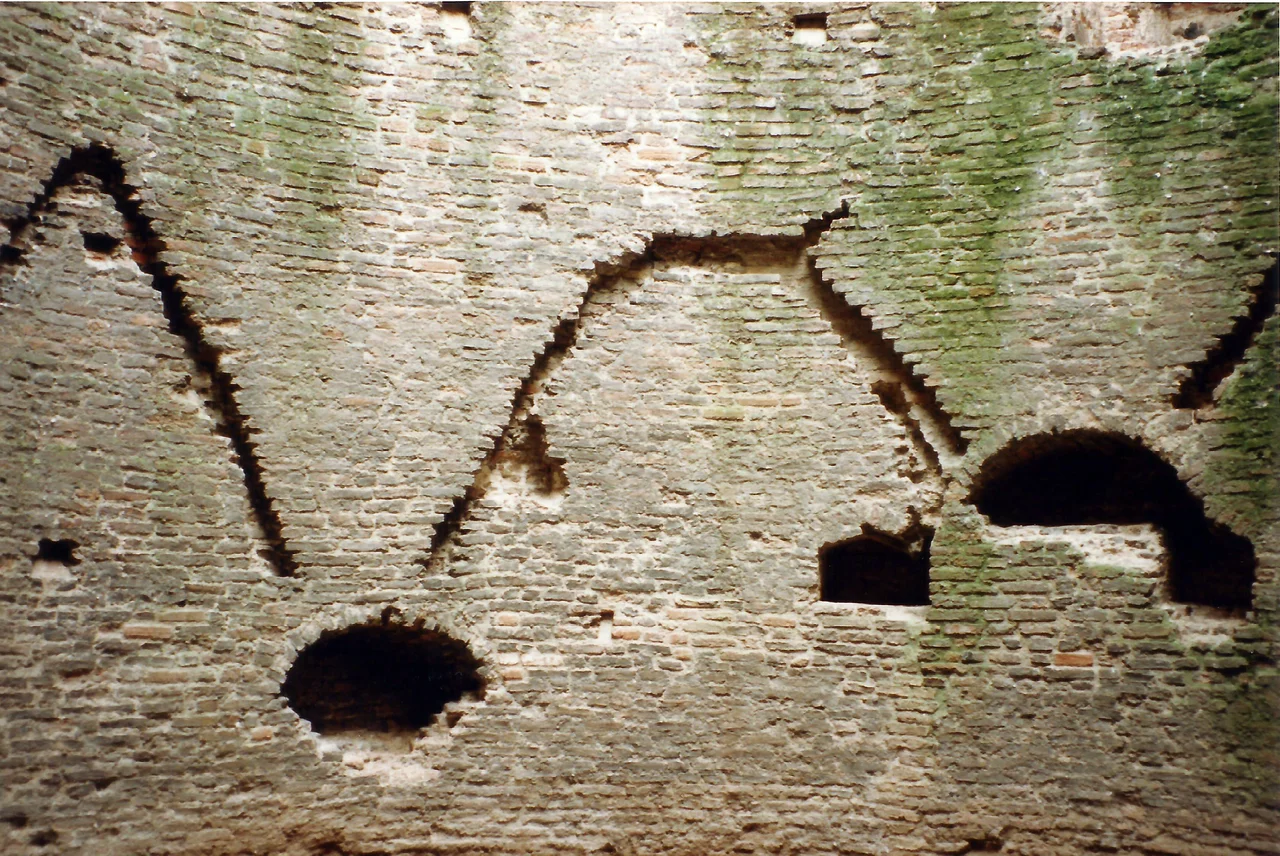

Cow Tower, Norwich
Thirty-six pounds, seventeen shillings and ninepence. That was what Norwich paid in 1398 and 1399 to put up the squat brick cylinder that still stands beside a bend in the River Wensum. The accounts survive in remarkable detail: 36,850 bricks, 170 cartloads of stone, timber rafted in from Great Yarmouth, lime, sand, a hoist. Most of all, the city wanted something nobody else in England really had - a tower built from the ground up to hold gunpowder weapons. France had them. Norwich, watching nervously as French raiders burned Southampton and as English peasants looted their own streets, decided it needed one too.
The Fear That Built It
Norwich at the end of the fourteenth century was a city of about 5,000 people - prosperous, well-connected to the Low Countries by the river, and acutely aware of how easily that prosperity could burn. Southampton had been devastated by a French attack in 1338, and the citizens of Norwich noticed the parallels: another trading city, another estuary, another tempting target. Then in 1381 the Peasants' Revolt rolled through and the rebels looted the place from the inside. Walls already ringed the medieval core, raised between 1297 and 1350 in a long, ambitious ditch-and-stone circuit. But the bend in the Wensum at Cowholme meadow was a gap, and gaps are where invaders come through. The city decided to plug it - not with another curtain wall, but with a free-standing artillery platform that could fire across the river onto the higher ground opposite. It was a strange-looking solution. The only comparable structures in the country were God's House Tower in Southampton and the West Gate at Canterbury, and even those were grafted onto existing walls. Cow Tower stood by itself, in a meadow, surrounded by cows.
Brickwork and Bombards
The tower is 11.2 meters across and 14.6 meters tall, three storeys of flint-cored wall faced inside and out with brick. The walls are 1.8 meters thick at the base. The archaeologist T. P. Smith has called the brickwork some of the finest medieval brick in England, which is an unexpected compliment for a building designed to throw iron. Quatrefoil gunports pierce the lower levels, four-lobed openings that could take either a hand cannon or a crossbow, with overlapping fields of fire across the meadow. The roof was reinforced for the heavy stuff - bombards, the long-barreled forerunners of cannon, possibly mounted on wheeled carriages and hoisted up on the winch that appears in the accounts. From the parapet a gunner could lob a stone ball clean across the Wensum and onto the rising ground beyond, where any besieging army would have to camp. Inside, ground floor and second floor had fireplaces. The first and second floors had garderobes. Someone planned this place to be lived in, at least for the duration of a siege - dining below, sleeping and fighting above.
The Day the Rebels Came
Cow Tower's gunports faced east, toward the higher ground beyond the river. In July 1549 that was exactly where Robert Kett's army camped. Sixteen thousand Norfolk men and women, marched here from Wymondham behind a yeoman who had joined his own tenants in tearing down the enclosure fences, sat on Mousehold Heath staring down at the city - and at the tower. On 22 July the rebels charged down the slope and began swimming the Wensum between Cow Tower and Bishop Bridge. The city's defenders fired arrows into them from the parapets. The tower's own artillery answered, but the river was narrow and the rebels were many. Within days Kett held Norwich. Cannon fire from the camp damaged the tower's parapets in the fighting that followed, and Cow Tower, the great experiment in defensive firepower, had failed in the only test it ever faced - because the enemy had not come, as the planners imagined, from France across the sea. It had come from the fields a few miles up the road.
Shell
What happened next was slow. The tower stood. The Crown nagged the city to keep it repaired. In 1450 the Great Hospital formally handed over its rights to the surrounding land. The 19th century brought well-meaning patches with modern concrete that turned out to be exactly the wrong material - it cracked, the river eroded, and long vertical splits opened on the northern face. In 1953 the Ministry of Works took the tower into guardianship and spent five years stabilizing it, though without the kind of archaeological survey that would have been done today. The floors are gone now. The roof is gone. What stands is a shell, open to the sky, scheduled as a monument and managed jointly by English Heritage and Norwich City Council. You can walk right up to it from the river path, lay a hand on the brick, look up through the empty interior at the clouds. Six hundred and twenty-six years after the bricks were laid, the building still asks the question that built it: what does a city do when it knows the world is changing faster than its walls?
From the Air
Cow Tower sits on the inside of a tight northern bend of the River Wensum at 52.6342N, 1.3083E, immediately north-east of Norwich Cathedral. At low altitude (1,500-2,500 ft AGL) the cylindrical brick form is unmistakable in its open riverside meadow - look for the cathedral spire to the west and Bishop Bridge a few hundred meters south. Nearest airport is Norwich International (EGSH) about 3 nm north-north-west; pattern altitude there is 1,000 ft. Approaching from the east, the tower lines up with the cathedral close beyond it.
Nearby Stories
- Sheringham 2.7 km away
- Wingfield Castle 4.4 km away
- Castle Acre Castle and Town Walls 6.3 km away
- Brancaster 7.1 km away
- West Stow Anglo-Saxon Village 9.3 km away
- Four Days' Battle 80 km away
- Battle of Lowestoft 80 km away
- SM U-97 110 km away