
Croke Park
On the afternoon of 21 November 1920, a Tipperary footballer named Michael Hogan was running the line at a Gaelic football match in north Dublin when men in dark uniforms broke through the turnstiles and opened fire on the crowd. Within ninety seconds, Hogan and thirteen spectators were dead or dying. The youngest victim was ten. Eighty-seven years later, in February 2007, an English rugby team stood on the same field while a Dublin choir sang 'God Save the Queen' and 82,000 Irish citizens listened in silence. Croke Park is many things -- the fourth-largest stadium in Europe, the cathedral of hurling, the place Westlife sold out in under five minutes -- but at heart it is the patch of grass where Ireland argues with its own history.
Butterly's Field
Before the stands and the floodlights, this was a horse-racing meadow on Jones' Road owned by a man named Maurice Butterly. The Bohemian Football Club kicked a leather ball around it in the 1890s, and the Gaelic Athletic Association rented it for athletics meets, but the ground might have ended its days as suburban housing if not for Frank Dineen. A journalist and GAA stalwart, Dineen borrowed most of the £3,250 asking price in 1908 and bought the field himself, holding it on behalf of an organisation that did not yet have the money to own it. Five years later the GAA finally bought it from him for £3,500, and renamed it after Archbishop Thomas Croke, one of the association's earliest patrons. A 1917 spectator terrace was christened Hill 60, after a Gallipoli battle in which Dublin and Munster Fusiliers had fought; within a few years, with Ireland's politics transformed, it had been rechristened Hill 16, for the Easter Rising of 1916.
Bloody Sunday
The morning of 21 November 1920 belonged to Michael Collins. His hand-picked assassins, the Squad, fanned out across Dublin and shot dead fourteen men associated with the Cairo Gang, a network of British intelligence officers. That afternoon belonged to the Auxiliary Division of the Royal Irish Constabulary. Dublin were playing Tipperary at Croke Park, the kind of unremarkable Sunday match that drew families and neighbours, when the Auxiliaries arrived and began firing into the stands. Fourteen people died, including Michael Hogan, the Tipperary corner-back, and a fourteen-year-old named John Scott. Some witnesses said the British forces claimed they were searching for IRA gunmen; an inquiry held decades later concluded the killings were 'indiscriminate'. The stand built in 1924 was named the Hogan Stand in the dead player's memory, and a century on, his name still calls down across the field every time a hurler raises the Liam MacCarthy Cup.
Hill 16 and the Cathedral of Gaelic Games
The GAA expanded the ground decade by decade -- the first Cusack Stand in 1927, the double-deck version in 1936, the cantilevered New Hogan Stand for the 75th anniversary in 1959. By the time the modern redevelopment began in 1991, Croke Park already meant something specific to Irish people: the place where September Sundays decided All-Ireland championships in football and hurling, where Kerry and Kilkenny became dynasties, where county jerseys became coats of armour. The 1961 All-Ireland football final between Offaly and Down drew 90,556 spectators, a record that still stands. Hurling at full speed -- the ball travelling 150 kilometres an hour, the ash sticks cracking like rifle shots -- finds its natural amphitheatre here. So does the silence before a free kick in front of 82,300 people, which is its own kind of sound.
Rule 42
For most of the 20th century, the GAA's Rule 42 forbade 'foreign games' -- meaning rugby, soccer and cricket -- from being played on its grounds. The ban was older than the Free State and as much about identity as sport. When Lansdowne Road closed for rebuilding in the mid-2000s, Ireland's national rugby and football teams had nowhere to play. After a wrenching debate, the GAA Congress voted 227 to 97 in April 2005 to temporarily relax the rule. On 11 February 2007, France beat Ireland 20-17 in the first rugby international ever played at Croke Park. Two weeks later, on 24 February, England arrived for a Six Nations match -- the same English state whose forces had killed fourteen people on this ground in 1920. The Irish anthem 'Amhran na bhFiann' was sung. Then 'God Save the Queen' followed, in full. Nobody jeered. The Dublin choir kept singing. Ireland then dismantled England 43-13, their largest victory ever in the fixture. Some moments of reconciliation are quiet. This one came with a scoreboard.
Concerts, Popes and the NFL
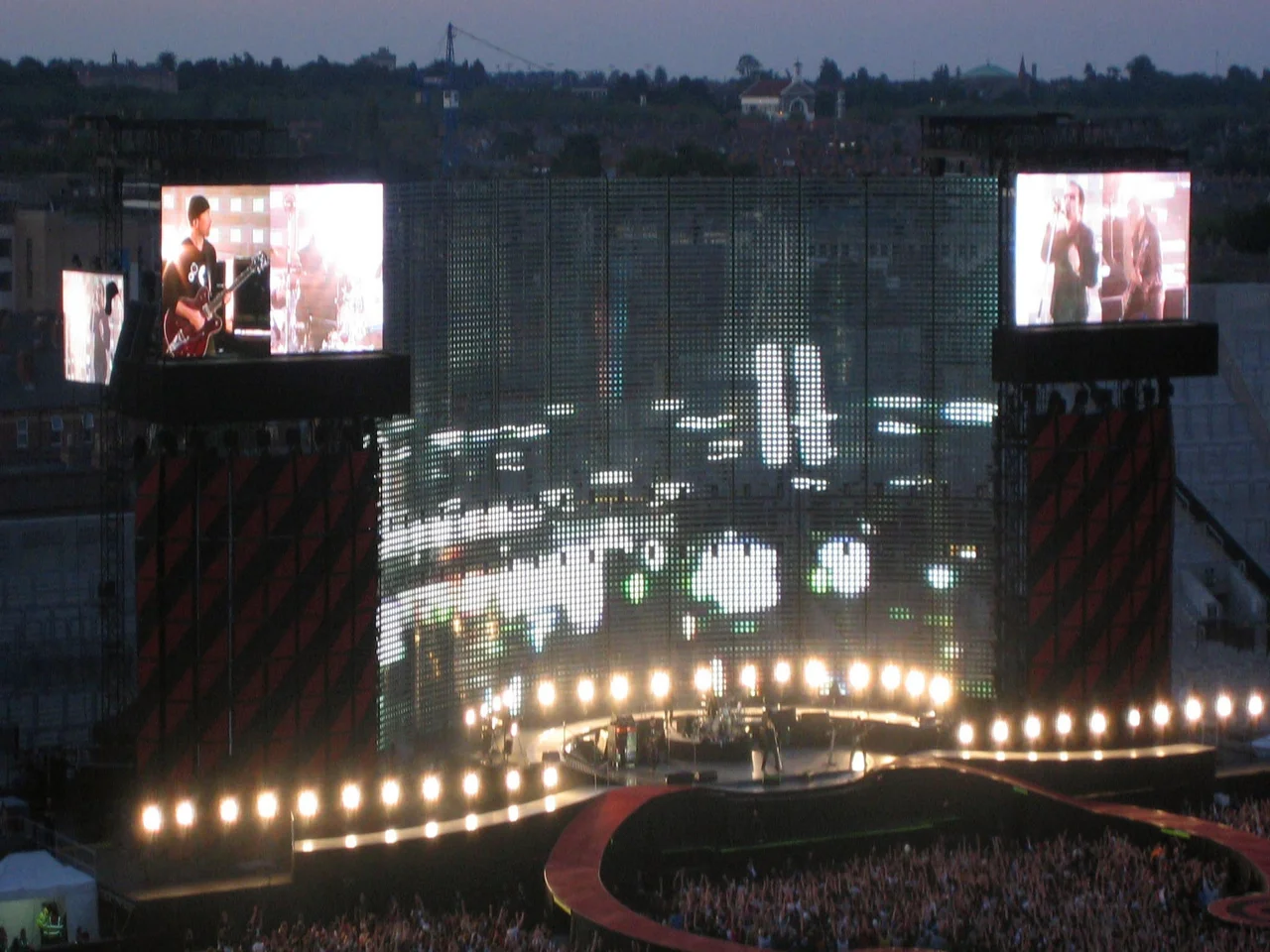
Croke Park's modern life has been gloriously promiscuous. Muhammad Ali fought Al Lewis here in July 1972, a tunnel beneath the Davin Stand is named for him. Pope John Paul II said Mass to a crowd in 1979; Pope Benedict XVI addressed the 50th Eucharistic Congress by video link in 2012. U2, Springsteen, Beyonce, Garth Brooks, Taylor Swift -- the stadium has hosted them all, with Westlife famously selling 85,000 tickets in under five minutes in 2012. On 28 September 2025, the NFL came at last: the Pittsburgh Steelers beat the Minnesota Vikings 24-21 in front of 74,512 fans, the first regular-season American football game ever staged in Ireland. The pitch grows under Dutch SGL lighting rigs in winter. The Skyline Tour walkway runs 44 metres above the ground, offering a view of north Dublin that takes in the Wicklow Mountains on a clear day. Croke Park is no longer just a stadium. It is a 130-year-old argument about what Ireland is allowed to host on its own ground -- and on most days now, the answer is: everything.
From the Air
Croke Park sits at 53.361N, 6.251W in Dublin's north inner city, a kilometre north of the River Liffey in the Drumcondra area. From altitude, look for the distinctive oval bowl of the stadium with its four asymmetric stands -- the long Cusack Stand on the east side, Hogan Stand to the west, Davin Stand to the south, and the Hill 16 terrace behind the northern goal. The stadium dominates its surroundings; nothing else nearby comes close to its 82,300-seat scale. Nearest airport: Dublin (EIDW), 8 km north. Recommended viewing altitude 2,000-3,000 ft AGL.
Nearby Stories
- Wicklow Mountains 12 km away
- Mornington 14 km away
- German submarine U-1051 16 km away
- Abbey of Kells 18 km away
- Irish Military Intelligence Service 20 km away
- HMS Manners (K568) 37 km away
- Templemore 42 km away
- Irish Sea Bridge 43 km away