
Dalaba
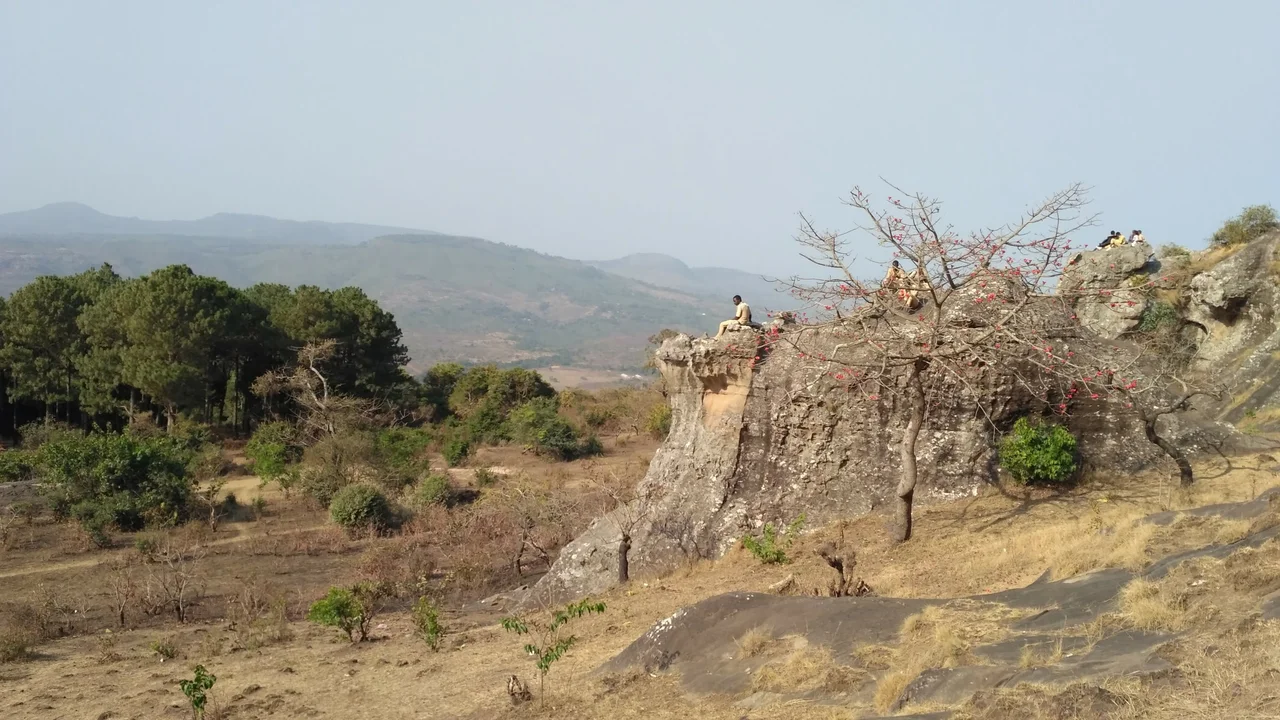
Pack a jacket. It is advice that sounds absurd for a town in tropical West Africa, until you climb to Dalaba. At roughly 1,300 meters, this is the highest town in Guinea, perched in the Fouta Djallon highlands where the air turns cool and the heat of the coast feels like another country. The French understood the appeal a century ago, which is why they built a sanatorium here and came up to convalesce. You come up for the same reasons they did: the climate, the views, and the strange quiet of a hill station that history left behind.
Getting Up There
Dalaba lies about 200 kilometers from Conakry as the crow flies, but the road is another matter, roughly 280 kilometers of climbing that turns the trip into a six-to-eight-hour shared-taxi grind from the capital. Most travelers come instead from Labé, two to three hours away by taxi, or by the local 5-place and 7-place cars that pack passengers in for the run up the plateau. Once you arrive, a mototaxi will take you almost anywhere in town for a modest fare. Dalaba makes a natural rest stop on the long overland route between Guinea and the borders with Guinea-Bissau and Senegal, a place to break the journey and breathe.
The Veil and the Villa
Two buildings hold the town's memory. The Case à Palabres, the palaver house, is a circular Fulani-style structure with beautiful mosaic work inside, the traditional space where elders gathered to talk through disputes and decisions, the African counterpart to the European order that arrived later. That European order left the Villa Sili, the former residence of the French colonial governor of the region, still standing as a relic of administration in the hills. Between the Fulani council house and the governor's villa runs the whole knotted story of the Fouta Djallon: an old highland society and the empire that came to rule it, side by side in one small town.
Water Off a Cliff
The Fouta Djallon is sometimes called the water tower of West Africa, and Dalaba sits squarely in that wet, high country. The reward for hikers is dramatic. The Chutes de Ditinn, a short journey from town, drop straight off a sheer cliff face in a single towering plunge, one of the most striking waterfalls in the region. For something stranger, hike east from Dalaba, cross the village of Dara, and seek out Le Pont de Dieu, the Bridge of God, a natural rock arch spanning a watercourse. The trail can be tricky; in the dry season the going is easier, but a local guide is worth the price either way.
A Voice in Exile
Dalaba's coolest air once sheltered one of Africa's greatest voices. Miriam Makeba, the South African singer the world knew for Pata Pata, lived in Guinea during her long exile, from 1968 to 1986, and spent time in Dalaba among the highlands. Banned from her own country for her stand against apartheid, stripped of her passport, she found refuge in newly independent Guinea, and the quiet town in the mountains became one of her havens. There is something fitting in it: a singer who could not go home, resting in the highest, coolest town of a country that had taken her in. The hills hold their guests well.
From the Air
Dalaba sits at about 10.69 N, 12.25 W, high in the Fouta Djallon at roughly 1,300 meters (4,265 feet) elevation, the highest town in Guinea. The nearest international gateway is Conakry's Ahmed Sékou Touré International Airport (GUCY / CKY); Labé to the north has a regional airport (GULB) closer to the highlands. From the air, the surrounding terrain is rugged plateau cut by deep gorges and waterfalls, including the high single-drop Chutes de Ditinn. Because of the elevation, expect cooler temperatures, frequent cloud build-up, and morning mist; the November-March dry season gives the best visibility over the dissected highland landscape. A viewing altitude of 7,000 to 10,000 feet shows the plateau's edges and waterfalls to good effect.
Nearby Stories
- Kindia 42 km away
- Outamba-Kilimi National Park 68 km away
- Maritime Guinea 79 km away
- Dinguiraye 106 km away
- Lake Sonfon 125 km away
- The Loma Mountains: Sierra Leone's Rooftop and Last Refuge 171 km away
- Boké 178 km away
- Boké Museum 237 km away