_(9995351303).jpg)
David Fleay Wildlife Park
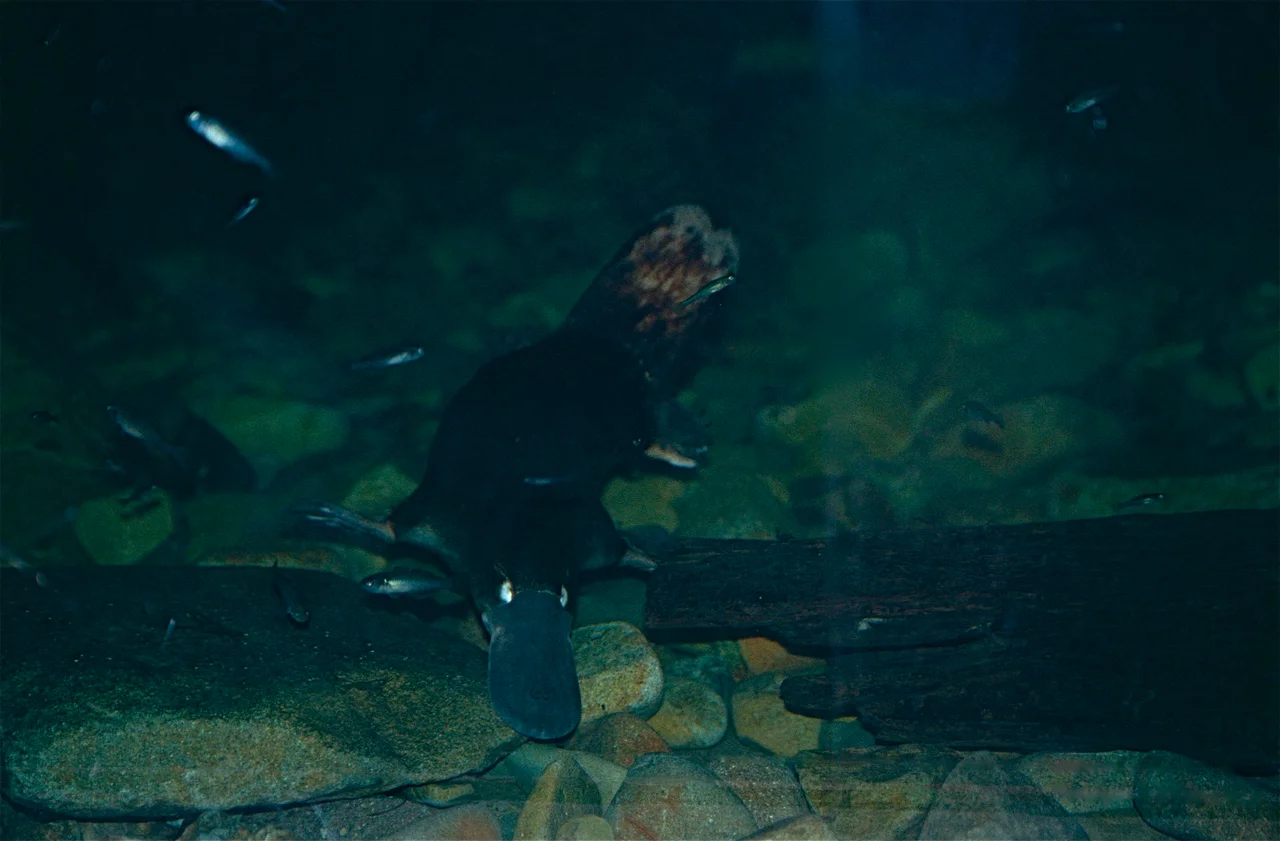
In November 1943, in a purpose-built tank he had designed himself, David Fleay watched something no one had ever achieved before: a baby platypus, "Corrie", born in captivity. More than eighty years later, his is still nearly the only name attached to that feat. The naturalist who managed it spent the second half of his life on a flood-free slope of the Tallebudgera valley in West Burleigh, building enclosures by compass so each one caught the morning sun, and turning a few acres of Gold Coast bushland into one of the most important wildlife sanctuaries in the country.
The Man Who Bred the Unbreedable
David Howells Fleay was born in Ballarat in 1907 and trained as a teacher and zoologist before his obsession with native animals took over. At Melbourne Zoo and then the Healesville sanctuary he racked up a string of scientific firsts — the first captive breeding of emus, the tawny frogmouth, birds of prey, and a parade of marsupials. But Healesville gave him his masterpiece. In 1943 he bred and reared the first platypus in captivity, the elusive "Corrie". The achievement stood essentially unmatched for the rest of the century; Healesville did not repeat it until 1998. Fleay was a difficult colleague who insisted, against zoo orthodoxy, that animals be fed only what they would eat in the wild. He was dismissed twice for sticking to his principles, and twice the science vindicated him.
A Sanctuary, Not a Zoo
Banned by the Victorian government from charging the public to see his private collection, Fleay and his wife Sigrid moved north and, in 1952, settled on the Tallebudgera estuary. He bristled at the word "zoo." "It's a place where the animals are kept in conditions as close as possible to the natural environment," he said, "where they can breed freely and be studied." He acquired the land parcel by parcel, transported his animals up from Victoria, and raised aviaries and pens at speed, painting every cage "Lawn Green" with "Mail Red" roofs. The barking owls were housed near the family home so Fleay could hear them call at night. At its peak the sanctuary cared for 450 animals, with Sigrid serving tea on the verandah while sick and injured creatures arrived at all hours.
Milking the Deadliest Snake
Some of Fleay's most consequential work involved animals most people would run from. At Healesville he had kept tiger snakes on an island and milked them for antivenom. His connection to the taipan, one of the most venomous snakes on earth, is woven into one of Australian science's hardest stories. In 1950 a young snake-catcher named Kevin Budden captured a large taipan near Cairns, was bitten, and died — but only after ensuring the live snake was sent south. Fleay milked that very taipan, repeatedly, producing the dried venom that fed the development of the first taipan antivenom, released in 1955. Within a year it saved its first life. In 1960 Fleay became the first person to breed the taipan in captivity, adding it to a list of breeding firsts that also included the powerful owl, sooty owl, and wedge-tailed eagle.
The Tortoise and the Legacy
For decades the park kept a particularly famous resident: Harriet, a Galápagos tortoise long associated with Fleay, who lived an extraordinarily long life before later moving to Australia Zoo. Fleay's honours piled up — an MBE in 1960, an honorary doctorate from the University of Queensland in 1984, and a fellowship of the Explorers' Club of New York. To secure the sanctuary's future, he and Sigrid sold the land to the Queensland Government in the early 1980s for a nominal sum, on the condition they could keep living there. Fleay died on 7 August 1993. In 1997 the park was renamed in his honour. Today, run by Queensland Parks and Wildlife Service, it carries on his mission with a nocturnal house, an animal hospital, and the same conviction that wild animals deserve a home that feels like the wild.
From the Air
David Fleay Wildlife Park lies at 28.11°S, 153.44°E, tucked into the forested Tallebudgera valley at West Burleigh, just inland from the Gold Coast beachfront. The park is surrounded by conservation parkland and the green ribbon of Tallebudgera Creek, set back from the high-rise coast. Best appreciated from 1,500–2,500 ft, where the wooded valley stands out against the urban Gold Coast grid. Gold Coast Airport (YBCG / OOL) at Coolangatta is about 9–10 km to the south; Brisbane Airport (YBBN / BNE) is roughly 90 km north. The surrounding rainforest canopy can hold morning mist in the valley floor.
Nearby Stories
- Tweed Regional Gallery 7.7 km away
- Purga Aboriginal Cemetery 19 km away
- North Stradbroke Island 21 km away
- Deebing Creek Mission 43 km away
- Bald Rock National Park 105 km away
- HMS Porpoise (1799) 636 km away
- Wreck Reefs 665 km away
- SS Elingamite: Gold, Fog, and a Captain Wrongly Blamed 1833 km away