
David Grant USAF Medical Center
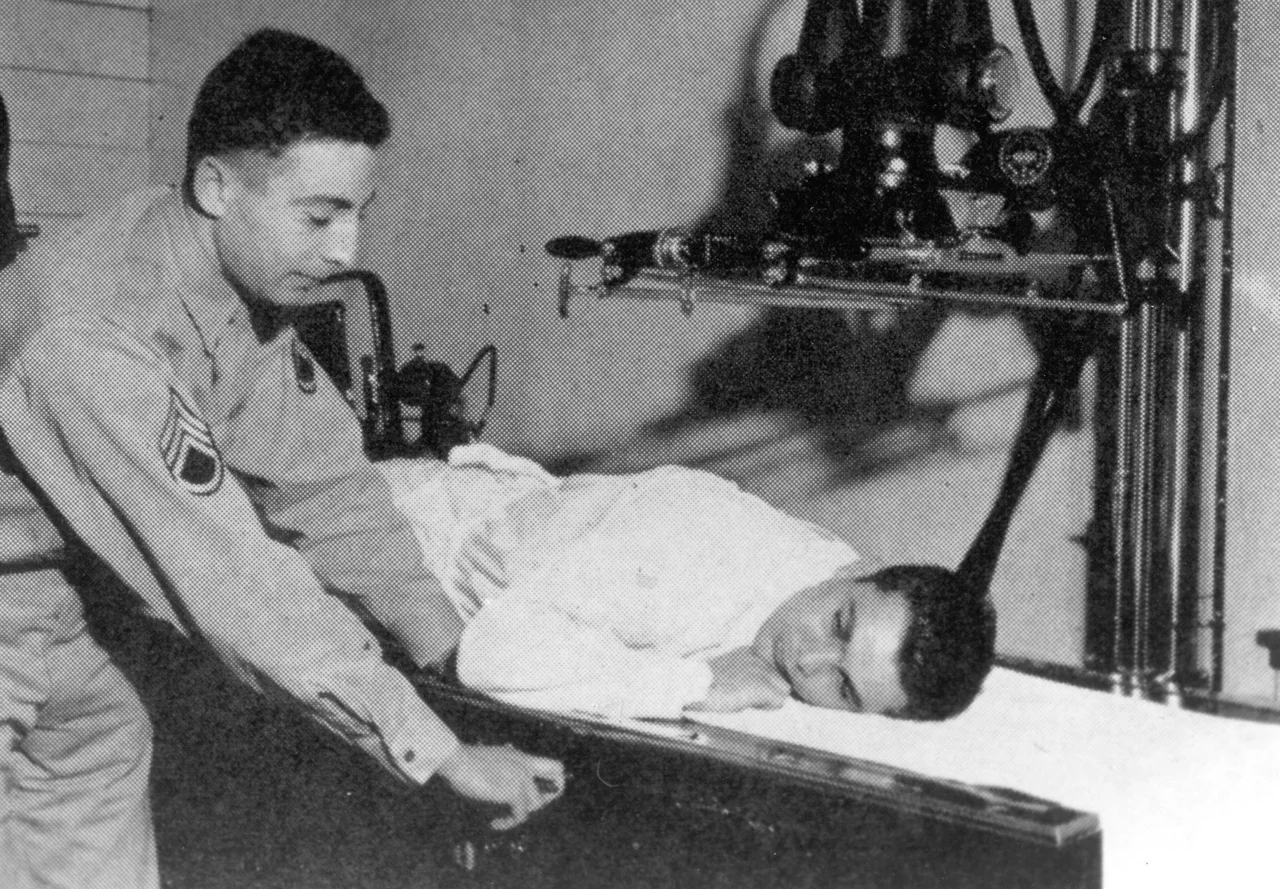
The first major operation at the 4167th Station Hospital was an emergency appendectomy, performed on August 6, 1943, in a cantonment ward building at Fairfield-Suisun Army Air Field. Before that date, anyone needing surgery had to be transferred to Hamilton Field near San Francisco. It was a modest beginning for what would become the Air Force's largest medical center in the continental United States -- a facility that now serves more than 500,000 military and veterans beneficiaries across 17 counties and 40,000 square miles of Northern California. From those seven original wards with 125 beds, David Grant USAF Medical Center has grown through every American conflict since World War II, its capacity expanding not by design but by demand: Korea flooded it with air evacuees, Vietnam made it the west coast's central receiving point for the wounded, and the wars in Iraq and Afghanistan sent Wounded Warriors through its Aeromedical Staging Facility on their way home from the Pacific theater.
The Hospital on the Hill
When the station hospital opened on July 1, 1943, its seven wards were divided with wartime pragmatism: two for medical service, one for convalescents, one crash ward that doubled as a supply redistribution point, and the rest for examinations and clearances. Congress authorized a 670-bed Aerial Debarkation Hospital in 1945, with plans for seven wards including a 70-bed mental health wing, but V-J Day halted construction mid-pour -- footings set, concrete walls rising to first-floor level, all of it eventually torn out. The hospital's future depended on whether the base itself would survive peacetime. It did. Additional funds arrived in March 1946, excavation for a new 150-bed permanent facility began in March 1947, and on May 20, 1949, staff moved into the installation locals came to call 'The Hospital on the Hill.' The building that earned that name is now Building 381, home to Fifteenth Air Force Headquarters -- the hospital having outgrown its hilltop decades ago.
Every War's Doorstep
Korea transformed the hospital from a base clinic into a mass-casualty facility almost overnight. As the only aerial debarkation hospital on the west coast, Travis received every patient evacuated by air from Pacific bases. In August 1950, airmen's barracks were converted into a 118-bed annex. By December, the hospital processed 5,475 air-evacuated patients in a single month. When American prisoners of war were exchanged with the Communists, the first group arrived at Travis on August 12, 1953. A year later, wounded French soldiers from Indochina landed -- 16 on litters, 31 ambulatory -- and the French consul general came to visit them. Vietnam brought the heaviest burden. After the Gulf of Tonkin incident in 1965, the hospital became the central receiving facility for aeromedical evacuations, expanding to 650 beds through the temporary conversion of a transient airmen's dormitory. Soldiers, sailors, marines, and airmen all passed through Travis on their way home from Southeast Asia.
A General's Name
On July 1, 1966, USAF Hospital Travis became David Grant USAF Medical Center, honoring Major General David Norvell Walker Grant, the first Surgeon General of the Army Air Corps and Army Air Forces, who had died two years earlier at 73. The renaming coincided with the hospital's transformation from a treatment facility into a teaching institution. That same year, planning began for five residency programs -- general surgery, pediatrics, obstetrics and gynecology, internal medicine, and radiology -- with classes starting July 1, 1967. Dental programs followed in 1969, family practice in 1978. Today, DGMC operates the second-largest Graduate Medical Education program in the Air Force, training 131 residents per year across seven medical, two dental, and six allied health specialties. Its nurse anesthetist program, run jointly with the Army's Graduate Program in Anesthesia Nursing at Fort Sam Houston, ranks first among 112 programs nationwide. The appendectomy hospital had become a university.
Off the Hill, Into the Future
On October 21, 1988, the medical center left its hilltop. The move to a state-of-the-art facility on the northwest portion of Travis Air Force Base gave DGMC a separate gate entrance and modern infrastructure that its 1940s-era buildings could never provide. But the real expansion came in capabilities rather than square footage. A hyperbaric medicine department opened in late 1989, housing one of the largest clinical hyperbaric chambers in North America -- 18 patients and three observers in the main chamber, operational around the clock since 1990, built at a cost of approximately $12 million. In 2000, a Veterans Administration outpatient clinic opened next door, replacing services lost after the 1989 Loma Prieta earthquake damaged the VA Martinez Medical Center. Joint ventures multiplied: a $1.6 million hemodialysis unit, a $5.5 million spine and neurosurgery service, a $5.9 million inpatient mental health unit, and in 2010, a $4.4 million robotically assisted cardiovascular operating room -- one of only five in the nation.
The Deploying Hospital
DGMC does not stay on its base. In 1991, 750 physicians, dentists, nurses, and enlisted personnel deployed to Nocton Hall, England, activating the 310th Contingency Hospital for Desert Storm casualties. From February to August 1995, 145 members ran the UN hospital at Camp Pleso in Zagreb during the Croatian war. The medical center has supported operations from Iraq and Afghanistan to the Indonesian tsunami, Hurricane Rita, and California wildfire relief. With over 730 mobility positions in 45 unit type codes, DGMC maintains roughly 150 medical personnel deployed at any given time. It also serves as the Sacramento-region Federal Coordinating Center for the National Disaster Medical System. In January 1994, the Travis Fisher House opened within walking distance of the hospital, providing a home away from home for families of patients. The small detail matters: five bedrooms, two suites, capacity for seven families, a 91 percent occupancy rate. Behind every medical statistic is a family waiting for news, and DGMC has learned to care for them too.
From the Air
David Grant USAF Medical Center sits at 38.27N, 121.96W on the northwest portion of Travis Air Force Base in Fairfield, California. The base itself (KSUU) has a prominent runway complex visible from altitude in the flat terrain between the Sacramento Valley and the Suisun Bay marshlands. The medical center is identifiable by its modern facility with a separate gate entrance on the base's northwest side. Travis AFB is located roughly midway between Sacramento (KSMF, 40nm northeast) and San Francisco (KSFO, 40nm southwest), along the Interstate 80 corridor. From altitude, look for the distinctive layout of the air base against the surrounding agricultural land and the nearby Suisun Marsh to the south. Fairfield's urban grid lies immediately west of the base.
Nearby Stories
- Where Vineyards Became a Canvas 3 km away
- Black Diamond Mines Regional Preserve 4.1 km away
- Chevron Richmond Refinery 4.9 km away
- Wings Mended: The California Raptor Center 6.1 km away
- Emery Worldwide Airlines Flight 17 7.9 km away
- When Wine Country Burned 13 km away
- Rancho Seco Recreational Park 21 km away
- From Aluminum to Ammunition to Aviation Fuel 43 km away