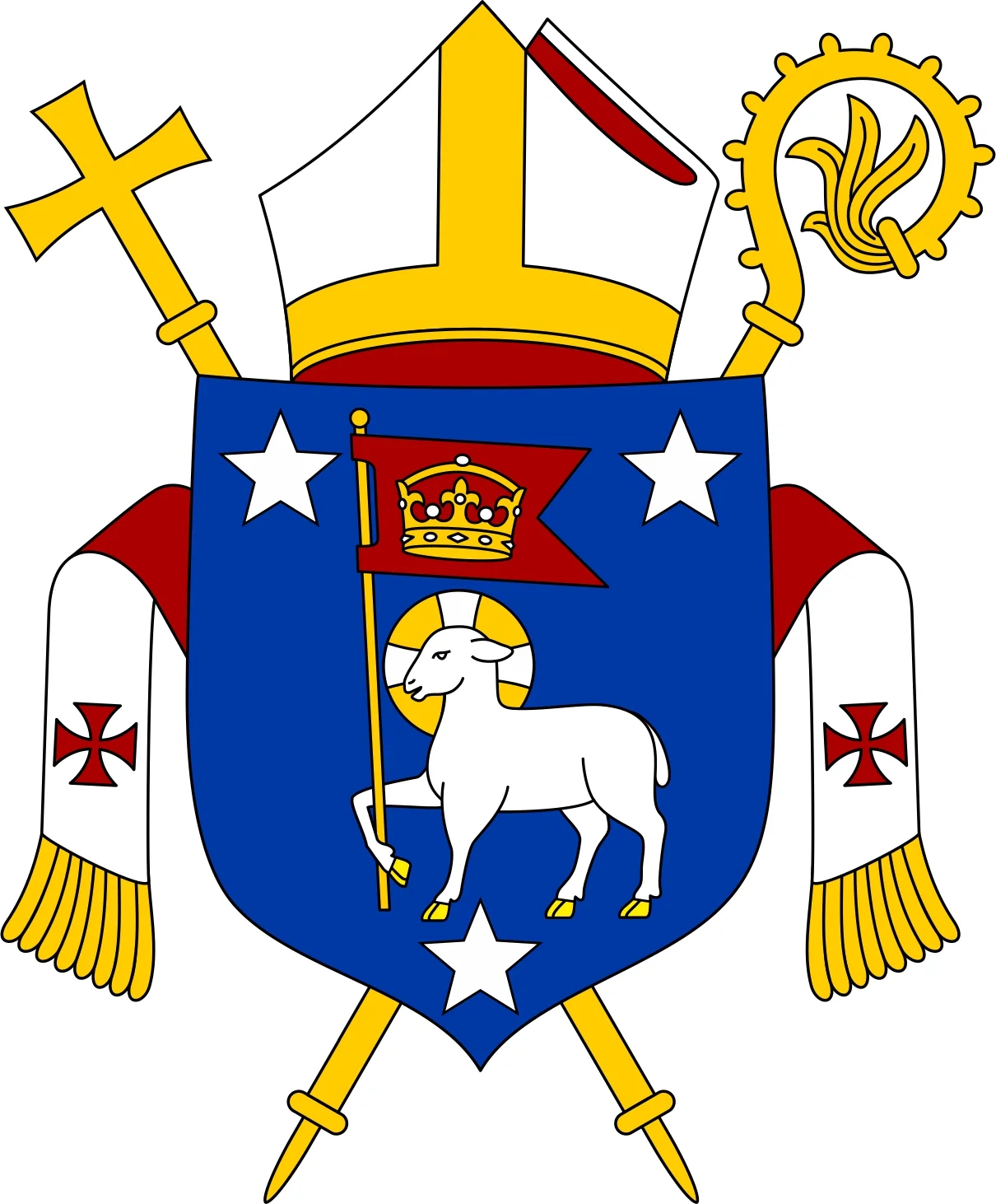

Diocese of Mendi
On 9 September 1954, a Swiss-born priest named Alexis Michellod stepped onto an airstrip in the Mendi Valley with his Breton companion Jean Delabarre and celebrated the first Catholic Mass ever offered in the Southern Highlands the next morning. They were only meant to spend two months. A cable arrived from Fr. Michellod's superior at Yule Island with a single-word instruction: Stay. The order committed the Missionaries of the Sacred Heart to a mountain region whose people had not seen outsiders in any numbers until the decade before. Out of that telegram grew the Diocese of Mendi, erected as a Prefecture Apostolic in 1958, elevated to Vicariate Apostolic in 1965, and raised to diocese on 15 November 1966.
The Land That Time Forgot
Mick Leahy, the Australian gold prospector whose 1933 overflight of the Wahgi Valley revealed the highlands to the outside world, called this region the Land That Time Forgot. Jack Hides, an Australian patrol officer whose 1935 expedition was the first government patrol through Southern Highlands territory, titled his book about the experience Papuan Wonderland. They were writing about country where living memory set the horizon of recorded history, where the languages between neighboring valleys could be mutually unintelligible, and where nothing resembling European contact had occurred until the patrol officers arrived with their carriers and their compass bearings. World War II interrupted further exploration. Highlanders watched large metal birds pass overhead in formation and named the sound itself - mu-engi, mother of the noise muuuu - without knowing what the planes were or why they went.
The Kiap and the Priest
In 1949, after the war ended, Australian kiaps - government patrol officers - reopened the post at Lake Kutubu. Sid Smith and Desmond Clancy walked into the Mendi Valley the same year. Clancy opened the Mendi station in September 1950. An airstrip followed immediately; the first plane landed in October. Reverend Gordon Young of the Methodist Overseas Missions had already set up camp at Mendi by then, making him the first Christian missionary in the region. When Fr. Michellod and Br. Delabarre arrived in 1954, they were exploring. What they saw convinced Rome. Reports had suggested about 30,000 people lived in the blue mountains of central Papua. The actual figure ran closer to a quarter million. Catholic officials in Australia and the Pacific moved quickly to secure mission assignments before other congregations claimed the territory.
The Capuchins from Pennsylvania
Two weeks after receiving the formal request from Rome, the Capuchin friars of the St. Augustine Province in Pennsylvania accepted the Mendi Mission. The first to arrive was Fr. Otmar Gallagher, OFMCap, on 23 November 1955 - a stern-voiced priest with Puerto Rico mission experience. Two days later came Fr. Berard Tomassetti, an engineer and former Navy officer the friars called Chief, who would survey roads and build hydroelectric plants in addition to preaching. Fr. Stanley Miltenberger trained as a pilot before coming. Br. Mark Bollinger, the youngest, was a carpenter and mechanic with an irrepressible laugh. Fr. Henry Kusnerik was the oldest, a worrier. Fr. Paul Farkas, the comic of the group, arrived last after nearly dying of illness at Samarai. By 22 December 1955 all were together at Tari in a two-story bush house Fr. Alexis had built without a single steel nail - he drilled holes and pegged the framework with wood. They named it St. Francis Friary.
Foot Patrol and Foundation
For months the MSC and Capuchin priests walked together through territory still officially prohibited to missionaries until derestricted area by area. They opened schools, built churches, said Mass in village clearings. They traveled two-by-two for days and weeks, the experienced MSCs teaching the newcomer Americans how to move through country where every clan owned every inch of the ground. The first baptisms took place in 1960. By that year four Sisters of the Order of St. Francis of Oldenburg, Indiana, had arrived - Sr. Noreen McLaughlin, Sr. Annata Holohan, Sr. Matrine Mayborg, and Sr. Claver Ehren - beginning what would grow to hundreds of women religious serving across the diocese. In 1959, Fr. Firmin Schmidt, a Kansas-born theology professor from Capuchin College in Washington DC, was appointed ecclesiastical superior. He was consecrated bishop on 15 December 1965 and became the first Ordinary of the Diocese of Mendi when it was erected the following year. He served for 36 years.
Three Bishops, Seventy Years
Since Bishop Firmin Schmidt retired in 1995, two successors have carried the diocese. Bishop Stephen Joseph Reichert, OFMCap, served from 1995 to 2010 before his appointment as Archbishop of Madang. Bishop Donald Francis Lippert, OFMCap, has led the diocese since 2012. The Diocese of Mendi today covers 31 parishes and pastoral areas, with roughly 350 Catholic communities across the province. About 75,000 Catholics - a quarter of the province's population - are served by a mixed corps of Capuchin missionaries, diocesan priests from Australia and America and Poland, and congregations including the Heralds of Good News, Missionaries of the Holy Family, Korean Mission Society priests, and the diocese's own Franciscan Sisters of Mary. Fr. Simon Apea became the first Southern Highlander ordained a diocesan priest; Br. Peter Warea the first Capuchin brother from the region.
The Apostle in Marseille
Fr. Alexis Michellod, the Swiss priest whose refusal to leave founded the mission, lived to see the Golden Jubilee in 2004. He was ninety, retired to an MSC community in France. He died at Marseille on 24 April 2010. He had been born at Leytron in the Valais Suisse on 30 June 1914, ordained a priest on 7 July 1940, and spent the most consequential years of his life walking between villages in the Mendi and Tari and Ialibu valleys, building schools and bush houses with wooden pegs, and never tiring of repeating the Gospel line he had read at his first Mass in the highlands: Fear not little flock, for it has pleased your Father to give you the kingdom. The diocese he helped found remains one of the youngest in the Catholic world. Its history is still shorter than the lifespans of many of its founders.
From the Air
The Diocese of Mendi covers the Southern Highlands Province of Papua New Guinea, centered on the city of Mendi at 6.15 degrees S, 143.66 degrees E. The Mendi Valley sits at about 1,675 meters elevation, flanked by Mount Giluwe to the northeast (PNG's second-highest peak at 4,368 meters). Mendi Airport (AYMN) serves the area with weekly Air Niugini flights from Port Moresby. Recommended viewing altitude 12,000-18,000 feet to see the valley framed by the highland ranges. Tari Airport (AYTA) lies about 120 km west. Afternoon weather in the highlands is volatile - rain, mist, and thunderstorms typical after 2 PM - so morning flights are strongly preferred.
Nearby Stories
- Purari River 15 km away
- Kuk Swamp 21 km away
- Mount Hagen 24 km away
- Lake Kutubu 32 km away
- Highlands Highway 35 km away
- 2018 Papua New Guinea Earthquake 37 km away
- Great Papuan Plateau 63 km away
- Fly River 182 km away