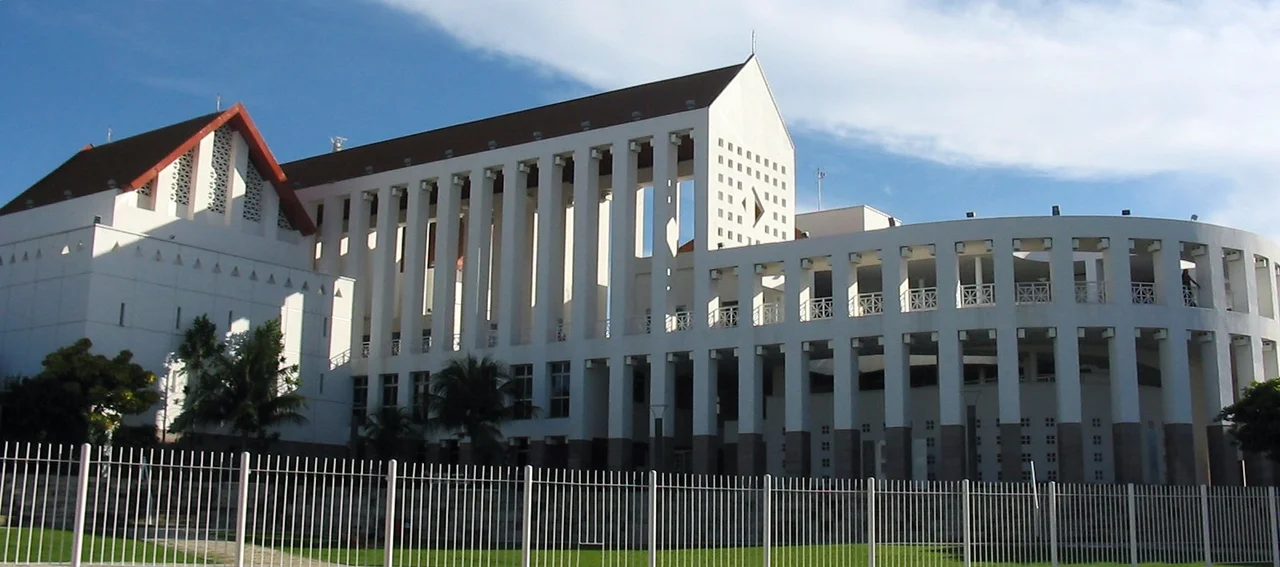

Dragão do Mar Center of Art and Culture
In the port of Fortaleza in 1881, a Black jangadeiro named Francisco José do Nascimento - a freeborn mariner who piloted the sailing rafts that served as the harbor's only human cargo link to larger ships - refused to carry enslaved people out to the vessels that would take them south into the plantations of Rio and São Paulo. Other jangadeiros followed him. Without the rafts, the slave trade through the port seized up. They called him Dragão do Mar, the Dragon of the Sea, and three years later, on March 25, 1884, Ceará became the first province in Brazil to abolish slavery - more than four years before the national law of 1888. The cultural complex that bears his name opened in April 1999. Thirty-three thousand square meters of museums, libraries, theaters, and a planetarium sit in the old port district he once navigated.
Who He Was
Francisco José do Nascimento worked the jangadas of the Fortaleza harbor for a living. The rafts - flat wooden platforms with a single lateen sail, no hull, no shelter - were the lighters that ferried people and cargo between the shore and ships anchored in deeper water. Slave traders depended on them. Without jangadeiros willing to pilot the rafts, enslaved people could not physically reach the ships that would carry them to markets further south. The 1881 boat strike was not a gesture; it was a logistical blow. The jangadeiros were poor men with little power against the wealthy port merchants, but they held the last link in a supply chain that moved human beings. When they stopped moving, the chain broke. The abolitionist movement in Ceará - led locally by figures like José do Patrocínio and backed by a growing network of organizations like the Sociedade Cearense Libertadora - used the strike as proof that abolition was possible if the local economy could be reshaped. Nascimento became its face.
The Building and Its Architects
The Dragão do Mar Center occupies a stretch of old port district near Praia de Iracema, just steps from where the historic harbor worked in the 19th century. The architecture is the work of Delberg Ponce de Leon and Fausto Nilo, two Ceará architects who took a light touch. Rather than demolish the early-20th-century buildings that dotted the site, they connected them. Curved concrete elevated walkways stitch the old houses together with the new galleries and theaters. Bold contemporary lines rise above red-tiled roofs that were there before. The effect is neither preservationist nor erasure-by-glass-tower. It is a third thing - modern architecture that takes the measure of its neighbors and then makes its own argument. From above, the planetarium dome stands out as the signature form, a pale sphere floating over the port quarter.
What's Inside
The complex packs several institutions into its 33,000 square meters. The Museu de Arte Contemporânea do Ceará covers 700 square meters across two floors, rotating Brazilian contemporary art. The Cearense Culture Memorial spreads through 800 square meters divided into six rooms that trace the folk history, music, and visual culture of Ceará - vaqueiro dress, literatura de cordel pamphlets, carnival costumes, the mandacaru cactus flower that became a regional emblem. The Menezes Pimentel Public Library holds 70,000 books across 40,000 titles, with the fourth-largest collection of rare titles in Brazil - a collection that includes 19th-century newspaper runs and 15th-century books. The Rubens de Azevedo Planetarium, built with German optical equipment, seats 90 and is said to be the only planetarium in Brazil capable of projecting a rainbow, using twenty multimedia projectors. Two cinema rooms, a modern theater, the open-air Sérgio Mota Theater, classrooms, and an auditorium fill out the rest.
Naming a Building After a Man the City Had Nearly Forgotten
Historical memory in Brazil is uneven. Statues of plantation owners and governors stand in most Northeast capitals. The Black men and women who broke the slave supply chains have taken much longer to get civic recognition. The decision to name the Fortaleza cultural center after the Dragão do Mar - rather than, say, a provincial governor or a poet - was a deliberate act of reframing. Visit the Cearense Culture Memorial and Nascimento's story takes its proper place as part of what Ceará thinks itself to be. The building itself, on the old port ground where the 1881 strike happened, does the work that a name alone cannot. You walk where he worked. You look at the water he crossed on a raft with a single sail. The city he helped change is all around you.
From the Air
Located at 3.72°S, 38.52°W in central Fortaleza, in the historic port district adjacent to Praia de Iracema. Elevation at sea level. Best viewed FL050-FL100 to see the cultural center's planetarium dome amid the city grid; or from ground level the complex is walkable from downtown hotels. Nearest airport: Pinto Martins International (SBFZ), about 6 km south of the complex. Weather: tropical, humid year-round; rainy season January-May; dry and windy August-January with strong trade winds.
Nearby Stories
- Prainha do Canto Verde Extractive Reserve 28 km away
- Redenção, Ceará 33 km away
- Guajiru 39 km away
- Emboaca 71 km away
- Canoa Quebrada 89 km away
- Ceará 132 km away
- German submarine U-164 (1941) 198 km away
- Nadir Crater 2724 km away