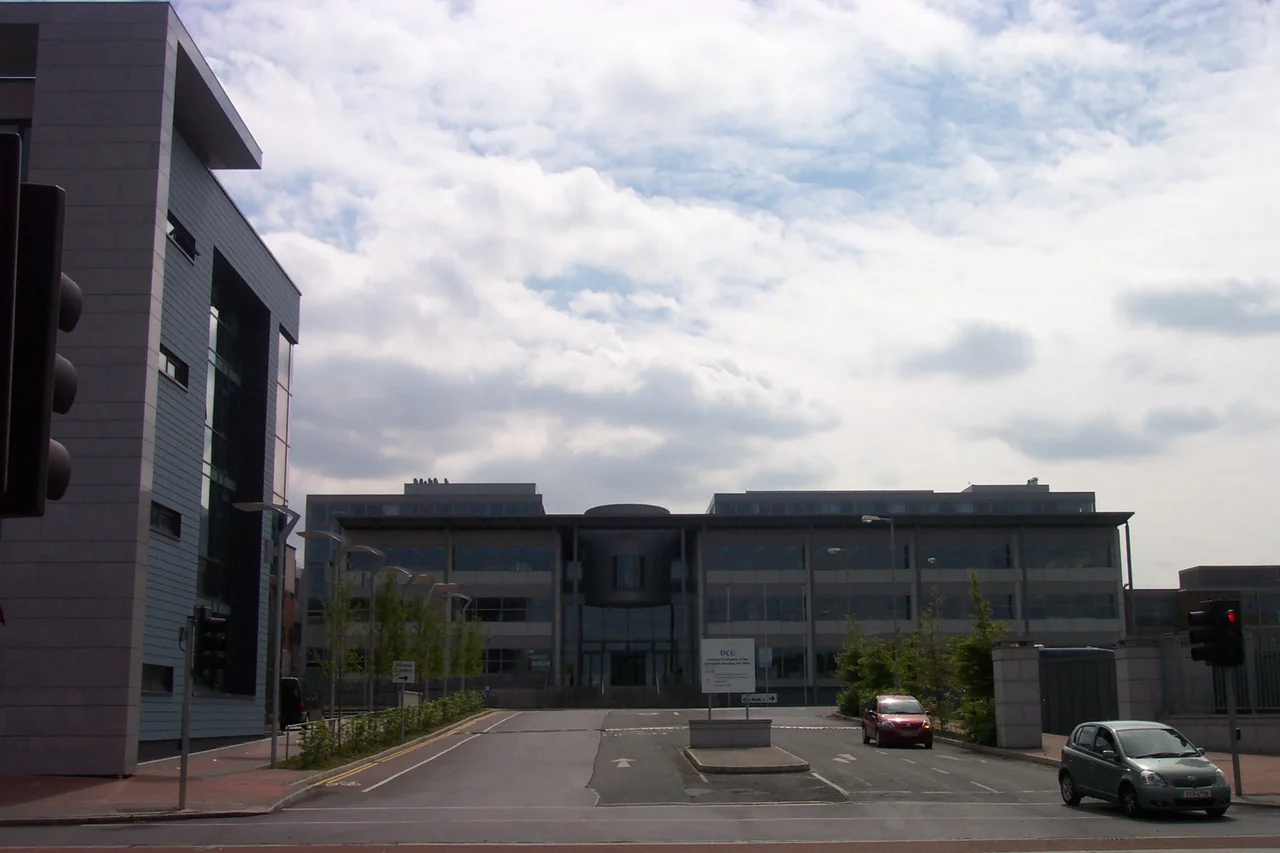

Dublin City University
It was meant to be a stopgap. In 1975, faced with an Irish economy that needed engineers and a higher education system that mostly produced barristers, the government created the National Institute for Higher Education in Dublin on what was officially an 'ad hoc basis' -- meaning nobody was quite sure what it would become. The first students arrived in 1980 on a 34-hectare site north of the city, beside the old Albert College agricultural buildings and a horse paddock. By 1989, the experiment had succeeded so completely that the Dail elevated it to full university status. Today Dublin City University enrols more than 20,000 students across five campuses, and its library -- by statute -- is automatically sent a free copy of every book published in Ireland.
The Northside Bet
Dublin's universities had always been southside affairs. Trinity College sat behind its 18th-century railings on College Green. University College Dublin had decamped from the city centre to a verdant 130-hectare campus at Belfield in the southern suburbs. The northside -- working-class, sometimes neglected, the place trains came from rather than went to -- had nothing. Locating the new NIHE in Glasnevin, just south of Ballymun's notorious 1960s tower blocks, was a deliberate civic statement: higher education would no longer be a southside privilege. The first building on the new campus, the Henry Grattan Building, opened in 1981. The original Albert College Building and the neighbouring President's Residence -- elegant 19th-century survivors from when the site was a model farm for the Royal Dublin Society -- still stand at the heart of the modern campus.
Engineers and Storytellers
From the start the institution had a defining quirk: every undergraduate, in every discipline, was required to spend six to eight months on a paid work placement before graduating. The programme was called INTRA -- Integrated Training -- and was the first of its kind in Ireland. A philosophy student might end up at a tech startup, a business student at a hospital, a journalism student at RTE. The placement model produced graduates who arrived at their first jobs already trained, and employers responded by hiring DCU students in disproportionate numbers. The early academic focus was unapologetically practical: computing, biotechnology, manufacturing, business. But the humanities crept in. Fiontar agus Scoil na Gaeilge offered every subject through Irish. The School of Communications became a feeder for Irish journalism and television. The Helix performing arts centre, opened in 2002 with the Mahony Hall as Ireland's largest concert venue, signalled that DCU wanted to be more than a polytechnic in a suit.
Absorption
In September 2016, DCU swallowed four other Dublin institutions in a single act of merger: St Patrick's College in Drumcondra (a 19th-century Catholic teacher-training college), the Church of Ireland College of Education, the Mater Dei Institute, and the venerable All Hallows College, founded in 1842 as a seminary for the Irish diaspora. The incorporation produced one of the largest Institutes of Education in Europe, with student teachers training across all the major Christian traditions on what had once been mutually suspicious campuses. The All Hallows campus still contains a burial ground from its seminary days. The St Patrick's campus, north of the River Tolka, is built around the Cregan Library -- a €50 million facility that opened in 2015. DCU's library system now holds the private papers of Charles Haughey, the famously cunning Taoiseach who died in 2006; the cataloguing alone took years.
Adjunct Professor Bruton
DCU's habit of recruiting unexpected staff produced one of Irish academia's stranger faculty rosters. In 2004, former Taoiseach John Bruton -- the Fine Gael leader who had governed Ireland from 1994 to 1997 and would later serve as the EU's ambassador to Washington -- joined the School of Law and Government as an adjunct faculty member. A year later Edward de Bono, the Maltese inventor of 'lateral thinking', accepted an adjunct professorship. The university was named Irish University of the Year by The Sunday Times in 2004-2005 and again in 2010-2011. The QS rankings have repeatedly placed DCU among the world's top 50 universities under 50 years old. The current Chancellor is Martin McAleese, husband of former President Mary McAleese; the position is largely ceremonial, but the symbolic weight is considerable for an institution that did not exist within living memory of most Irish citizens.
Five Campuses, One Code
Walk the main Glasnevin campus today and the institutional history is laid out in glass and brick: the Henry Grattan Building from 1981, the John and Aileen O'Reilly Library (designed by Scott Tallon Walker, opened 2002, winner of the SCONUL Library Design Award), the Helix arts centre, two Starbucks (the first in Ireland opened on campus). Across Ballymun Road, the St Clare's sports campus runs to 14 hectares including the Sports Pavilion. A few kilometres north, the DCU Alpha innovation campus houses 35 startups working on connected health and Internet-of-Things hardware. The St Patrick's and All Hallows campuses sit a short walk apart in Drumcondra, separated by the Tolka and a few centuries of religious history. The student body now comes from every Irish county and more than seventy countries. The institutional motto -- adopted at the 1989 elevation -- is Fios, Fearann, Fiontar: Knowledge, Land, Enterprise. Three words, three syllables each. Engineers would approve.
From the Air
DCU's main Glasnevin campus sits at 53.385N, 6.257W in Dublin's northside, roughly 5 km north of the city centre, bordered by Ballymun Road to the west and Collins Avenue to the north. From altitude the campus shows as a substantial modern complex of brick and glass buildings clustered around playing fields and the older Albert College Building. The Helix arts centre dominates the south-east corner. The DCU Alpha innovation campus lies a kilometre or so south. St Patrick's and All Hallows campuses sit in nearby Drumcondra. Nearest airport: Dublin (EIDW), 4 km north -- DCU lies almost directly under the southern approach to runway 28R.
Nearby Stories
- Wicklow Mountains 12 km away
- Mornington 14 km away
- German submarine U-1051 16 km away
- Abbey of Kells 18 km away
- Irish Military Intelligence Service 20 km away
- HMS Manners (K568) 37 km away
- Templemore 42 km away
- Irish Sea Bridge 43 km away