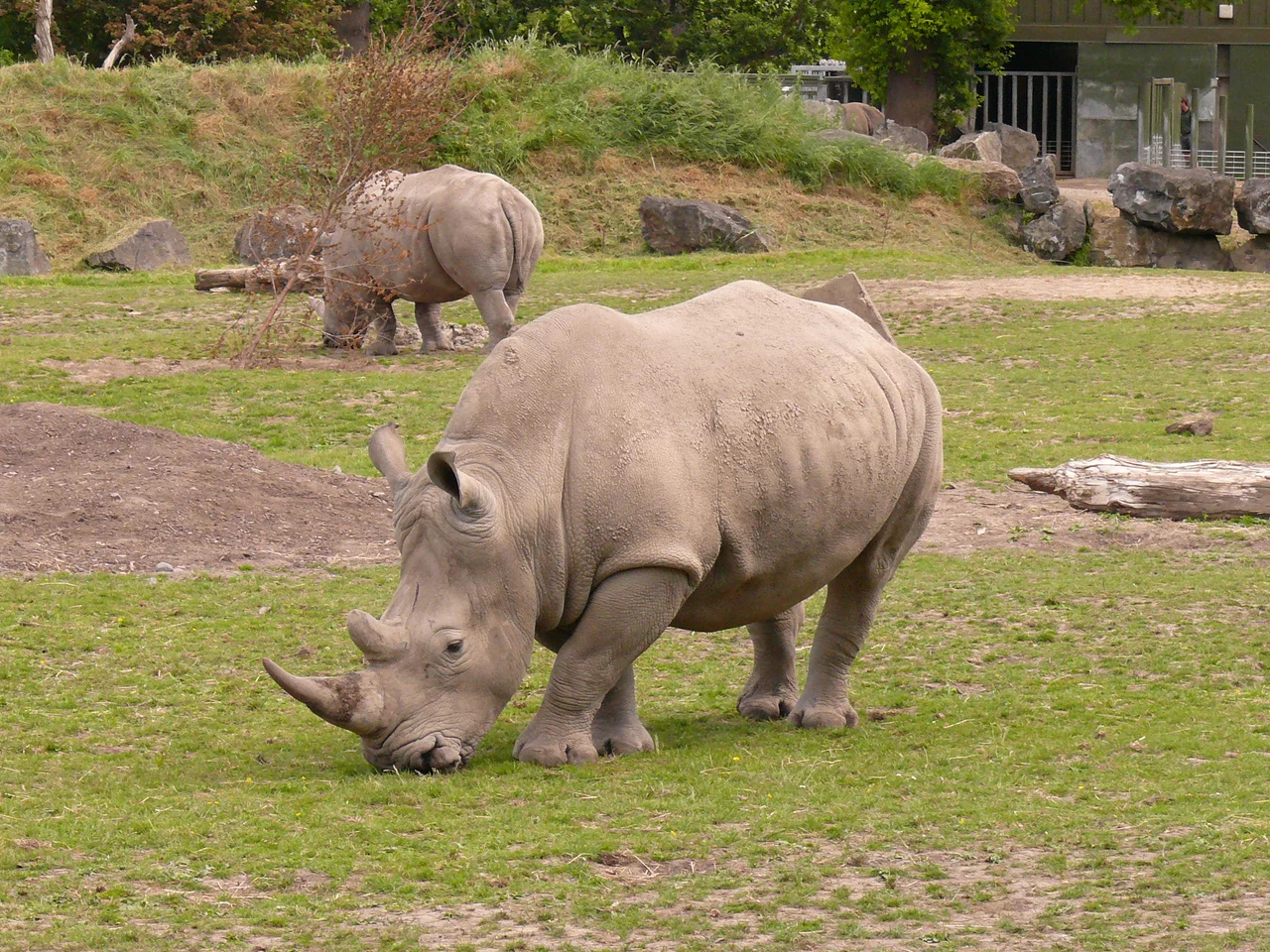

Dublin Zoo
On a Tuesday afternoon in May 1830, a group of physicians, naturalists and Royal Dublin Society members met in the Rotunda Hospital to found a zoological garden. They had no animals yet. London Zoo, founded two years earlier, donated their first specimens; the Tower of London's Royal Menagerie, then in its final years, sent more. The Royal Zoological Society of Ireland opened its gates in Phoenix Park the following year and never closed them. Almost two centuries on, Dublin Zoo is the world's third-oldest scientific zoo, the third-most-visited tourist attraction in Ireland, and home to about 400 animals across 100 species. The original 1833 thatched gatehouse, built for thirty pounds, still stands just to the right of the modern entrance.
The Penny Sunday
From the start the zoo made one choice that distinguished it from its English cousins: on Sundays, the entrance fee dropped from one shilling to one penny. London charged the same prices to everyone, which meant in practice that the working class did not come. Dublin's penny Sundays packed the park with families who could otherwise never have afforded the gates. The decision was social, possibly political, possibly just kind. It worked. By the coronation of Queen Victoria in 1838, the zoo opened its gates free for the day and drew 20,000 visitors -- a single-day record that still stands. The first giraffe arrived in 1844. The first pair of lions arrived in 1855 and bred for the first time in 1857, a major scientific achievement for the era; Dublin lions became internationally famous, and the post-presidency Ulysses S. Grant came to see them on his world tour. The reptile house, the Roberts House, opened in 1876; the first tearooms in 1898.
The Rising and the Lions
Easter Week 1916 found Dublin in chaos. The Rising's volunteers seized the General Post Office and a string of other strongholds, the British Army shelled the city centre, and food deliveries to Phoenix Park stopped. A young keeper named Jack Flood -- son of the long-serving Christopher Flood -- stayed inside the zoo with two other young men to keep the animals alive. They faced a brutal arithmetic: the meat had run out, the carnivores would die, the carnivores were the zoo's irreplaceable stars. The decision they made has haunted the zoo's records ever since. Several of the smaller animals were killed to feed the lions and tigers. The big cats survived. Jack Flood did not survive much longer; he died in his twenties of the Spanish flu that ravaged Dublin a few years later. The keepers who stayed through the Rising are remembered in the zoo's institutional history, but never quite celebrated. The mathematics of that week was nobody's idea of a happy ending.
Almost Closed
By the late 1980s Dublin Zoo was nearly bankrupt. Visitor numbers had fallen, animal welfare standards had slipped behind the rest of Europe, and the protests of former keeper Brendan Price were forcing uncomfortable questions about cramped enclosures and outdated cages. Dublin City Council briefly considered closing the place. Instead, the Irish government stepped in with an annual grant in line with other European capitals, and in 1994 the new Plan for the Future of Dublin Zoo was presented to Finance Minister Bertie Ahern. He freed up IR£15 million for redevelopment. Then, in 1997, came the gift that transformed the zoo: 13 hectares of land surrounding the lake in the grounds of Aras an Uachtarain -- the President's official residence next door -- were handed over. The total zoo area almost doubled overnight. The first themed habitat, World of Primates, opened in 1996 with its archipelago of islands in a natural lake; African Plains opened in 2001; Kaziranga Forest Trail for the Asian elephants in 2007; Gorilla Rainforest in 2012; Sea Lion Cove, opened by President Michael D Higgins, in 2015.
Bangui and the Elephants
The silverback gorilla now in residence is named Bangui, after the capital of the Central African Republic; he leads a troop that includes the adult females Kafi and Vana, and the young Asali and Kambiri, born in 2011 and 2019. His predecessor Harry, who died in 2015, sired a great many offspring across European zoos before his death and is still spoken of with affection by long-serving staff. The Asian elephant herd at Kaziranga numbers eleven, ranging from the adult females Bernhardine and Yasmin down to the youngest calves Kabir and Sanjay, born in 2017 and 2018. The orangutan Jorong became briefly famous in 2011 when a four-minute video posted to YouTube showed her gently rescuing an injured moorhen chick from a pond, coaxing it ashore with a leaf and lifting it onto the grass. Another orangutan, in 2008, escaped her enclosure for an hour and was eventually found on top of the Sumatran tiger night house. A group of schoolchildren alerted the staff.
Conservation as Mission
The zoo's stated mission is to contribute to the conservation of endangered species, and it backs the claim with paperwork. Dublin manages the European Endangered Species Programme studbooks for the golden lion tamarin -- a tiny South American primate brought to within a few hundred individuals by deforestation before captive breeding programmes pulled it back -- and for the Moluccan cockatoo. In November 2023 the zoo opened a National Centre for Species Survival in partnership with the IUCN, housed in the renovated Society House. The pandemic nearly broke the institution: in November 2020, with the zoo closed and animal-feed bills running into millions, Dublin Zoo launched a public appeal and the Irish public responded with €2 million in 48 hours. Over a million visitors come every year now -- 1.3 million in 2023 -- to walk the same paths that Ulysses S Grant walked, past lions, past elephants, past the small thatched gatehouse where, in 1833, a single keeper sold tickets and took the names of donations in a leather-bound book.
From the Air
Dublin Zoo sits within Phoenix Park at 53.354N, 6.304W, west of the city centre on the north bank of the Liffey. From altitude the park itself is unmissable -- at 707 hectares (1,750 acres) it is one of the largest enclosed urban parks in Europe, a vast green rectangle in the otherwise dense Dublin urban grid. The zoo occupies 28 hectares in the south-eastern quarter of the park, recognisable by its distinctive lakes, the radial layout of habitats, and the white outbuildings of the Phoenix Park Visitor Centre. The President's residence (Aras an Uachtarain) is the large white house immediately adjacent. Nearest airport: Dublin (EIDW), 11 km north-east.
Nearby Stories
- Wicklow Mountains 12 km away
- Mornington 14 km away
- German submarine U-1051 16 km away
- Abbey of Kells 18 km away
- Irish Military Intelligence Service 20 km away
- HMS Manners (K568) 37 km away
- Templemore 42 km away
- Irish Sea Bridge 43 km away