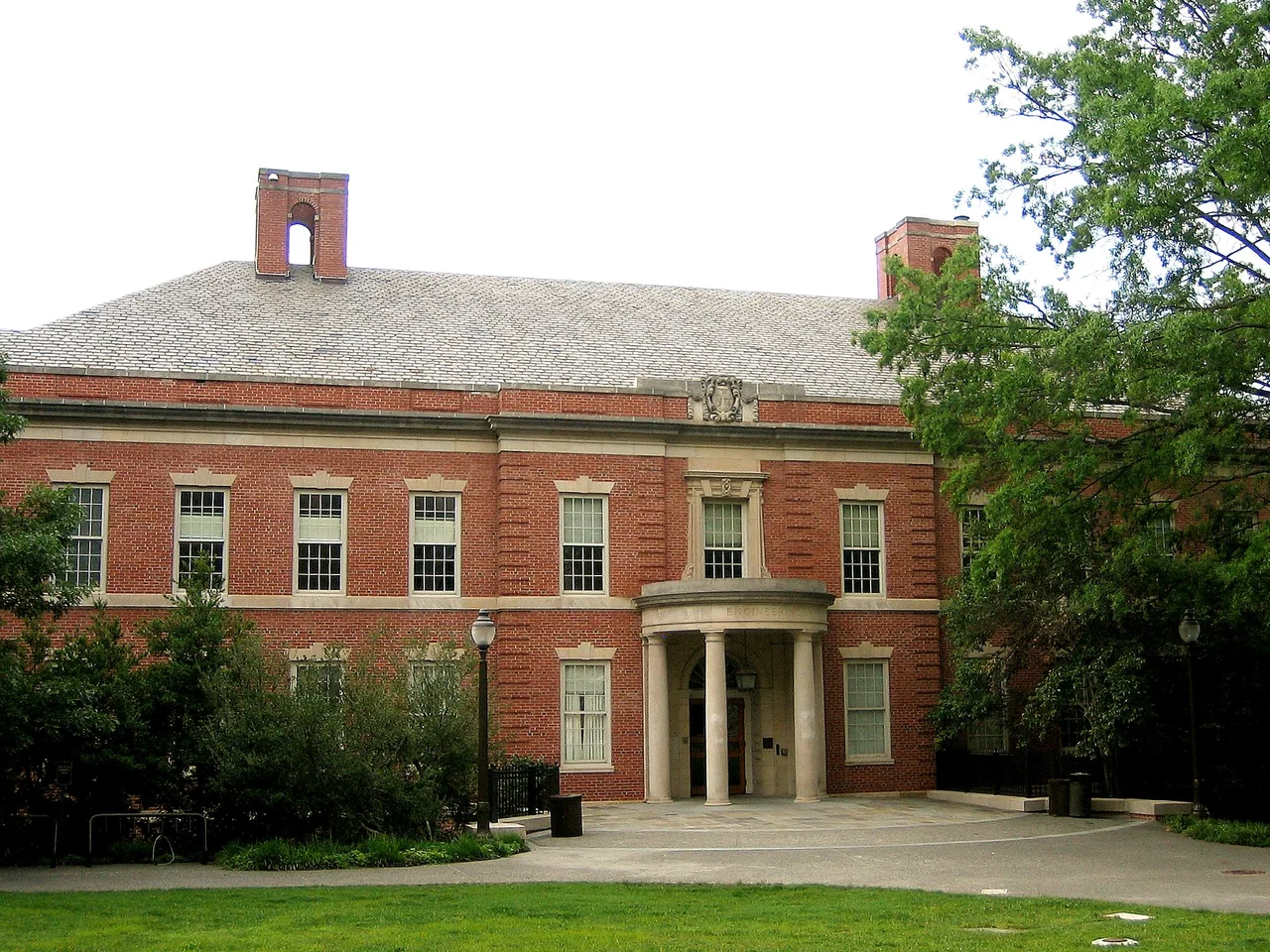

Duke University
In 1924, a Durham tobacco and electric power industrialist named James Buchanan Duke wrote a check for $40 million and changed the name of Trinity College to honor his father. The institution that became Duke University already had nearly a century of history under different banners. It had begun in 1838 as Brown's Schoolhouse, a one-room subscription school organized by Methodists and Quakers in the present-day town of Trinity, in the central North Carolina piedmont. It had moved to Durham in 1892 with the support of Washington Duke himself, James's father, who provided land and money to make the move possible. The endowment of 1924 sealed the second naming and built the campus the world now recognizes.
From Brown's Schoolhouse to Durham
The original school opened in 1838 as a one-room subscription schoolhouse in Randolph County. It evolved through several names, becoming Union Institute in the 1840s, then Normal College, and finally Trinity College in 1859. Methodists assumed control. The school relocated to Durham in 1892 after Washington Duke, the tobacco entrepreneur, offered $85,000 and land to bring the college to his growing factory town. The relocation tied the institution's future to the Duke family fortune. Trinity served as a small Methodist college for the next three decades. In 1924, when James B. Duke established the Duke Endowment with $40 million, the trustees voted to rename the institution Duke University in honor of Washington Duke.
Julian Abele's Campus
The campus that opened in the late 1920s and early 1930s was designed by Julian Abele, the African American chief designer of the Philadelphia firm Horace Trumbauer. Abele had studied architecture in Paris — commonly associated with the Ecole des Beaux-Arts, though the exact nature of his enrollment there is uncertain — and was one of the first Black architects to work at the highest tier of American practice. West Campus is a Collegiate Gothic ensemble crowned by Duke Chapel at the highest ridge, built in stone from the Duke Quarry near Hillsborough. East Campus, the original Durham site, is Georgian in red brick. Abele could not have stayed in the segregated hotels of Durham during construction, and he never visited the site. The university for decades did not publicly credit him as the principal designer. That credit has been corrected in recent years.
Tobacco, Labor, and the Endowment
The fortune that built modern Duke came from the American Tobacco Company, the cigarette trust that James B. Duke had assembled by the early 20th century before federal antitrust action broke it up in 1911. The tobacco was grown by farmers and tenant farmers across the bright-leaf belt of North Carolina, Virginia, and South Carolina, including many Black sharecroppers whose labor was central to the industry but whose lives were constrained by Jim Crow. The Duke fortune also drew on hydroelectric power. The $40 million 1924 endowment was, at the time, one of the largest charitable gifts in U.S. history. It funded Duke University, supported Methodist churches and orphanages in North Carolina, and underwrote Davidson College, Furman, and Johnson C. Smith University, a historically Black college in Charlotte. The wealth had a complicated origin and a wide reach.
Trinity, Pratt, and the Hospital
Duke is structured around Trinity College of Arts and Sciences, the undergraduate liberal arts school that preserves the original Trinity name, and the Pratt School of Engineering. Graduate and professional schools include the School of Medicine, the School of Nursing, the Sanford School of Public Policy, the Fuqua School of Business, the Nicholas School of the Environment, and the Divinity School. The Duke University Hospital and Health System operates one of the major academic medical centers in the United States. The university opened a satellite campus, Duke Kunshan University, in Kunshan, China, in 2014, and the Duke-NUS Medical School in Singapore in 2005. Undergraduate admissions have grown extraordinarily selective. Duke is consistently ranked among the top universities in the country.
Cameron, the Crazies, and Coach K
Duke athletics is concentrated in Cameron Indoor Stadium, the small, loud men's basketball arena on West Campus. Built in 1940, Cameron seats 9,314 and feels like an old-fashioned gym amplified to international scale. The student section, the Cameron Crazies, is one of the most theatrical in college sports. Mike Krzyzewski coached the men's basketball team from 1980 to 2022 and became the all-time winningest coach in NCAA Division I men's basketball, retiring with 1,202 victories. Duke has won five men's national basketball championships, in 1991, 1992, 2001, 2010, and 2015. The rivalry with the University of North Carolina, eight miles away in Chapel Hill, is the most intense in American college sports. The football team plays at Wallace Wade Stadium, named for the 1930s coach who took Duke to the Rose Bowl.
From the Air
Duke University's West Campus sits at roughly 36.00 N, 78.94 W in Durham, North Carolina. The 210-foot Gothic tower of Duke Chapel is the dominant visual landmark from the air and orients the entire campus. East Campus lies about a mile northeast, recognizable by its Georgian red brick. Wallace Wade Stadium and Cameron Indoor Stadium are immediately south of the chapel. Nearest airport: Raleigh-Durham International (KRDU) about 10 nautical miles southeast. Recommended viewing altitude 3,000 to 6,000 ft AGL.
Nearby Stories
- Orange County Speedway 3.7 km away
- Tobacco Road 8.7 km away
- Haw River 15 km away
- Johnston County, North Carolina 18 km away
- Soul City, North Carolina 25 km away
- Chinqua Penn Plantation 29 km away
- North Carolina Aviation Museum 40 km away
- Cherry Hill Plantation 45 km away