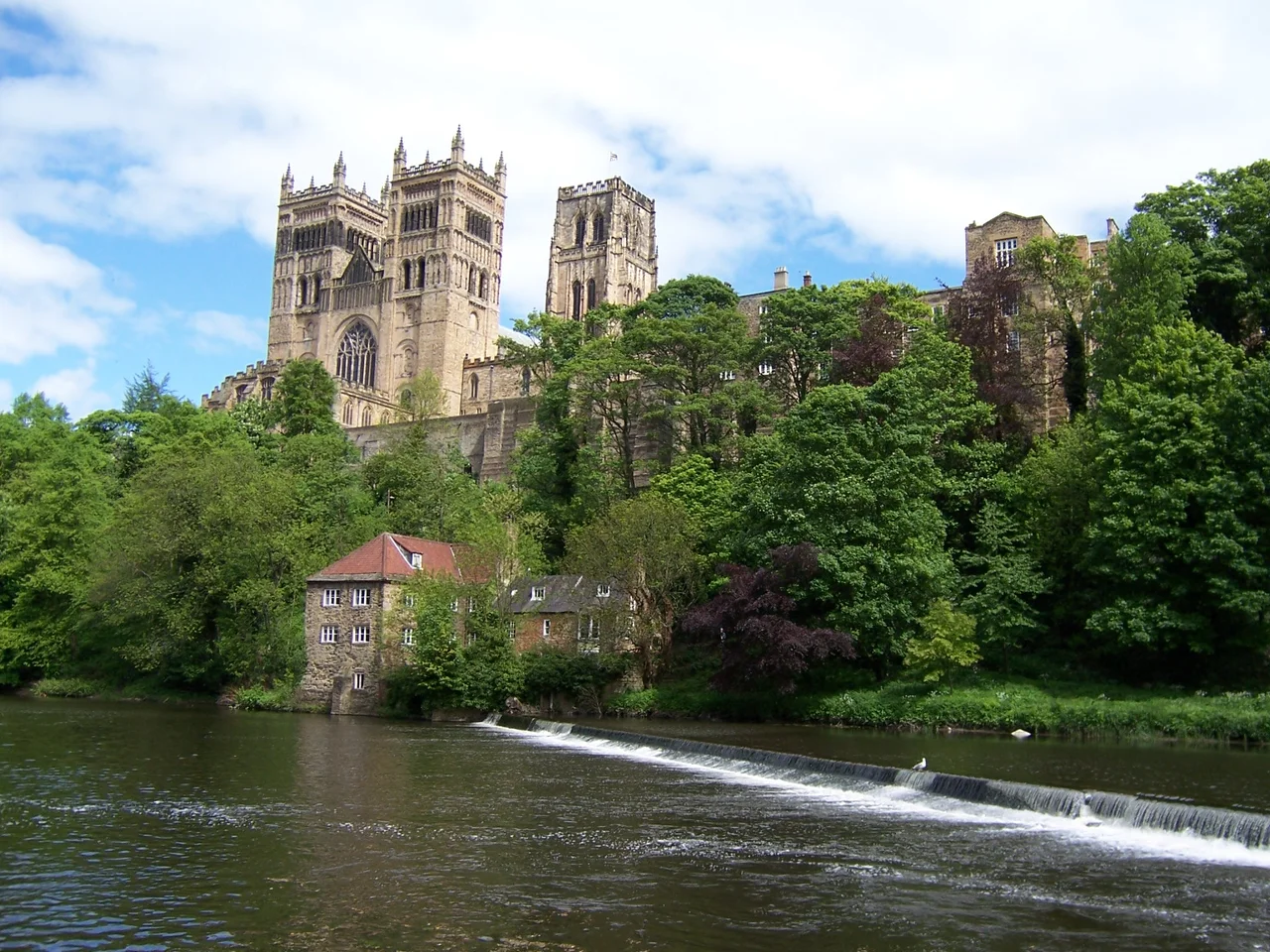

Durham University Museum of Archaeology
In 1833, the same year Durham University opened its doors, an old fulling mill on the banks of the River Wear became the university's museum. Only one institution in England, Oxford's Ashmolean, had a university museum open to the public before this. The Durham collection started with stuffed birds donated by Thomas Gisborne and Roman artefacts dug up at Binchester. By 1892 the magazine The Antiquary praised the Roman finds as "of first-class archaeological value" but concluded that overall the museum "reflects no credit on the University of Durham." That tension, between the importance of the objects and the modesty of their housing, has shaped the museum's history ever since.
Eric Birley and the Wall
The university appointed Eric Birley as its first lecturer in archaeology in 1931. Birley excavated along Hadrian's Wall and added his finds to the teaching collection, transforming what had been a haphazard cabinet of curiosities into a working archaeological resource. In 1950 he acquired the Oswald-Plique collection of Samian ware, over 4,500 pieces of fine Roman pottery from across Gaul. This collection became internationally important. It served as the reference base for Oswald's 1936-7 Index of Figure Types on Terra Sigillata and for Stanfield and Simpson's 1958 Central Gaulish Potters. Both works remain standard reference books for Roman pottery studies. Birley's 1930s excavation work at Benwell on Hadrian's Wall also fed material into the collection that students still examine today.
A Museum That Kept Moving
The Old Fulling Mill served as the museum from 1833 to 1876, when the collection moved to Bishop Cosin's Almshouses on Palace Green. At the start of the First World War, Durham's lecture theatres were commandeered for military use and the museum became a temporary lecture theatre. The collection was rationalised: British birds went to St Hild's College, scientific specimens to the science laboratories, Roman finds to a room used for history lectures, other objects to the university library. The collection scattered through the institution for decades. In 1975 the museum reopened in the Old Fulling Mill, now focused purely on archaeology, with new galleries added in 1986. But the riverside location flooded regularly and sat off the main tourist routes. In 2014 the museum moved a fifth time, to the Wolfson Gallery within the Durham University Library complex on Palace Green.
The Bronze Age Sword
In 1996, on the Houghall campus of East Durham College just south of Durham, someone found a Ewart Park sword from between 700 and 900 BC. It is now known as the Houghall Sword and is one of the museum's prize pieces. Ewart Park swords represent a distinct phase of late Bronze Age metalwork in Britain, produced during the final centuries before iron-working transformed warfare and economy. Whoever buried this sword, or lost it, did so almost 3,000 years ago. The museum also holds Britain's first complete Roman fleet diploma, a bronze certificate issued to a Roman sailor confirming his discharge, citizenship, and right to marry. The diploma was found by a metal detectorist near Lanchester, north-west of Durham, in 2017.
Bottles from Claypath
Most of the museum's collection comes not from prestigious excavations but from development-led archaeology, the salvage digs that precede new construction. The museum acts as the repository for finds dug up in Durham City and the surrounding parishes. Between 2016 and 2017, archaeologists prepared the site at 18-29 Claypath for student residences and discovered bone fragments of a person who lived between 90 BC and 60 AD. These bones now represent Durham's earliest known resident. The museum also holds over 100 17th and 18th century glass bottles from earlier Claypath excavations in the 1990s, one of the largest collections of post-medieval glass in the United Kingdom. Old bottles do not sound dramatic, but they document daily life, drinking habits, and trade patterns in a way that grander artefacts cannot.
The River Wear Assemblage
In 2023 the museum hosted a special exhibition on the Durham River Wear Assemblage, more than 13,500 objects recovered from the riverbed below the 12th-century Elvet Bridge. Diver Gary Bankhead spent years pulling lost items from the silt: medieval pilgrim badges, lead seals, coins, buttons, jewellery, fragments of pottery, even a piece of armour. Each object had fallen or been thrown into the river over centuries, and together they form an extraordinary record of what Durham people carried, lost, and discarded. The assemblage continues to be studied. The museum sits within the Wolfson Gallery on Palace Green now, finally in a building designed for its purpose, after nearly two centuries of moving and resettling and rationalising.
From the Air
The Museum of Archaeology sits at 54.77 degrees north, 1.58 degrees west, in the Wolfson Gallery on Palace Green within the Durham University Library complex. Newcastle Airport (ICAO: EGNT) is 18 miles north. Teesside International (EGNV) is 24 miles south-east. From cruising altitude Palace Green is identifiable as the open space between Durham Castle and Durham Cathedral, on the peninsula formed by the tight meander of the River Wear. The cathedral's central tower at 218 feet is the most prominent landmark. The Old Fulling Mill, the museum's original home, still stands on the riverside walkway below the cathedral. The East Coast Main Line viaduct crosses the river west of the peninsula. River fog often forms in the Wear valley on calm mornings and can persist when surrounding higher ground is clear.
Nearby Stories
- Hadrian's Wall Path 1.8 km away
- Killingworth 2.2 km away
- Allenheads 9.2 km away
- Nine Standards Rigg 11 km away
- Catterick Bridge Explosion 12 km away
- Rosedale Abbey 19 km away
- Saltburn Pier 20 km away
- Alexander L. Kielland (Platform) 306 km away